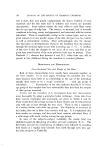
188 JOURNAL OF THE SOCIETY OF COSMETIC CHEMISTS In a previous paper ( 1 ), the writer argued that if co and Cw in equation 1 could be regarded as nonequilibrium concentrations in a system where the rate of surfactant migration is slow, the initial surfactant location would be a very important factor in determining the type of emulsion formed. More- over, in systems where the surfactant concentration in the oil phase is not in equilibrium wi. th the aqueous phase concentration, from equation 3, the HLB value of the surfactant system should be considered as a dynamic and not a static value. The experimental data presented indicate that the initial surfactant distribution prior to emulsification can affect emulsion viscosity, particle size distribution, emulsion stability, as well as emulsion type. ]•XPERIMENTAI, As in the previous investigation, most of the experiments were carried out in a clear, plastic emulsification vessel. The dimensions of this vessel as well as the experimental procedure have been described in an earlier paper (1). Prior to emulsification, emulsifiers were dissolved or dispersed in each phase with a laboratory propeller mixer at 600 rpm. The liquids were then placed in a constant temperature bath until the temperature reached 24: ñ 0.1øC. The water phase was first placed in the vessel and the oil phase was then very carefully placed on top of it. The mixer, set at 400 rpm, was then turned on to start emulsification. The emulsion was agitated at this speed for 30 sec and the speed was then increased to 750 rpm. After mixing for another 2 • min, the mixer was turned off, and the type of emulsion was determined immediately. For viscosity measurements, a Brookfield Synchrolectric Viscometer Model LVT * was used. Since only the relative viscosities were required, the results were reported in terms of the readings on the 100 scale. For determining the type of emulsion, a laboratory phase tester was used. This meter was uniformly calibrated to 100 and the maximum reading roughly corresponded to the conductivity of a 0.1•) aqueous solution of sodium chloride. The measurement obtained with this meter was called relative conductivity. Manufactured by Brookfield Engineering Lab, Stoughton, Mass.

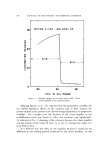
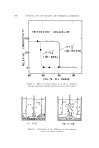
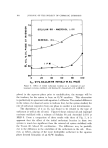
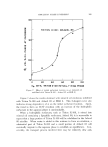
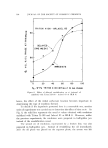
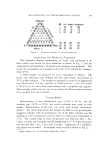
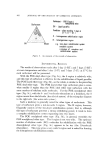
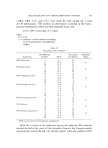
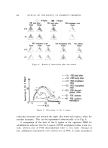
EMULSION PHASE INVERSION 189 The oils used for the experiments were a light mineral oil * and isopropyl myristate.•- The surfactants used and their HLB values suggested by the suppliers are listed below' Surfactants HLB Tween 80 © • 15 Arlacel 80 © ++ 4.3 Arlacel 83 © { 3.7 Amerchol L-101 © õ 8 Solulan 98 © õ 13 Triton X-100 © [1 13.5 RESULTS AND DISCUSSION With the technique described, the volumetric percentage of oil phase at inversion point, •b, was studied as a function of initial surfactant distribution. To determine the value of •b, a series of emulsions containing different quantities of oil phase, but identical amounts of surfactants, was prepared for each system. The estimated point at which emulsion type changed was taken as •b. The type of emulsion was determined from the change in viscosity as well as from the change in conductivity. However, the results obtained with both methods agreed substantially. Figure 1 shows an example of a series of emulsions with different amounts of mineral oil stabilized with a mixture of Triton X-100 and Arlacel 83 at HLB 8. In this particular example, the total surfactant concentration was 1(•, and 60% of the hydrophilic surfactant, Triton X-100, was placed in the aqueous phase before emulsification. As clearIx' shown, there is a very sharp drop of viscosity corresponding to the volumetric percentage of oil phase at 90.6•. The viscosity indicated here is the Brookfield Viscomctcr reading taken with the No. 2 spindle at 30 rpm. Figure 2 shows the conductivity change as a function of volumetric percentage of the oil phase. Note again a very sharp discontinuity at around 90.6•. For this system, the value of 4 was then taken as 90.6. Since the measurement of the relative conductivity was simpler than the measurement of viscosity, the former technique was used to determine the inversion point in most instances. ß Carnation Oil ©, Witco Chemical, Sonneborn Division, New York, N.Y. •' Deltyl Extra ©, Givaudan Corp., New York, N.Y. :• Tween 80© (polyoxyethylene sorbitan monooleate), Arlacel 80© (sorbitan mono- (fieate), and Arlacel 83 © (sorbitan sesquioleate), Atlas Chemical, Wilmington, D•i. õ Amerchol L-101 © (multisterol) and Solulan 98 © (ethoxylated lanolin), American Cholesterol Products, Amerchol Park, N.J. I! Triton X-100 © (octylphenoxy polyethoxy ethanol), Rohm & Haas Co., Philadelphia, Pa.
Purchased for the exclusive use of nofirst nolast (unknown)
From: SCC Media Library & Resource Center (library.scconline.org)