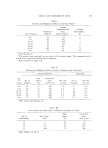
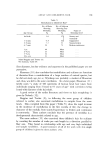
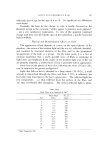
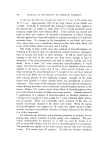
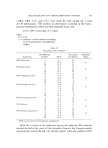
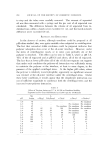
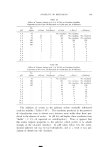
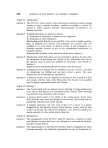
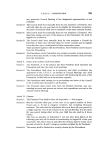
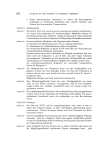
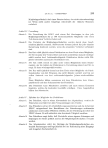
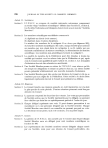
STABILITY OF EMULSIONS 219 Table II Effect of Various Amines at 5.4 X 10-aM on Emulsion Stability Expressed as Per Cent Oil Released at 13,000 rpm for 30 Minutes No 2- pH Amine n-Hexyl Ethylhexyl n-Octyl n-Decyl n-Dodecyl 5.4 5.8 6.2 6.6 7.0 7.4 7.8 8.2 8.6 9.0 9.4 9.8 10.2 43 70 95 100 100 100 .... No emulsion No emulsion ... 66 6 100 No emulsion No emulsion 17 3 88 No emulsion No emulsion 3 3 71 100 100 3 3 43 97 97 3 3 6 50 75 3 2 4 22 27 3 2 4 6 9 3 2 4 3 6 .. 2 3 3 5 .. 2 3 3 4 .. 1 2 3 4 .... l 3 4 Table Ill Effect of Various Amines at 8.1 X 10⁻³M on Emulsion Stability Expressed as Per Cent Oil Released at 13,000 rpm for 30 Minutes No 2- pH Amine n-Hexyl Ethylhexyl n-Octyl n-Decyl n-Dodecyl 6.2 6.6 7.0 7.4 7.8 8.2 8.6 9.0 9.4 9.8 0.2 0.6 95 100 100 100 .. 4 No emulsion ... No emulsion 2 3 100 No emulsion No emulsion 2 2 92 No emulsion No emulsion 1 2 80 100 100 1 2 63 87 75 2 2 46 47 56 3 2 30 27 44 3 2 14 17 31 3 2 9 11 23 3 2 6 6 17 3 2 4 3 11 .. I 2 3 3 The addition of amines to the polymer system markedly influenced emulsion stability (Tables I-IV). The emulsions produced in the presence of n-hexylamine were in almost every in•:tance more stable than those pro- duced in the absence of amine. At ?H 6.6 and higher, these emulsions were "stable" ( 5• oil separated on centrifugation). Thus, it appears that this amine imparts properties to the polymer which permit it to adsorb strongly at the oil-water interface. At pH values below 6.6, the n-hex- ylamine--polymer salt may be too hydrophobic, and as a result it may pre- cipitate or desorb into the oil phase.

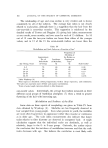
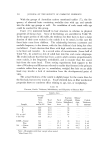
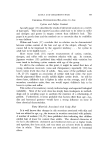
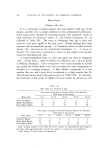
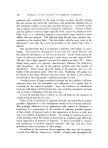
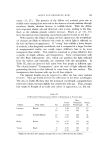
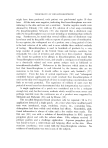
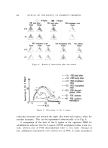
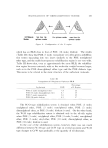
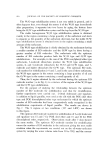
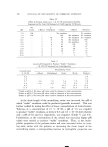
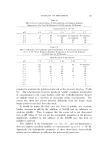
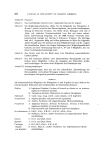
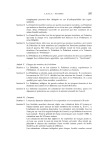
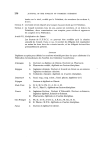
220 JOURNAL OF THE SOCIETY OF COSMETIC CHEMISTS Table IV Effect of Various Amines at 1.1 X 10-aM on Emulsion Stability Expressed as Per Cent Oil Released at 13,000 rpm for 30 Minutes No 2- pH Amine n-Hexyl Ethylhexyl n-Octyl n-Decyl n-Dodecyl 8 9 9 9 10 10 11 70 74 78 8 2 6 0 4 8 2 6 0 100 .... No emulsion ... No emulsion 100 .... 100 No emulsion No emulsion ... I 10 99 No emulsion No emulsion ... 1 8 96 No emulsion 100 ... 1 6 92 No emulsion 95 ß.. 1 4 87 100 93 ... 1 3 82 95 87 ß.. 1 3 72 86 79 ß.. 2 3 20 57 65 ß.. 2 2 5 17 10 ... 2 2 ... 3 3 Tablc V Lowest pH Required to Produce "Stable" Emulsions (• 50-/o Oil Separated on Centrifugation) Concentration Neutralizing Amine X 10-aM n-Hexyl 2-Ethylhexyl Octyl Decyl Dodecyl 0.5 .............. 5.8 1.0 .............. 6.2 2.7 6.6 7.0 7.4 7.8 7.8 5.4 6.6 6.2 7.8 8.6 9.0 8.1 a b 10.2 10.2 10.6 11.0 c 9.0 10.6 11.0 11.0 aStable at pH 6.6. No lower pH value could be obtained at this concentration. bStable at pH 6.2. No lower pH value could be obtained at this concentration. •Stable at pH 7.2. No lower pH value could be obtained at this concentration. As the chain length of the neutralizing amine was increased, the pH at which "stable" emulsions could be produced generally increased. This was [urther verified by noting the effect of lower concentrations of dodecylamine. Whereas, at a concentration of 2.7 X 10-•M, a pH of 7.8 was required to produce "stable" emulsions, at levels of 0.5 and 1.0 X 10-•M dodecylamine only a pH of 5.8 and 6.2, respectively, was required (Tables V and VI). Furthermore, as the concentration of the amines was increased, higher pH values were needed to produce "stable" emulsions. Thus, as the hydro- phobic properties of the polymer-amine salt were increased either by react- ing more amine with the polymer or increasing the chain length of the neutralizing amine, a corresponding increase in hydrophilic properties was
Purchased for the exclusive use of nofirst nolast (unknown)
From: SCC Media Library & Resource Center (library.scconline.org)