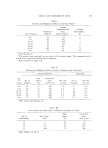
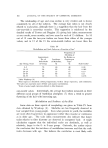
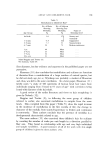
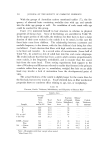
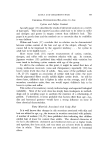
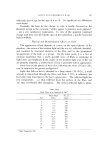
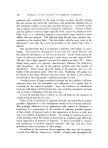
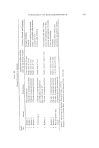
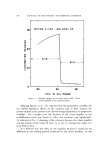
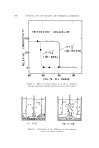
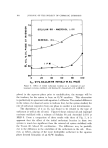
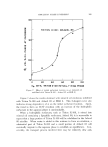
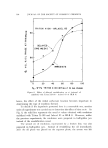
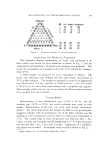
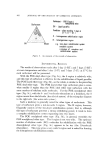
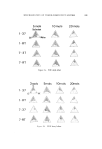
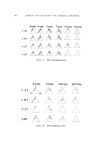
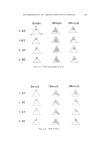
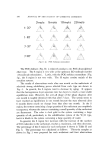
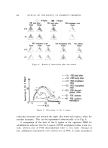
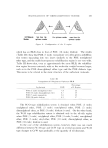
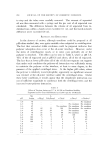
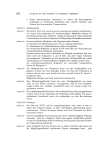
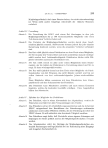
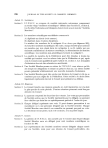
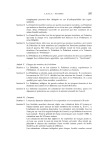
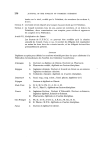
206 JOURNAL OF THE S9CIETV OF COSMETIC CHEMISTS 3tools 5tools 10mols 20tools Figure 3g. POE Sorbitan monooleate The POE dioleate (Fig. 3f) is relatively similar to the POE dinonylphenyl ether type. The S region is very wide at the optimum EO molecule number (18-molecule ethoxylates). Lastly, with the POE sorbitan monooleate (Fig. 3g), the S region is not very wide. The H region consists mainly of the emulsion systems. The results of observations made after one month on the surfactants of relatively strong solubilizing power selected from each type are shown in Fig. 4. In general, the S regions tend to decrease by aging. It appears that the homogeneous layer separates into two layers to reach a more stable equilibrium state. However, the over-all shape of the phase diagram after one month is roughly identical with that after 7 days. The system seems to have reached an equilibrium in one month because the state observed after 6 months shows nearly no change from that after one month. In the S region, the systems containing a large quantity of the surfactant are completely transparent, whereas the systems containing a small quantity of the surfactant are fluorescent. The color is dark gold in the system containing a large quantity of oil, particularly in the solubilization system of the W/O type, but it is bluish in the system containing a large quantity of water. In general, the S region first increases with the increase of the number of EO molecules in the surfactant, reaches a maximum, and then decreases. The percentage of the S region for each surfactant is shown in Table II and Fig. 5. The percentage was calculated as follows: Thirty-six samples as shown in Fig. 1 were prepared for each surfactant and four observations

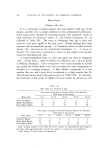
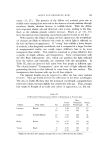
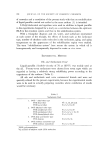
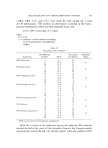
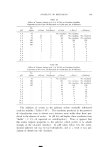
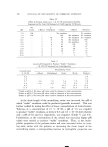
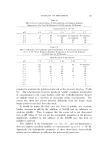
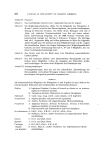
SOLUBILIZATION OF THREE-COMPONENT SYSTEM 207 (1-RT, 7-RT, 1-37, and 7-37) were made for each sample for a total of 14:4: observations. The number of observations occurring in the homo- geneous solubilization system was then expressed in per cent. n/N X 100 •-percentage of S region where N • 144 n = number of observations occurring in the homogeneous solubilization system Table II Percentage of the S Region EO Molecule Percentage Optimum Surfactant Number HLB • of S Region Point POE oleyl ether 5 6.7 54 10 10.0 56 0 20 13.5 19 POE lauryl ether 3 6.4 30 5 8.7 54 0 10 12.1 22 20 15.5 12 POE octylphenyl ether 3 5.8 12 5 8.2 15 0 10 11.5 4 20 14.9 2 POE nonylphenyl ether 3 5.4 17 4 6.7 36 0 5 7.8 26 7 9.4 34 10 11.1 4 20 14.6 0 POE dinonylphenyl ether 5 5.3 10 l0 8.7 59 0 20 12.0 26 POE dioleate 9 5.4 5 18 8.9 57 0 36 12.5 23 POE sorbitan monooleate 3 8.6 13 5 9.8 15 0 10 12.0 13 20 14.5 6 •HLB was calculated by Kawakami's equation (2). With the S region of the surfactant having the optimum EO molecule number located at the center of the triangular diagram, the S region extends symmetrically toward the left (the oil-rich region) when the number of EO
Purchased for the exclusive use of nofirst nolast (unknown)
From: SCC Media Library & Resource Center (library.scconline.org)