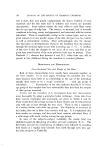
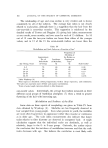
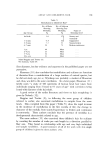
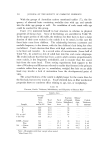
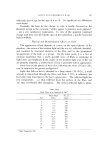
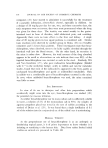
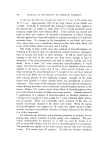
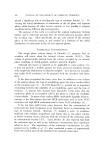
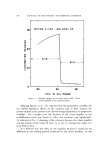
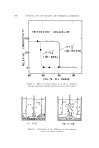
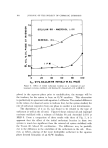
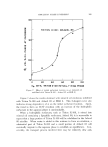
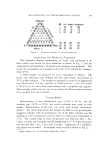
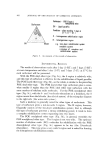
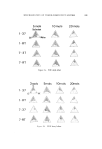
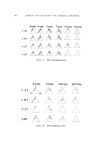
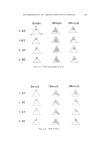
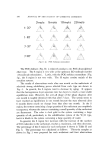
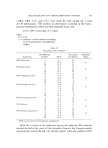
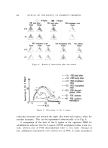
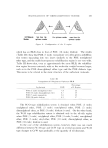
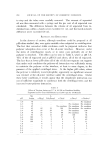
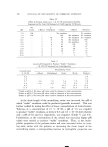
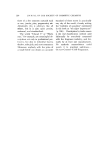
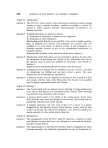
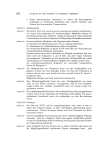
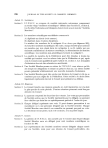
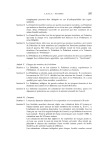
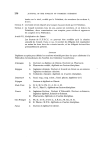
2O8 JOURNAL OF THE SOCIETY OF COSMETIC CHEMISTS 37øC POE oleyl ether 5mols 10mols (•)'"H Region •".S Region POE lauryl ether 5tools POE nonylphenyl ether 3mols 5mols 7mols POE dinonylphenyl ether 10mols POE oct¾1phen¾1 ether 5mols POE dioleate 18mols Figure 4. Results of observations after one month ..... 1.1...POE oleyl ether ..... 1.2'-'POE lauryl ether •--0 2.1...POE octylphen¾1 ether ---' 2.2.'. POE nonylphenyl ether •---02.3--' POE dino.n¾1- phenyl ether "--"3.1... POE dioleate * .... 4.1.-. POE sorbitan monooleate Figure 5. Percentage of the S region molecules decreases and towards the right (the water-rich region) when the number increases. This can be represented schematically as in Fig. 6. A comparison of the sizes of the S region at the optimum HLB for solubilization indicates that the S region of POE nonylphenyl ether is not very wide, whereas that of POE dinonytphenyl ether is very wide. Because of this, additional experiments were carried out on POE (7 mols) monooleate

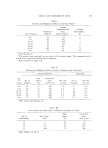
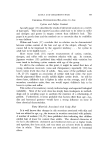
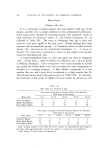
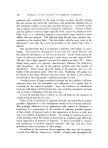
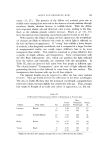
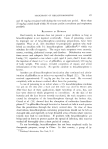
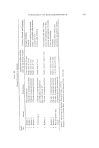
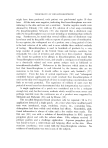
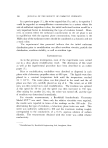
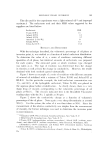
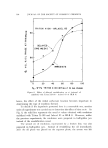
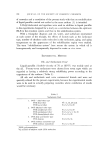
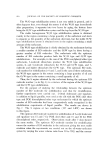
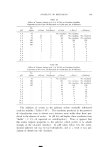
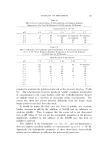
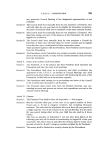
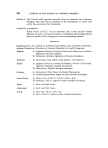
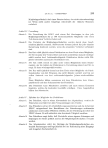
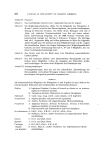
SOLUBiLiZATION OF THREE-COMPONENT SVSTEM 209 EO Molecule less than the the optimum number more than the Number optimum number optimum number Figure 6. Configuration of the S region which has an HLB close to that of POE (18 mols) dioleate. The results (Table III) show that POE (7 tools) monooleate very often gives a solubiliza- tion system separating into two layers similarly to the POE nonylphenyl ethcr type, and the stable homogeneous solubilization region is not very wide. Table III shows that, even at approximately the same HLB, the solubiliza- tion region becomes extremeiv wide as the molecular weight becomes larger, such as in the POE dinonylphenyl either type and the POE dioleate type. This seems to bc related to the steric structure of the surfactant molecule. 'Fable III Comparison of S Regions at ()ptirnum HLB Percenta•c Surfactants HLB of S Region POE (5 tools) nonylphenyl ether 7.8 POE (10 mols) dinonylphcnyl ether 8.7 POE (7 mols) monooleate 9.0 POE (18 mols) dioleate 8.9 26 59 29 57 The W/O type solubilization system is obtained when POE (3 mols) octylphenyl ether, POE (3 mols) nonylphenyl ether, POE (5 tools) dinonylphenyl ether, or POE (9 tools) dioleate is used. On the other hand, the W/O type solubilization system is obtained only in the oil-rich region when POE (5 mols) octylphenyl ether, POE (4 mols, 5 mols) nonylphenyl ether, POE (5 mols) oleyl ether, POE (10 tools) dinonylphenyl ether, or POE ( 18 tools) dioleate is used. In the case of the solubilization system, however, there was not much difference between W/O type and O/W type on several occasions and W/O type changes to O/W type gradually as the quantity of oil decreases.
Purchased for the exclusive use of nofirst nolast (unknown)
From: SCC Media Library & Resource Center (library.scconline.org)