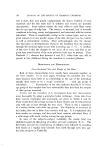
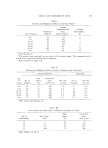
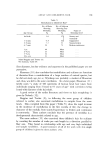
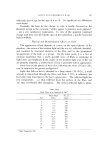
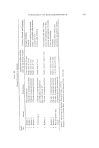
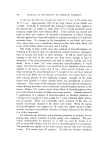
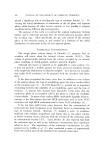
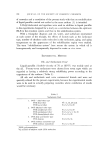
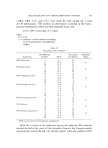
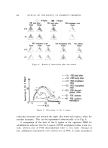
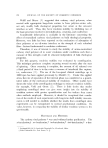
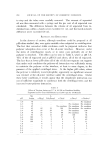
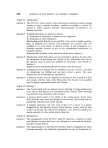
174 JOURNAL OF THE SOCIETY OF COSMETIC CHEMISTS ORAL TOXICITY IN ANIMALS The determination of the acute oral toxicity of a new product on different species of animals is usually the start of the toxicological studies. Before going into details, we would like to show how the oral toxicity of hexa- chlorophene for mice compares with that of other related bisphenols (Table I). Apparently, increase of the number of chlorine atoms on the benzene rings was attended by greater toxicity. However, it will be noted that an isomer of hexachlorophene (compound No. 4) is not much different from compound No. 2 which contains only four chlorine atoms. The most toxic compound (No. 5) with eight chlorine atoms has an oxygen instead of a methylene linkage. It is believed that the increase in chlorine atoms has a greater influence on toxicity than the change in the linkage in view of Dorsman's (3) findings that there was no significant difference in toxicity for guinea pigs between hexachlorophene and its analog with a sulfur bridge. The first determination of the acute oral toxicity of hexachlorophene was done in guinea pigs (4). They received hexachlorophene in form of a suspension in orange juice (1 g in 20 ml of orange juice). At a dosage of 330 mg/kg of body weight all animals died, whereas at a dose of 300 mg/kg 8 of 10 animals died, and a dose of 250 mg/kg allowed the survival of one-third of them. Many tests were run on mice and the doses calculated for the death of 50% (LD,0) of the animals are presented in Table II. It will be noted that most values are in a narrow range between 160 and 210 mg/kg, independent of the formulation only Florestano (5) reported a higher toxicity, and, in our studies, the addition of 1% polyvinylpyrrolidone unexpectedly increased the toxicity. The influence of the addition of the Table I Acute Oral Toxicity of a Series of Bisphenols in Mice Range, (19-20 LD•0 confidence No. Compound mg/kg a limit) 1 2,2 ~Methylenebis(4-chlorophenol) (Dichlorophene) 1000 2 2,2'-Methylenebis (4,6-dichlorophenol) 860 3 2,2'-Methylenebis (3,4,6-trichlorophenol) (Hexachloro- 168 phene) 4 2,2 -Methylenebis (3,4, 5-trichlorophenol) 728 5 2,2'-Oxybis (tetrachlorophenol) 24.5 630-1160 141-200 674-786 19.9-30.1 The method of Litchfield and Wilcoxon (51) was used in calculating the oral LD•o.

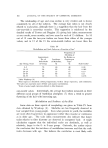
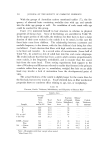
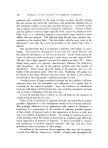
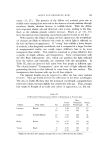
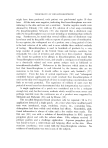
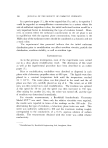
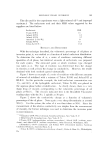
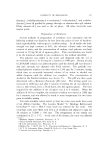
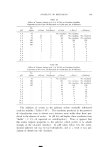
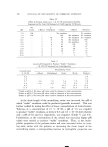
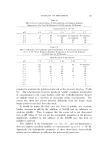
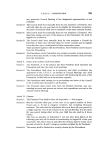
TOXICOLOGY OF HEXACHLOROPHENE 175 nonionic solvent for hexachlorophene, Tween © 80,* on the toxicity for mice was also studied (6). A dose of 250 mg/kg of hexachlorophene gave a 10070 mortality this was not changed when one part of hexachlorophene was mixed with 2, 4, and 9 parts of Tween 80. The acute oral toxicity of hexachlorophene for rats is about the same as that for mice. The LDa0 was 161 mg/kg (range 138 to 188 mg) when hexachlorophene was administered in the form of a 40{j solution in 35% aqueous propylene glycol (7). At a test level of 200 mg/kg, the microscopic examination of liver, kidney, and spleen of the rats showed normal histology. Thorpe (8) observed a LDs,, of 146 mg/kg with a 1.5g, suspension of hexachlorophene in a solution (0.15 % each) of Lissapol-Dispersol.,• Feder- mann (9), using hexachlorophene in the form of a 30% wettable powder, and administering single doses of 100, 250, and 500 mg/kg to 10 rats each, reported that all animals survived the lowest dose, four died at 250 mg, and all died at the highest dose. Dogs appear to be somewhat more su ceptiblc. All of 12 dogs died receiving single doses of 140 mg/kg of hexachlorophenc in gelatine capsules Table II Acute Oral Toxicity of Hexachlorophene in Mice LD•0 No. Formulation mg/kg Range Investigator Year 1 Suspended in 10 % soln. of 80 gum acacia 2 10% soln. of soap containing 187 1% hexachlorophenc (on total weight) 3 10% soln. of soap containing 186 1% hexachlorophene (on total weight) 4 Same as No. 3 plus 1% 105 polyvinylpryrrolidone 5 25 mg hexachlorophene per 215 ml of dist. water plus one drop of 10% sodium hydrox- ide soln. 6 Suspended in 0.5 % soln. of gum tragacanth 7 Deodorant soap with 1% of hexachlorophene 8 Deodorant soap with 0.75 % of hexachlorophene and 0.75 % of 3,4,4'-tric hlorocarb anilide ......... Florestano (5) 1949 166-209 Nickorson (52) 1949 2-226 Lebcrco 1954 Labs. (6) 84-131 Lcbcrco 1954 Labs. (6) 186-250 Leberco 1952 Labs. (6) 168 141-200 13 g kg 10.7-15.9 12 g kg 10.2-14.2 Leberco 1952 Labs. (6) Leberco 1963 Labs. (6) Leberco 1963 Labs. (6) * Atlas Chemical Industries, Wilmington, Del. • L. C. L. Ltd., Dyestuff Division, London, England.
Purchased for the exclusive use of nofirst nolast (unknown)
From: SCC Media Library & Resource Center (library.scconline.org)