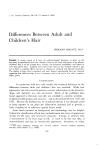
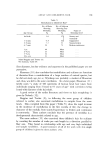
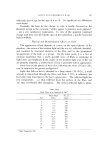
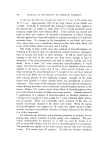
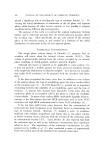
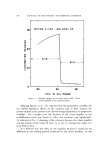
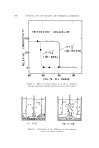
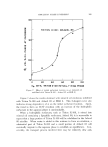
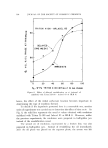
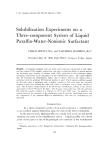
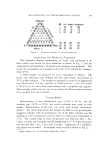
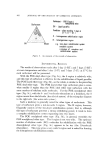
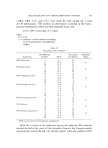
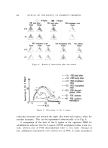
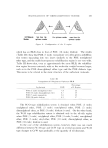
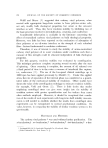
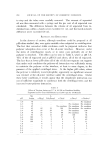
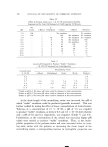
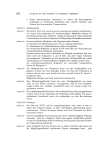
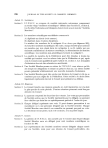
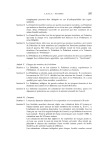
190 JOURNAL OF THE SOCIETY OF COSMETIC CHEMISTS Z bJ bJ 40 2O i i I _ TRITON X-IO0 - ARLACEL 83 • o/w = -- w/o • o I I I 85 90 95 VOL. % OIL PHASE Figure 1. Viscosity change at inversion point, 60% Triton X-100 initially in the aqueous phase Although Benson et al. (12) reported that the preparative variables did not exhibit significant effects on the emulsion type in their systems, the systems studied in the present work showed strong dependency on preparative variables. For example, even the location of the mixer impeller in the emulsification vessel was found to affect the emulsion type significantly. As indicated in Fig. 3, changing of the clearance between the mixer impeller and the bottom of the vessel, H, from ¬ to 2 ¬ in. changed the value of q• from 90.6 to 84c/o. It is believed that this effect of the impellar location is caused by the difference in the mixing pattern produced by the mixer location. It was

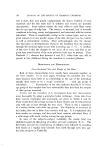
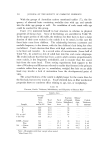
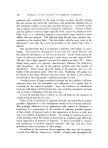
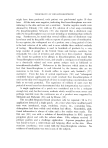
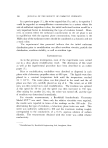
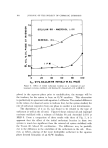
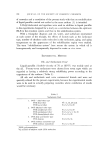
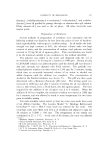
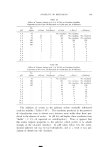
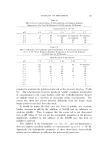
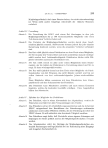
EMULSION PHASE [NVERSiO24 191 IOO 5o Fi,•ure 2. i I i TRITON X-IO0 - ARLACEL8:5 O/W • W/O .... I I I 85 90 95 VOL. % OIL PHASE Conductivity change at inversion point, 60% Triton X-100 initially in the aqueous phase observed that placing of the turbine near the vessel bottom tended to draw the oil phase downward to favor the formation of an O/W emulsion. Placing of the impeller near the upper liquid surface tended to pull the aqueous phase upward and thus encouraged the formation of a W/O emulsion as illustrated in Fig. 4. Since the main purpose of this work was to study the effect of the initial surfactant distribution, the clearance, H, was set at a constant value, ¬ in., and all physical variables were controlled very carefully to assure good reproducibility. In all cases, the surfactant systems used were mixtures of a lipophilic and a hydrophilic surfactant at HLB 8. The total surfactant concentration was kept at 1•'o. Since the lipophilic surfactants used had poor solubility in water, they were all dissolved in thc oil phase prior to emulsification. The hydrophilic surfactants were, on the other hand, divided between the oil phase and aqueous phase in different proportions.
Purchased for the exclusive use of nofirst nolast (unknown)
From: SCC Media Library & Resource Center (library.scconline.org)