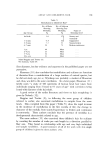
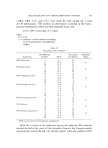
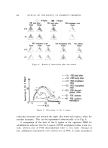
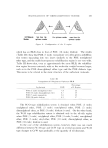
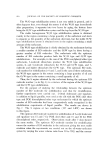
J..%c. Cosmetic Chemists, 20, '215-'2'23 (March 4, 1969) Effect of Neutralizing Amine on Stability of Emulsions Prepared with Carboxy Vinyl Polymers the N. D. WEINER, Ph.D.,* A. K. SHAH, M. S.,* J. L. KANIG, Ph.D.,* and A. FELMEISTER, Ph.D.' ' Synopsis The influence of chain length and concentration of neutralizing amine on the stability of carboxy vinyl polymer stabilized emulsions was studied. Stability was based on the per cent of oil released under centrifugation at 13,000 rpm. Whereas the short chain length butylamines and the longer chain length amines (C s or higher) generally yielded poor emulsions, hexylamine and 2-ethylhexylamine gave stable emulsions over a wide pit range. The stability of these emulsions is discussed in terms of orientation of the polymer at the droplet-continuous phase interface. The degree of adsorption seems to le dependent on the 1)•fiy•m'r conformation and hydrophilic-lilmphilic balance. i NTRODU CTION Stirface active cmulsifiers that orient at the droplet continuous phase interface and that produce a more or less rigid film serve to reduce markedly the rate of coalescence. They prevent the droplets of the internal phase from losing their discreteness, even upon close approach. It should be noted that these surface active agents may not influence the rate of cream- ing to any significant degree. Some hydrophilic polymers which act by modifying the rheological properties of the dispersion medium, i.e., viscosity and yield value, may further increase the stability of such emulsions. These polymers act by decreasing the rate of creaming without, in many instances, influencing directly the rate of coalescence. * College of Pharmaceutical Sciences, Columbia University, New York, N.Y. 10(/23. •' Rutgers The State University, College of Pharmacy, Newark, N.J. 07104. 215

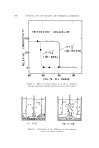
216 JOURNAL OF THE SOCIETY OF COSMETIC CHEMISTS Wolff and Meyer (1) suggested that carboxy vinyl polymers, when reacted with appropriate long-chain amines to form polymer-amine salts, not only modify bulk rheological properties, but orient at the oil-water interface as well. Thus, they favor emulsion stability by inhibiting two of the basic processes involved in demulsification, creaming, and coalescence. Considerable information is available in the literature concerning the effect of neutralized carboxy vinyl polymers on bulk rheological properties. However, very little has been reported on the mechanism of adsorption of these polymers at an oil-water interface or the strength of such adsorbed films--factors fundamental to emulsion coalescence. Therefore, it was of interest to study the stability of amine-neutralized carboxy vinyl polymer oil in water emulsions under conditions such that a measure of film strength could be obtained independent of bulk rheological properties. For this purpose, emulsion stability was evaluated by centrifugation. This technique produces complete creaming several seconds after the start of spinning. Once creaming is complete, the amount of oil released over a fixed period of time is in the main a measure of interfacial film rupture, i.e., coale,•cence (2). The use of the low-speed clinical centrifuge up to 3600 rpm has been applied previously by Merrill (3). Under this applied stress, the rate of separation of the internal phase was considered as a quanti- tative index of the mechanical stability of emulsions. Other studies have shown the value of the centrifugation technique to estimate emulsion atability, for example, Vold and Groot (2). There is little doubt that studies employing centrifugal stress can give some insight into the stability of emulsion systems with greater quantification and less tedium than many other methods employed. However, it should be recognized that correla- tion of the results of such experiments with long-term shelf stability measure- ments is still needed to establish whether the results from centrifugal stress experiments can be extrapolated to normal gravitational conditions. Its value, however, in comparing the stability of similar emulsion systems is lets questionable. MATERIALS AND METHODS The carboxy vinyl polymer •' was used without further purification. The n-butylamine,•' sec-butylamine, • iso-butylamine, • tert-butylamine, • n-hex- Carbopol 941, B. F. Goodrich Chemical Co., Cleveland, Ohio. Fisher Scientific Co., Fair Lawn, N.J.
Purchased for the exclusive use of nofirst nolast (unknown)
From: SCC Media Library & Resource Center (library.scconline.org)