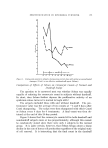
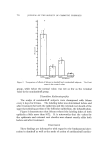
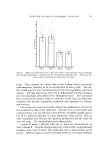
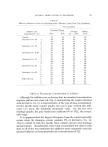
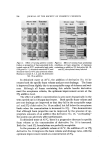
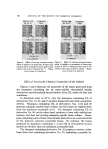
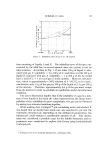
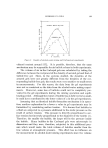
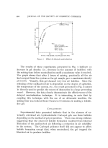
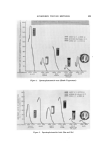
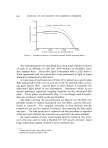
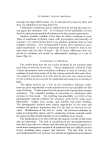
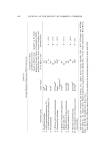
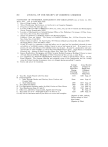
SELENIUM SULFIDE ON EPIDERMAL TURNOVER 773 Epidermis Ext. RootSheath Epidermis Ext. RootSheath Pre-P• Pre-• Pos1-P• Post-i• Figure 3. Effect of shampooing every 4 days for 6 times on the turnover of the epidermal and follicular epithelium, as expressed by the Ha-thymidine labeling index. Shown are the means and one standard deviation from the means tions. They support the thesis that excess scaling reflects increased epidermopoesis resulting in an overproduction of horny cells. The de- fect would appear to be a functional one in the rate-regulating control of mitosis. By light microscopy there are no inflammatory dermal changes nor even histologic alterations in the Malpighian layer. The increased flow of cells to the surface ends in a defective horny layer in which the cornified cells become improperly patterned and separated by fissures and crevices. The corneocyte count necessarily reflects the proliferative activity of the germinative cells of the epidermis. Because it is so convenient and exempts biopsy, one can tolerate some inherent variability mainly due to loss of an unknown quantity of scales during the 4-day period there is also a sampling error because the quantity produced is not the same all over the scalp. The dandruff process is often patchy. Counts of about 1,000,000 cells/cm •' or more are characteristic of heavy dandruff. Regular shampooing every 4 days with a nonmedicated shampoo may tend to lower this somewhat but a steep decline never occurs. With an agent as active as Selsun, however, the count declined

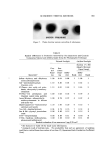
774 JOURNAL OF THE SOCIETY OF COSMETIC CHEMISTS drastically by 8 days, continued to fall steadily during the treatment period, and remained low for at least 16 days after treatment. Selsun has much the same effect on the normal scalp, reducing horny cell production by about 75%. This suggests that the mode of action is uniform and relates to retardation of cell multiplication. Selsun depresses cell turn- over whether it is originally high or normal. The term cytostatic denotes this effect without implying how it is brought about. To ascribe it to the well-known toxicity of selenium is tempting but unsupported by experimental evidence (8). Examinations of biopsies of Selsun-treated scalps do not reveal epidermal damage the effect is doubtless at the sub- cellular, biochemical, rather than the cytologic level. Probably the various agents active against dandruff work in quite different ways. The cytostatic action of Selsun was confirmed by thymidine radio- autography. This base is incorporated into the cell nucleus during the S phase of DNA synthesis, a period lasting about 6 hours, which tends to be rather constant even when cell turnover is tremendously increased as in psoriasis (9). In a rapidly proliferating epidermis, the mean length of time from mitosis to mitosis (cell cycle) will be reduced largely at the expense of G•, the post-mitotic phase. Inevitably, the proportion of cells synthesizing DNA at any given time will be elevated and the labeling index will, of course, rise. Unpublished studies have stated that this value may be two to three times normal in intensive dandruff (10). An index of 10% for the normal scalp (Fig. 3) is about twice as great as on glabrous areas such as the back. This was also found to be true for the face (11). The head appears to be a region of high turnover. On the normal scalp, Selsun reduced the labeling index by about 50%. This of course does not mean that the cell cycle has been halved. The decrease in corneocyte counts is probably more directly proportional to the decreased turnover. Attention is called to the findings in the in- fundibulum of the follicle. The cell turnover is the same as in the epidermis. This of course means that horny cells are continuously streaming into the lumen of the upper follicle these issue at the mouth. Indeed, if one closely scrutinizes the dandruff scalp as scaling returns after thorough shampooing, it is often possible to observe wreaths of scales encircling the hairs. The infundibulum probably contributes im- portantly to the total quantity of scales. Selsun depresses cell multipli- cation of this epithelium equally as well as the epidermis. An active agent should be capable of diminishing the turnover of both the epidermis and the infundibulum. (Received January 13, 1969)
Purchased for the exclusive use of nofirst nolast (unknown)
From: SCC Media Library & Resource Center (library.scconline.org)