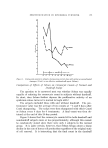
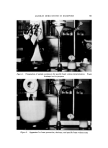
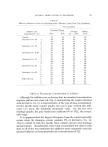
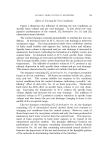
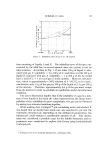
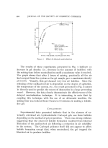
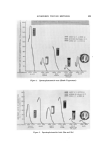
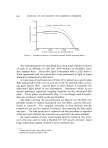
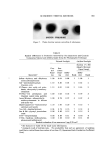
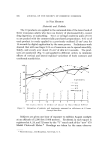
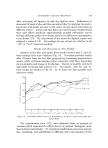
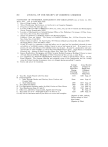
LANOLIN DERIVATIVES IN SHAMPOOS 789 Effect of Varying the Test Conditions Figure 4 illustrates the influence of altering the test conditions on spedfie foam volume and per cent drainage. It also shows the com- parative performances of the control, 2% derivative No. 16, and 2% ethoxylated stearyl alcohol. The control shampoo responds dramatically to altering the test con- ditions. In deionized water at 23 øC, the per cent drainage is below the acceptance range. The foam generated under these conditions consists of fairly small bubbles and appears dry, lacking luster and richness. Spedfie foam volume is depressed and per cent drainage is increased in moderately hard water, indicating the formation of a slightly wetter, less copious foam. In deionized water at 45 øC, both spedfie foam volume and per cent drainage are increased and fall within the acceptance limits. This is a larger bubble, richer, wetter foam than the one produced at room temperature. The addition of synthetic sebum at 45 øC produces a sig- nificant depression in both spedfie foam volume and per cent drainage. This foam is characterized by smaller wet bubbles that lack richness. The shampoo containing 2•/• of derivative No. i6 produces acceptable foams at all test conditions. All foams are medium bubble size, glossy, rich, and wet. This system exhibits less response to the variations in test conditions than the control shampoo, indicating a possible "sta- bilizing" effect of derivative No. 16 on foam properties. Moderately hard water has little effect on spedfie foam volume or per cent drain- age. Increasing the temperature to 45 øC reduces the spedfie foam volume slightly and increases the per cent drainage. The addition of synthetic sebum at 45 øC produces a further reduction in spedfie foam volume and also lowers the per cent drainage, bringing it closer to the middle of the acceptable range. Like the shampoo containing 2% of derivative No. 16, the shampoo containing 2% of ethoxylated stearyl alcohol shows less response to changing test conditions than the control system. However, none of these foams meet the acceptance criteria and only the foam produced in moderately hard water is better than the control foam. This improve- ment of foam properties in hard water appears to be typical of the ethoxylated materials studied. The dramatic difference between the performance of the shampoo containing ethoxylated lanolin alcohols (derivative No. 16) and that containing ethoxylated stearyl alcohol il- lustrates the importance of the size and structure of the lipophilie portion of the molecule in determining orientation at the interface.

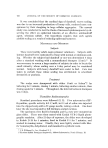
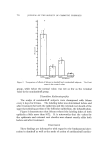
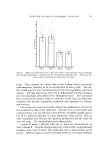
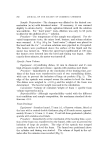
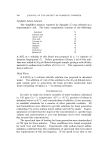
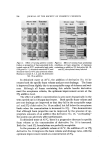
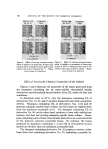
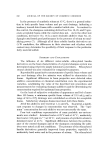
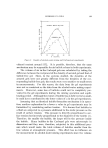
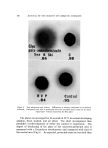
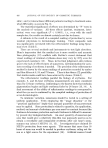
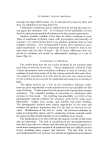
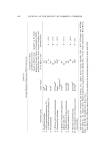
79O JOURNAL OF THE SOCIETY OF COSMETIC CHEMISTS ORRINRSE SPECIFIC FORM %ORRINAGE MIN. WOL ML./G. 5 MIN. •//• 12:s Ot. ]6'• i ........... • [ • •:•:•io• 1 5• 0 50 DEIONI•ED WATER :2 % .A DOiT I V E Figure 5. Effect of varying chemical compo- Figure 6. Effect of varying chemical compo- sition of additive on properties of foams gen- sition of additive on properties of foams gen- erated at 23øC in deionized water and in rood- erated at 45øC in deionized water and in de- erately hard water (150 ppm Ca++). Sham- ionized water plus synthetic sebum. Sham- poos contain 2% additives poos contain 2% additives Effect of Varying the Chemical Composition of the Additive Figures 5 and 6 illustrate the properties of the foams generated from the shampoos containing the six water-soluble ethoxylated lanolin derivatives and ethoxylated stearyl alcohol, all at 2%, under the four test conditions. In deionized water at 23 øC, only the shampoos containing 2% of derivatives Nos. 16, 25, and 75 produce foams that meet both acceptance criteria. Shampoos containing 2% of derivatives Nos. C-24 and 97 generate adequate specific foam volume, but the foams are slightly drier than the minimum acceptable level. The shampoo containing 2% of derivative No. 98, on the other hand, produces a foam with satisfactory wetness, but does not develop adequate specific foam volume. Sham- poos containing each of these three lanolin derivatives at a concentration of 1%, however, generate acceptable foams. By contrast, the foams produced by shampoos containing 1, 2 and 5% of ethoxylated stearyl alcohol are all drier than the minimum acceptable limit. The shampoo containing derivative No. 16 produces a wetter, richer foam than that containing derivative No. 25, indicating a possible in-
Purchased for the exclusive use of nofirst nolast (unknown)
From: SCC Media Library & Resource Center (library.scconline.org)