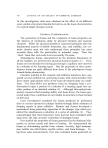
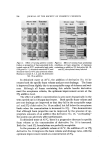
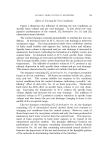
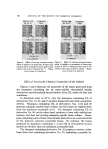
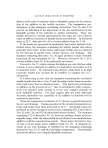
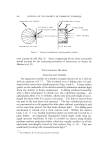
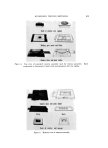
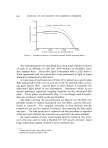
810 JOURNAL OF THE SOCIETY OF COSMETIC CHEMISTS then cut to conform to a side of a cuvette and are appended by tape. The control cuvette is similarly dressed but without sunscreen on the paper. A possible drawback of this technique is that oily substances make paper somewhat translucent and therefore may give low absorption readings. Another variable might be the adherence or interaction of sunscreens and paper. Interactions could be monitored by change in form of the absorption curves compared to those of Method #l. Such changes did not occur. Method #$ This method is similar to #2, but employs waxed paper which is tan, to approximate more closely the lipid and pigment-containing surface of the epidermis. The same criticisms apply as in Method #2. Method #4 The procedure uses 10 mg% solutions of suspensions of whole product and evaluates absorption against the solvent control. Titanium- and zinc-containing products are incompletely dissolved and are shaken to cloudiness immediately before measuring. A major criticism is that solubilization may change the product and its light absorption char- acteristics however, absorption curve form did not change, and so it is unlikely that the absorber was changed. Method #6 This method attempts to simulate bathing after application of a sunscreen. A 50-ml beaker containing tap water at 28øC and a magnetic bead is placed on a magnetic stirrer and the water is gently agitated. Strips saved from Method #2 are placed into the bath for 5 minutes, dried 1,5 minutes, and applied to the side of a cuvette. Controls are white strips similarly wetted and dried but containing no sunscreen. Signifi- cant differences in light absorption have been noted after bathing the white paper. The major criticism is that the incorporation of sunscreen into white paper and its release by swirling water may be different from its binding to and release from the stratum corneum. Moreover, this test is dependent on the accuracy of Method #2. Results and Discussion Spectrophotometric Methods Absorption of mid and far ultraviolet light (2900-4000 •-) was deter- mined for each substance by the five testing methods. Products were

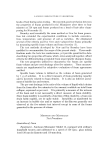
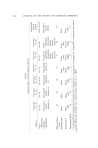
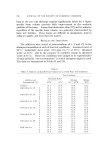
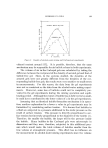
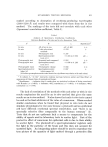
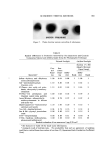
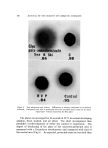
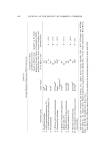
SUNSCREEN TESTING METHODS 811 ranked according to absorption of erythema-producing wavelengths (2900-3200 •) and results were compared with those from the in vivo method. The rankings of the tests did not correlate with each other (Spearman's correlation coefficient, Table I). Table I Analysis of Spearman's Correlation Coefficients Between Rankings of in vivo and in vitro Sunscreen Tests A s B m• Significance •' In vivo All other in vivo all 0. 800 -1--{- In vivo 7 skin physicians' 0. 576 -{- estimate In vivo Photographic test 0. 297 -- In vivo Spectrophotometric -- 0. 355 to 0. 065 all -- tests #1-5 Photographic test Repeated and compared 0. 952 -q- Photographic test Spectrophotometric -- 0. 406 to 0. 248 all -- tests #1-5 Photographic (sun) Photographic (lamp) 0. 845 -1- -q- Spectrophotometric Spectrophotometric 0. 667 (glass) •1 (white paper) #2 (All other spectrophotometric tests showed no significant correlation with each other) • In column A, "in vivo" represents ranking (average between amber and blue filter) of sunscreens at 8 hours (time of maximal erythema). b Significance: --indicates that A ranks show no statistical evidence o[ being associated with B ranks (ms 0.564) d- indicates 95% correlation (ms 0.564) -1--• indicates 99% correlation (ms 0.746). The lack of correlation of the methods with each other or with in vivo results emphasizes the need for an in vitro method that gives the same results as an in vivo method. It also shows that such in vitro tests cannot be used as the final arbitrator of the value of a sunscreen. Blum reached similar conclusions when he found that physical in vitro tests do not simulate physiological in vivo ones because a photocell and an epidermal cell have different erythemal spectral sensitivities, and "there is no spectrally selective filter comparable to the human corneum" (2). Tests that do not use epidermis lack a means to compensate for the ability of agents used in laboratory tests to scatter light. Part of the protective effect of sunscreens for epidermal cells is due to their ability to scatter light. The photocell of a spectrophotometer registers only the light in the pathway of the beam and this does not account for scattered light. An integrating sphere should be used to reproduce the true picture of the quantity of light emitted through a protective film
Purchased for the exclusive use of nofirst nolast (unknown)
From: SCC Media Library & Resource Center (library.scconline.org)