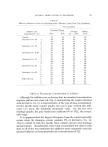
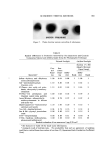
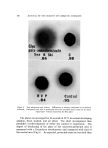
SELENIUM SULFIDE ON EPIDERMAL TURNOVER 769 The parameter sought is the labeling index, defined as the percentage of labeled germinative eelIs. In this study, 800-1200 basal eelIs were scanned, counting all those whose nuclei contained at least 6 grains. It is important to note that all labeled eelIs were counted whether they were in the basal layer or not in dandruff, a distinctly greater number of suprabasalar eelIs become labeled. This is, in fact, a feature of condi- tions in which epidermopoesis is increased, such as psoriasis (4). No effort was made to correct for the loss of grains in the emulsion. The multiplication factor of 1.4 recommended by Iverson and Evenson is at Best dubious (5). All the labeled cells were arbitrarily related to the dermo-epidermal distance bounded by 100 basal eelIs in order to express the labeling index in a convenient, though inexaet, way. Counting was limited to the interfollieular epidermis, avoiding the external root sheath of the upper hair follicle. The labeling index of the external root sheath of the hair follicles was determined in the same fashion. This requires careful sectioning so that the cut is along the long axis of the follicle. Corneocyte Counting The eorneoeyte count is the number of desquamating horny eelIs per square centimeter. The procedure is described in detail elsewhere (6). It fulfills a long recognized need in replacing subjective clinical assess- ment of sealing by an objective measurement. Two control values were obtained, each at 4 days after a standard scalp washing with a non- medicated shampoo. The scalp was then shampooed at 4-day intervals with Selsun and eorneoeyte counts were made at even intervals, usually 8 days, but always 4 days after shampooing. The scalp was not washed or anointed between shampoos. The plot of eorneoeyte counts against time describes a curve whose steepness is a measurement of effectiveness. The 4-day period was selected because this is long enough to permit a reasonable quantity of scales to accumulate, but not so long as to allow excessive loss through combing and other activities. The technique of eorneoeyte counting was adapted from Williamson and Kligman's method for quantitatively sampling the bacterial micro- flora (7). Briefly, the scales are collected by two 1-minute scrubs with a nonionic detergent solution contained in a glass cup having an area of 3.8 emL The cup is placed in a site where sealing is judged to be maximal. The wash fluids are pooled, stained with crystal violet and earbol fuehsin, and mechanically agitated by vortexing to disperse the scales into indi- vidual horny eelis. These are then counted in a Fuehs-Rosenthal

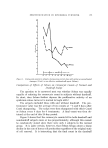
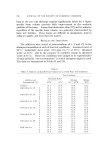
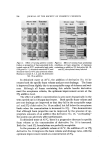
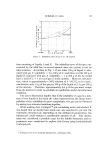
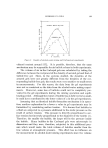
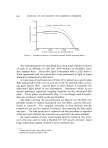
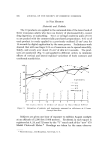
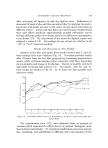
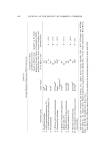
770 JOURNAL OF THE SOCIETY OF COSMETIC CHEMISTS hemocytometer* following accepted procedures for white blood cell counting. Small clumps of cells are disregarded these are never numer- ous and are often absent altogether. Appropriate calculations are then made to establish the quantity of sloughed horny cells collected per square centimeter. The percentage of parakeratotic, nucleated cells can be determined at the same time, though this measurement was neglected in the present study. An experienced person can make a count in 10-15 minutes from the time of scrubbing. RESULTS AND COMMENTS Sequential Corneocyte Counts After Conti and Selsun in Dandruff Subjects Figure 1 presents the mean corneocyte counts of 8 nondandruff sub- jects shampooed every 4 days for 9 times with Conti, and 9 dandruff subjects similarly shampooed with Selsun. In this instance, the first count at -8 days was from the unprepared scalp, i.e., not previously shampooed. Immediately after sampling, the scalps in both groups were shampooed with Conti, sampled again 4 days later (- 4 days), followed immediately by another Conti shampooing. On day 0, one group continued on a 4-day shampooing schedule. The chief information to be gleaned from the Conti group is the variability inherent in the procedure. It should be noted that the first count (- 8 days) is not really meaningful since the scalps were not sham- pooed and the scales had collected for an unknown period. Four days later (--4 days), the count fell from about 1,250,000 cells/cm 2 to about 800,000 cells/cm 2. This is actually the first true value and in the rou- tine treatment sequence is the time of the first count. The drop from the initial count in both groups simply reflects the debriding effect of sham- pooing and is typical of heavy dandruff subjects. Thereafter, the Conti counts varied from a low of 650,000 cells/cm 2 at the end of 32 days to 950,000 cells/cm 2 at 40 days. Fluctuations of this magnitude are un- avoidable and have to be tolerated as experimental error. These oscilla- tions, however, stand in striking contrast to the Selsun group in which the counts fell sharply and steadily throughout the treatment period from a high at 0 days of 1,650,000 cells/cm • to a low of 300,000 cells/cm s at the end of 32 days, a decrease of about 80%. Apparently the effect persists for the count at 48 days after four nonmedicated shampoos was still !ower than at the end of the treatment period. * Manufactured by C. A. Hausser and Son, Philadelphia, Pa.
Purchased for the exclusive use of nofirst nolast (unknown)
From: SCC Media Library & Resource Center (library.scconline.org)