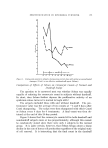
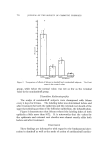
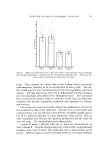
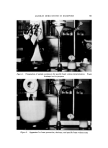
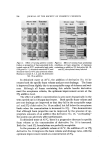
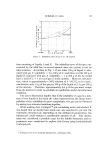
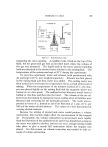
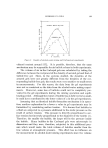
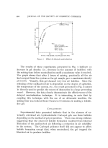
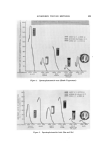
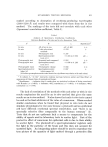
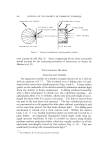
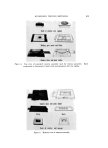
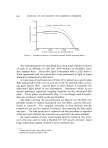
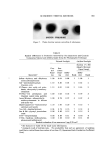
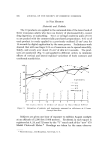
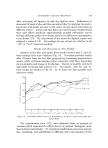
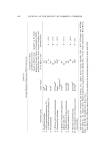
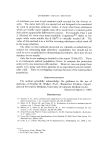
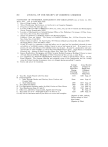
808 JOURNAL OF THE SOCIETY OF COSMETIC CHEMISTS Evaluating sunscreens is difficult because of the complex physical, chemical, and biological interactions possible when a chemical comes into contact with human skin and energy of inconstant intensities and wave- lengths (sunlight) is applied. Skin varies in structure, composition, and surface characteristics, depending on past and present activity, genetic background, age, etc. In addition, physical properties of sunscreens, including viscosity, solubility, stability, light scattering potential, etc., introduce another group of variables. Attaining uniform measurement in a system lacking consonance appears overwhelming and it may be that the real problem is finding the "right" sunprotectant for a person's skin for a given intensity of sunlight, and then learning how to measure the protection achieved. Measurement would be much easier if the skin contained a photocell, the protective agent were a clear solution in a cuvette (1), and the sun were the light of a spectrophotometer. Unfortunately, this is not the case. SPECTROPHOTOMETRIC METHODS Materials and Methods The instrument used for the first five testing methods is a Cary Recording Spectrophotometer, Model 14, whose prism system easily resolves and emits with equal intensity the wavelengths tested (Figs. 1 and 2). Method #1 This method measures the ultraviolet absorbing capacity of a thin film of sunscreen on quartz glass. Substances tested are rubbed into one side of a quartz cuvette as thinly as possible a clean cuvette serves as a control. A major limitation is the difficulty in producing a layer of equal thickness by digital application of the various products. The thinner the layer of sunscreen, the less it absorbs (Fig. 2, Sea & Ski "Glass"). Method #• In this method absorption capacity of the products is measured when they are applied to white onionskin copying paper. Following applica- tion, the products are briskly wiped off the paper 12 times with a sharp- edged ruler. After about four wipes there is no evidence that further substance is being removed but the extra strokes assure that the prod- ucts are spread equally thinly. The sunscreen-containing papers are

SUNSCREEN TESTING METHODS 809 too 80 6o 3000 \ WHITE WAX • •E.DIU• (Erylhemic} U.V. •,,• m LON• U.V. il 3200 A• 3000 ,•000 3000 ,•000 SOLUT!O'H 1•0•g%1 F$gure 1. Spectrophotometric tests (Shade Coppertone) ::• t :.a .s .s Figure 2. Spectrophotometric tests (Sea and Ski)
Purchased for the exclusive use of nofirst nolast (unknown)
From: SCC Media Library & Resource Center (library.scconline.org)