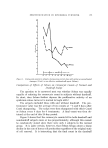
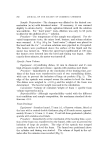
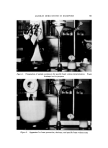
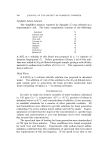
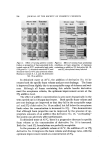
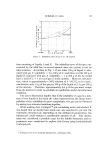
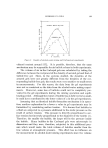
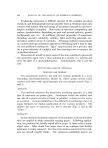
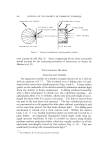
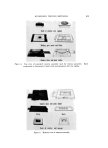
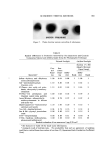
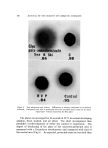
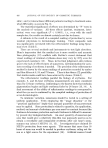
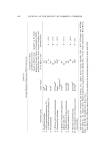
818 JOURNAL OF THE SOCIETY OF COSMETIC CHEMISTS in l/ivo Materials and Methods The 10 products are applied to the untanned skin of the lower back of three Caucasian adults who have no history of photosensitivity, recent drug ingestion, or sunbathing. Ten 1-cc syringes scaled in units of 0.01 cc are packed with the commercially purchased preparations 0.05 cc of each product is evenly applied to a previously outlined 25-cm" area for 15 seconds by digital application by the same person. Preliminary work showed that with one finger 0.05 cc of sunscreen can be spread smoothly, thinly, and evenly over about 25 cm 2 of skin in 15 seconds. The prod- ucts are numbered (Fig. 9) and applied in different orders to minimize effects of vertical and lateral regional variations of body contours and erythemal sensitivities. Figure 9. 100 [ •.-• ..... ß 'x '- / ....... ..'"' ".- 6 0 J'""'"'J'"'•- 'e".-" "•'"'"•'"'J ?" "'"' '"" P A T I E N T S ....' ...... #1 40 •#2 ......... R N• S V A C • R •MEAN O A U t V R 1 20 -P S f A v o P s S y 1 e q P r 1 i i i i i i i I I 9 4 5 10 2 8 7 3 1 6 Ten Sunscreens in Order of Least to Mast Mean Affect Interaction of patients and treatments measured as reflectance at 8 hours through blue filter Subjects are given one hour of exposure to midday August sunlight at an altitude of 5,280 feet (1600 meters). Erythema in each square is registered at 8, 24, and 72 hours by the "Y" search unit of the "new" 670 Model Photovolt Meter.* Readings are taken by the same observer * Photovolt Corp., 1115 Broadway, New York, N.Y.

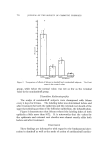
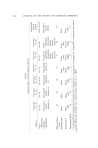
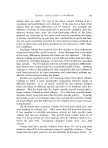
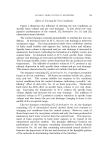
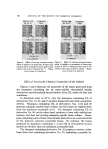
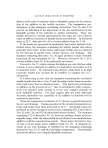
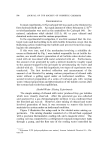
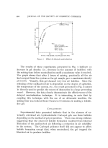
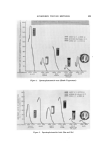
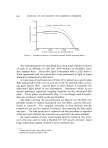
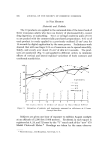
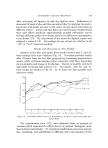
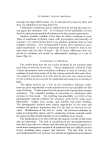
SUNSCREEN TESTING METHODS 819 after surveying all squares to find the lightest area. Reflectance is measured through a blue and then an amber filter by applying the meter- ing device with gentle pressure to the center of each square four times in different orders. Amber and blue filters are used because Daniels found that such filters produced approximately parallel reflectance curves through different grades of erythema and that red filters are unresponsive to erythema (10). By adjustment of the meter the lightest square was assigned a value of 100. All readings for one subject are relative to his "100" or "best" sunscreen readings. Results and Discussion in Vivo Method Analysis of the blue and amber filter results showed that $- and 24- hour readings have least variation (Fig. 10). Variation probably results after 24 hours from the fact that progressively increasing pigmentation occurs, while erythema remains rather consistent until then, depending on wavelengths and dosage of irradiation. Barely perceptible and short ultraviolet erythema fade earliest (11). For clarity, only 24- and 72- hour results are shown in Fig. 10. At 72 hours the lines parallel each other less closely. I00 80 v v 60 •0 2O Figure 10. B-24 A-24 ------ A-72 B -72 / / i I L I F I I I • 9 4 5 3 I0 2 1 8 7 6 Ten Sunscreens in Order of Least ta Most Mean Affect Individual patient curves of reflectance at 24 and 72 hours using blue and amber filters The experimental error (5%) was estimated from an analysis of variance which separated the effects due to (a) patient (biological varia- tion between individuals) (b) treatment (individual sunscreens spread- ing, combining, and solubilizing at different rates and amounts of the
Purchased for the exclusive use of nofirst nolast (unknown)
From: SCC Media Library & Resource Center (library.scconline.org)