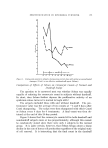
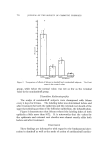
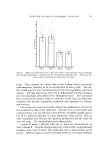
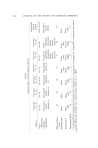
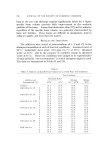
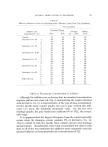
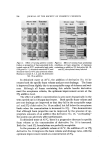
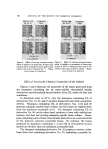
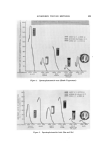
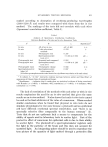
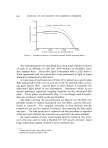
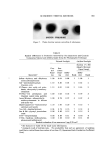
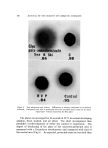
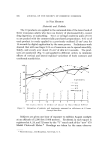
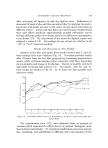
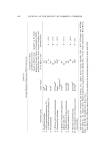
820 JOURNAL OF THE SOCIETY OF COSMETIC CHEMISTS skin) and (c) interactions (different patients reacting to treatment some- what differently, as seen in Fig. 9). The statistical significance of effects was determined by "F" tests in the analysis of variance. All three effects (patient, treatment, inter- action) were very significant (P 0.0005) i.e., even with the small sample size, the results are almost certainly not due to chance. A sidenote is the result of a compiled ranking of protection by seven resident physicians in dermatologic training. Their composite rank was significantly correlated with the reflectometer findings using Spear- man's test (Table I). There are several methods and instruments to test light absorbers. Blum's impression that the unaided eye is more sensitive and accurate than photography (12) conflicts with Rottier's recent statement that visual readings of minimal erythema doses may vary by 25% even for experienced examiners (13). Since, in the final judgement, skin redness proves the lack of effectiveness of sunscreens, instrumentation for accu- rate recording of erythema is needed. The precision of the reflectometer method is shown by the mean rankings of protection recorded by amber and blue filters at 8, 24, and 72 hours. There is less than a 1% possibility that similar ranks could have been achieved by chance (Table I). The reflectometer readings parallel the biology of erythema. For example, 8- and 24-hour erythema measurements are more consistent than the 72-hour erythema, conforming to the known facts that melanin pigmentation begins and light erythema fades by 24 hours (13, 14). A final assessment of the ability of reflectometer readings to correspond to what the eye sees is confirmed by the compiled rankings of protection of seven dermatologists. To minimize variation, sunscreens should be tested in a setting of uniform application. Tests employing the "usage situation" or the "practical application" imply that unequal quantities of sun protectant may be applied. Since protection is related to quantity, the application, method, and amount of substance per area must be constant because film thickness determines protection and such thickness is difficult to measure by present day biological methods. An exact quantity of sunscreen per area that would give a relatively thin film was purposely used so as to obtain a recordable and comparable erythema after one hour's noon, summer sun (about 3 MED's) (11, 15). Investigators have claimed 50 MED's protection from some agents. This means that more than 16 hours of noon sun would be needed to produce erythema, ruling out the sun as a light source for the experiment (16). Artificial sources break

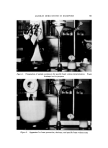
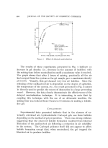
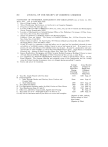
SUNSCREEN TESTING METHODS 821 through this high MED barrier (17) as advocated by Giese in 1946, and they are suitable for screening tests (18). Uniformity of thickness can be attained best by having the same per- son apply the substance (19). It is because of this possibility of error that the same person applied all substances in the present experiments. Another possible variable is the time at which erythema is read. Time of maximum erythema varies with wavelengths and intensity of exposure (14), which means there is no absolute optimum time to read sunlight erythema. The recommended 8 hours after exposure is not a rigid requirement it is more important that all results be read at the same hour and not after 24 hours. By 72 hours, differences were ob- served in erythema not noted by reflectometer readings at 8 and 24 hours (Fig. 10). COMPARISON OF METHODS The results show that the six in vitro methods do not correlate with each other or with the in vivo test. This is statistically verified in Table I where Spearman's rank correlation coefficient is used to correlate the rankings of protection achieved by the various methods with each other. The negative correlation of in vitro with in vivo tests was expected since in vitro systems do not account for epidermal and sunscreen scattering of light. The highly positive (-•s 0.8) in vivo correlation indicates reflec- tometry gives reproducible results and attests to its acceptability for this type of testing. It also shows that the mean trend of protection remains consistent. The compiled grading of protection by physicians adds credence to this trend. The startling reproducibility (-•s 0.952) of the photographic method confirms the accuracy achieved by using exact dimensions:_ weight, area, energy, and machine end point readings. The photographic method most closely approaches in vivo tests and confirms the authors' impression that it is the best in vitro test yet de- vised. Modification of this test to "catch" all scattered radiation by using an integrating sphere and by emplacing stratum corneum under the sunscreen film should simulate in vivo conditions more closely. The implications to be derived from the negative results in this work also are important. The lack of correlation of the spectrophotometric tests with each other is evidence that skin with all its topical vagaries is a much more homogenous receptacle of products than are artificial carriers tested, including glass, papers, and solvents. The fact that, in the spectrophotometric test systems, the method of application and amount
Purchased for the exclusive use of nofirst nolast (unknown)
From: SCC Media Library & Resource Center (library.scconline.org)