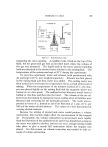
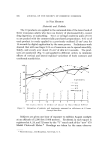
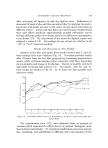
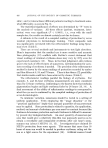
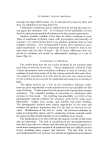
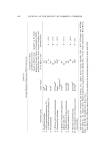
PHOTOCHEMISTRY IN COSMETICS 763 MEC}•A•XSMS OF P}•OTOSTAmI•Z•T•O• In the framework of these considerations, it can be seen that photo- stabilization is the process whereby one prevents photochemical teac- tions of molecules in their excited state. plished by interference with either: A. B. C. D. This objective can be accom- Absorption of light, Quenching of singlet S1, Quenching of triplet T•, or Prevention of chemical reactivity by changing the photochemical properties of the substrate. (This procedure is of limited interest as it alters the basic nature of the product.) In all cases, an additive is introduced which can take up the un- wanted energy and which can dissipate this energy as heat, as fluores- cence, or in a reversible chemical reaction. The above properties must be considered in conjunction with the obvious criteria involved in cos- metic formulation (toxicity, compatibility, cost, etc.). Most of the commercially available photostabilizers are of type A, i.e., ultraviolet light absorbers. The absorption of light by the additive is a function of its extinction coefficient at a given wavelength and that of the substrate to be protected. Thus, in the case of noninteracting solutions, eq 1, derived from Beer's law, can be used to calculate the percentage of light absorbed by the additive: % of light absorbed by the stabilizer = 100C• CASA + Cs•s CA and Cs are the molar concentrations of the additive and substrate, respectively. The •'s are the corresponding extinction coefficients at the wavelength in question. In concentrated solutions and in semisolid media the deviations from the above equation are parallel to the devia- tions from Beer's law. Nevertheless, the relationship is useful for esti- mates of the amount of additive to be used in a given preparation. The undesirable photochemical energy is dissipated in a reversible photochemical reaction. Thus, absorption of light may lead to a re- arranged structure which returns to the original form in a "dark," i.e., nonphotochemical, process. The following are examples of structural types and processes involved.

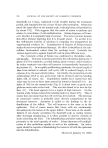
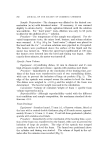
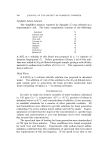
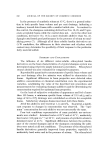
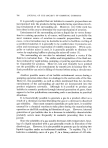
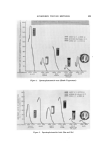
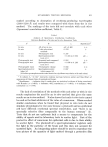
764 JOURNAL OF THE SOCIETY OF COSMETIC CHEMISTS HO R OR I II • • OH Ill IV X•CYANO Y=ESTER HO The products in this area belong to one of the following groups: 2-Hydroxybenzophenones (I) are substances whose photochemistry has been studied in detail and the intermediacy of "photoenols" (II) is established (6). Typical materials available commercially are 4-do- decyloxy-2-hydroxybenzophenone, 4-decyloxy-2-hydroxybenzophenone, 4-octyloxy-2-hydroxybenzophenone, and 4-methoxy-2-hydroxybenzo- phenone. Benzotriazoles (III) are exemplified by 2-(2'-hydroxy-5'-methyl- phenyl)benzotriazole. The photochemical processes, although less well understood, are probably analogous to the photoenolization of hydroxy- benzophenones. Substituted acrylonitriles (IV) constitute a class of substances which absorb ultraviolet light in the primary step and dissipate the energy in a photochemical reaction, in this case most likely cis-trans isomerization about the olefinic bond. Aryl esters (V) are yet another structural type in this series. Here also, the mode of dissipation of energy is incompletely understood. Speculations have been advanced (7) that these materials undergo ir- reversible rearrangements, such as Photo-Fries rearrangement (8), to yield structures capable of photoenolization. The availability and sources of these and related products are discussed in industrial literature (7). Although photoenolization and related processes constitute an effec- tive method of dissipating photochemical energy, photosensitization by absorbers cannot be excluded. The chronology of events and the effi-
Purchased for the exclusive use of nofirst nolast (unknown)
From: SCC Media Library & Resource Center (library.scconline.org)