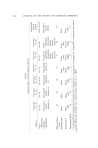
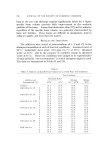
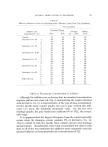
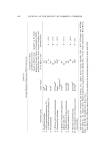
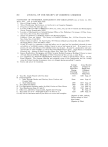
LANOLIN DERIVATIVES IN SHAMPOOS 783 Calculation--(Volume in cylinder/volume of funnel) X specific foam volume X 100 = per cent drainage. Reproducibility--Reproducibility of this test also varied with the test conditions and sample composition. The maximum standard deviation was 2.0. Materials The following simple shampoo formulation was used: Sodium lauryl sulfate, 30% active 30% Amide 6 Additive 1-5 Water, deionized q.s. ad 100 This was diluted to a concentration of 11% w/w (1% active sodium lauryl sulfate) for foam generation. Sodium Lauryl Sulfate A commercial product containing 28-30% sodium lauryl sulfate, 1.5-3ø-/o free fatty alcohol, and approximately 0.2% sodium sulfate was selected. When formulated in the shampoo, the active sodium lauryl sulfate concentration was approximately 9%. A mide A 1:1 lauric acid diethanolamide, a commercial superamide, was incorporated at a concentration of 6% as a foam stabilizer. Additives Six water-soluble ethoxylated lanolin derivatives were evaluated. These additives are identified in the text by derivative numbers which are defined in Table I. The derivatives vary in physical form, chemical constitution, molecular weight, and ethylene oxide content. They have important functional properties which have been detailed elsewhere (6). For comparison, ethoxylated stearyl alcohol (10 moles EO) was in- cluded. This product contains approximately the same per cent ethyl- ene oxide as water-soluble lanolin derivative No. 16. Salient data describing these additives are summarized in Table I.

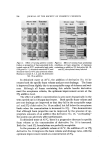
784 JOURNAL OF THE SOCIETY OF COSMETIC CHEMISTS Synthetic Sebum Solution The simplified mixture reported by Spangler (7) was selected as a representative soil. The fatty composition consists of the following: Ingredient Palmitic acid 10 Stearic acid Oleic acid Coconut oil 15 Olive oil 20 Squalene 5 Paraffin 10 Cholesterol Spermaceti 15 A 20% w/v solution of this blend was prepared in a 1:1 mixture of benzene/isopropanol (7). Before generation of foam, 2 ml of this solu- tion were added to 50 g of diluted detergent sample, giving a ratio of fatty material to sodium lauryl sulfate of 0.8 to 1.0. This represents a fairly heavy soil level. Hard Water A 0.825% w/v calcium chloride solution was prepared in deionized water. The addition of 1 ml of this solution to the 49 g of diluted deter- gent sample prior to generating the foam provides moderately hard water containing 150 ppm Ca + + as calcium carbonate. EXPERIMENTAL In order to study the desired variables of water-hardness (deionized rs. 150 ppm Ca++), temperature (23 ø rs. 45øC), presence of sebum in deionized water at 45 øC, and concentration of additive, it was necessary to establish standards for a number of other potential variables. All test formulations were diluted to provide solutions for foam generation containing 1% active sodium lauryl sulfate and 0.67% amide. Experi- mentation revealed that the slopes of the concentration rs. specific foam volume and concentration rs. per cent drainage curves were essentially flat around this concentration. The speed and time of beating for foam generation were standardized at 720 rpm for three minutes. These conditions were found acceptable by both New and Bromley. Experiments with sodium lauryl sulfate solutions confirmed that this combination of speed and time best suited the requirements of this investigation. If the speed is too slow or the
Purchased for the exclusive use of nofirst nolast (unknown)
From: SCC Media Library & Resource Center (library.scconline.org)