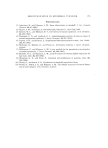
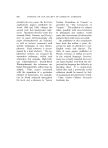
824 JOURNAL OF THE SOCIETY OF COSMETIC CHEMISTS (7) (8) (9) (10) (11) 12) 13) 14) 15) 16) 17) 18) 19) Moon, P., Proposed solar radiation curves for engineering use, J. Franklin Inst., 230, 583-617 (1940). Kahn, G., University of Colorado Medical Center, 1968, unpublished spectrophotometric data. Harber, L. C., Clinical evaluation of quantitative differences in UV absorption of com- pounds containing the substituted benzoic acid nucleus, J. Invest. Dermatol., 23,427-35 (1954). Daniels, F., Jr., and imbrie, J. D., Comparison between visual grading and reflectance measurements of erythema produced by sunlight, Ibid., 30,295-304 (1958). Van der Leun, J. C., Theory of ultraviolet erythema, Photochem. Photobiol., 4, 453-8 (1965). Blum, H. F., Radiation Biology, II, McGraw-Hill Inc., New York, N. ¾., 1955, p. 491. Rottier, P. B., Biologic problems concerning sunscreens, Y. Soc. Cosmetic Chemists, 19, 85-93 (1968). Keller, P., (•ber die Wirkung des ultravioletten Lichtes auf die Haut unter besonderer Berficksichtigung der Dosierung, Strahlentherapie, 16,824-35 (1924). Luckiesh, M., Application of Germical Erythemal and Intra Red Energy, Van Nostrand Co., New York, N.Y., 1946. Wilson, W. W., Quero, R., and Master, K. J., The search for a practical sunscreen, Southern Med. J., 59, 1425-30 (1966). Rossman, R. E., Knox, J. M., and Freeman, R. G., Acrylonitriles, a new group of ultra- violet absorbing compounds, J. Invest. Dermatol., 39,449-53 (1962). Giese, G. C., and Wells, J. M., Sunburn protection, natural and artificial, Sci. Monthly, 62,458-64 (1946). The Givaudian, Sindar Corp., New York, N.Y., 1961.

Book Reviews AUTOOXIDATION OF HYDROCARBONS MECi•ANISMS, by Leo Reich and Sal- vatore S. Stivala. Marcel Dekker, Inc., New York. 1969. 527 pages. Price $29.75. The 1968 Diploma Examination of the Society of Cosmetic Chemists of Great Britian [J. Soc. Cosmetic Chemists, 20, 61 (1969)] includes the question, "Give an account of the che•nistry of oxidative rancidification .... " Drs. Reich and Stivala an- swered this important question admir- ably. Their book is not for the casual reader it is replete with mechanisms, mathematical derivations, and kinetic expressions. But, it is also full of data, presents an excellent precis of the literature, and is must reading for any chemist concerned with oxidative rancidification or polyolefin stability, e.g., of packaging materials. A few highlights of this scholarly work are: the introduction, a well- presented review of the history, chem- istry, and experimental techniques used to generate the information to follow Chapter 3, a lucid account of the role of antioxidants Chapter 8, a description of experimental tech- niques for investigating polyolefin 825 oxidation (this chapter by itself is well worth the price of the book). My sole criticism is that the sec- tions describing oxidation and auto- oxidation in the presence of metal catalysts do not adequately warn of the dangers of coloring polyolefins with certain metal pigments which might act as catalysts, even at low temperature. There have been litera- ture reports on this subject and the findings are important to technolo- gists in the field. The ambitious reader will want to attempt the problems at the end of chapters for a self-taught, though not easy, graduate course. Rarely am I so enthusiastic over a book. This one is worth your atten- tion. HA}•VEY ALT•Gillette Re- search Institute, Inc. ELECTROPHORESIS--TECHNICAL AP- PLICATIONS a Bibliography of Ab- stracts. B.J. Haywood. Ann Arbor --Humphrey Science Publishers, Ann Arbor, Mich., 1969. 440 pages. Prices $18.75. The author has put together, in book form, a large collection of refer- ences to recent work concerned with zone electrophoresis. The volume is
Purchased for the exclusive use of nofirst nolast (unknown)
From: SCC Media Library & Resource Center (library.scconline.org)