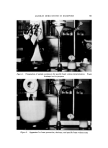
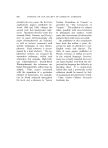
LANOLIN DERIVATIVES IN SHAMPOOS 779 heads of hair during salon testing. He reported good correlation between the properties of foams produced in the Mixmaster after three to four minutes at 720 rpm and foams produced on a head of hair after sham- pooing for 30 seconds (4). Bromley used essentially the same method as New for foam genera- tion but extended the experimental conditions to include concentra- tion, temperature, and presence of soil as variables. He eliminated several of the criteria used by New and evaluated the foams primarily by measuring specific foam volume and foam viscosity (5). The test methods developed by New and by Bromley have been modified to accommodate the scope of this present study. These modi- fications make the tests less cumbersome, yet provide quantitative data describing two properties of foams, which, when analyzed together, afford criteria for differentiating acceptable from unacceptable shampoo foams. The two properties utilized to characterize the foams are specific foam volume and per cent drainage after five minutes. These measure- ments are supplemented by subjective evaluation of foam appearance and feel. Specific foam volume is defined as the volume of foam generated by 1 g of solution. It is a direct measure of foam-producing capacity and is inversely related to foam density. It is also an indirect assess- ment of bubble size and wetness. The per cent drainage is the ratio of the volume of liquid which drains from the foam after five minutes to the amount available on total foam collapse, expressed as per cent. It is primarily a measure of the wetness of the foam and is not necessarily a direct measure of foam stability. Since foam stability is essentially a function of film elasticity, a foam can drain fairly rapidly, yet be quite stable. Instability as manifested by an increase in bubble size and/or rupture of the film was generally not observed at the five-minute test interval except in some of the foams generated in the presence of sebum. METHODS AND MATERIALS Test Procedures Generation of Foam Equipment--Sunbeam Mixmaster Model 12, equipped with ordinary household beaters and calibrated to a speed of 720 rpm glass mixing bowl 150 mm in diameter and 110 mm deep.

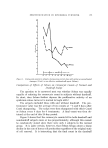
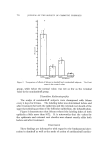
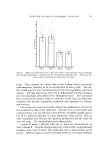
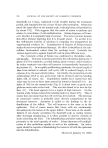
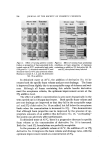
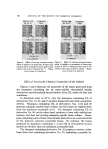
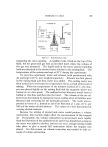
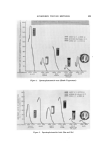
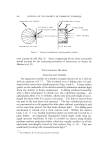
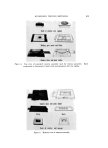
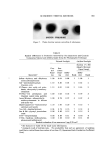
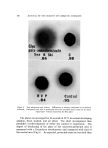
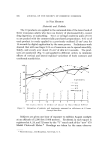
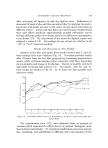
78O JOURNAL OF THE SOCIETY OF COSMETIC CHEMISTS Sample Preparation--The shampoo was diluted to the desired con- centration (w/w) with deionized water. If necessary, it was warmed slightly to attain clarity. Gentle agitation followed until the solution was uniform. For "hard water" tests, dilution was only to 98 parts to allow for the addition of Ca + + solution. Procedure--The temperature of the sample was adjusted. For ele- vated temperature tests, the mixer bowl, beaters, and sebum solution were warmed. A 50-g (49-g for "hard water") aliquot was placed in the bowl and the Ca ++ or sebum solutions were piperred in, if required. The beaters were positioned above the surface of the liquid and the motor was turned on. When the speed had equilibrated at 720 rpm, the beaters were lowered into the bowl and timing was begun. After exactly three minutes, the motor was turned off. Specific Foam Volume Equipment--Crystallizing dishes, 50 mm in diameter and 35 mm high of known weight and volume spatula with stainless steel blade. Procedure -Immediately at the conclusion of the beating time, por- tions of the foam were transferred to each of two crystallizing dishes, with care to prevent the inclusion of large air pockets (Fig. 1). The edge of the spatula was scraped across the surface to level the foam. The dishes were weighed to +0.01 g and the weight of the foam was determined. The heavier weight was used in the calculation. Calculation--Volume of container/weight of foam = specific foam volume expressed as ml/g. Reproducibility--Although reproducibility varied with the different test conditions and sample composition, the maximum standard devia- tion was 0.3. Foam Drainage Equipment Stemless funnel, 75 mm i.d., of known volume, fitted at the base with a conical double-thickness l•lug of 20 mesh screen, approxi- mately 20 mm X 10 mm X 15 mm 25-ml tall-form graduated cylinder spatula with stainless steel blade. Procedure -Immediately at the conclusion of the beating time, a por- tion of the foam was transferred to the funnel, with care to prevent the inclusion of large air pockets. The edge of the spatula was scraped across the surface to level the foam. The funnel was positioned above the cylinder and timing was started. The volume of liquid in the cyl- inder after five minutes was recorded (Fig. 2).
Purchased for the exclusive use of nofirst nolast (unknown)
From: SCC Media Library & Resource Center (library.scconline.org)