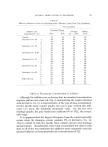
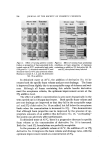
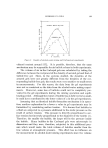
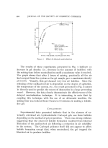
J. Soc. Cosmetic Chemists, 20, 767-775 (Dec. 9, 1969) The Effect of Selenium Sulfide on Epidermal Turnover of Normal and Dandruff Scalps GERD PLEWIG, M.D. and ALBERT M. KLIGMAN, Ph.D., M.D.* Presented before the •rew York Chapter, January 8, 1969, •rew York City Synopsis--A highly active antidandruff agent, seleniuxn sulfide, was studied with normal and dandruff scalps to test the hypothesis that the excess scaling is due to an overproduction of horny cells and that effective therapy is absolutely dependent on lowering the rate of multi- plication of germinative cells. A new technique to demonstrate an increased production of horny cells in dandruff entailed determination of the corneocyte count, the quantity of horny cells per square centimeter produced over a 4-day period. Use of a selenium sulfide-contain- ing shampoo sharply reduced the corneocyte counts a nomncdicated shaxnpoo reduced the count only slightly. Selenium sulfide was proportionately effective in lowering the corneocyte count of the normal scalp. It was postulated that this agent controls dandruff by its cytostatic capa- bilities. Its principal impact is to reduce cell turnover. Thyroidinc radioautography con- firmed the inhibitory effect of selenium sulfide on epidermopoesis. The labeling index of both the epidermis and the infundibulum of the hair follicles of the normal scalp, not previ- ously described in the literature, was determined. Selenium sulfide was equally effective in diminishing the labeling index of the epidermis and the upper part of the external root sheath of the hair follicles. INTRODUCTION In a previous study from this laboratory (1), preliminary evidence was obtained of increased epidermal turnover (accelerated epidermopoe- sis) in the scalps of subjects with intense dandruff. In a limited series, results showed: (a) an approximate doubling of the mitotic index (b) almost twice the normal amount of radiolabeled cells after the intra- dermal injection of tritiated thymidine (c) histologic loci of parakerato- sis and (d) a lessened transit time of radiolabeled cells through the Malpighian layer. * Department of Dermatology, University of Pennsylvania School of Medicine, Phila- delphia, Pa. 19104. 767

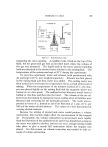
768 JOURNAL OF THE SOCIETY OF COSMETIC CHEMISTS It was concluded that the cardinal sign of dandruff, excess scaling, was due to an increased production of horny cells, rendered more con- spicuous by their sloughing in large cellular aggregates. The current study was conducted to test the thesis of increased epidermopoesis by ob- serving the effect on epidermal kinetics of an effective antidandruff agent, selenium sulfide. The hypothesis requires that such agents abolish scaling as a result of reducing epidermal turnover. MATERIALS AND METHODS Subjects These were healthy adult, negro prisoner volunteers. Subjects with intense dandruff were contrasted to those with normal or minimum scal- ing. Whether the subject had dandruff or not was determined 4 days .after a standard washing with a nonmedicated shampoo (Conti).* It was necessary to screen a large number of subjects in order to locate the .small minority whose scaling over a 4-day period may be considered normal. Subjects with heavy dandruff were easier to find. Care was taken to exclude those whose scaling was attributable to seborrheic dermatitis or psoriasis. Treatment The scalps were shampooed with either Conti or Selsun©t by lathering for 1 minute, rinsing 1 minute, lathering another minute, then rinsing again for 1 minute. Throughout, the interval between shampoos was 4 days. Thymidine Radioautography Standard procedures were followed (2, 3). Five microcuries of H '•- thymidine, specific activity 6.0 C/mM, in 0.1 ml of saline was injected into the clipped scalp with a 27-gauge needle, raising a wheal. One hour later the site was biopsied by full thickness scalpel excision. The specimens were fixed in formalin and 6-/• cuts were mounted on glass slides. These were then coated with Kodak NTB-2 liquid photo- graphic emulsion. After 21 days of exposure, the slides were developed in Kodak D-19 for 4 minutes, fixed in Kodak F-5 for 7 minutes, and washed in running water. Finally, they were lightly stained with Har- ris' hematoxylin, dehydrated, and mounted in synthetic resin. * J. B. Williams Co., Inc., Cranford, N.J. } Selenium Sulfide Detergent Suspension, Abbott Laboratories, North Chicago, Ill.
Purchased for the exclusive use of nofirst nolast (unknown)
From: SCC Media Library & Resource Center (library.scconline.org)