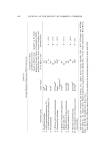
778 JOURNAL OF THE SOCIETY OF COSMETIC CHEMISTS In this investigation, data were obtained on the effect of six different water-soluble ethoxylated lanolin derivatives on the foam characteristics of a typical simple shampoo system. CjENERAL CONSIDERATIONS The generation of foams and the evaluation of foam properties are the subjects of continuous study by physical chemists and cosmetic chemists. While the physical chemist is concerned primarily with the fundamental aspects of bubble formation, size, and stability, the cos- metic chemist must not only understand these principles but must reconcile them with the practicality of intended usage. Thus the "ideal" foam that each seeks is not necessarily the same. Monodisperse foams, characterized by the identical dimensions of all the bubbles, are preferred for physical chemical studies (1). These foams are best obtained by forcing gas through a capillary tube inserted in a solution of the foaming agent. But the properties of these mono- disperse foams are quite different from those of the polydisperse foams formed during shampooing. Chemists working in the cosmetic and toiletries industries have sug- gested several methods for generating foams with characteristics that more closely approximate those of the foam developed under use condi- tions. The Ross-Miles test produces foam by dropping from a pre- determined height a portion of a solution of a foaming agent into an- other portion of an identical solution (2). Although this method ade- quately measures flash-foaming ability and foam decay, the foams gen- erated under these conditions are not similar in structure to those formed on the head. Later investigators examined the foams produced by perforated discs or screens operated in plunger fashion through dilute solutions of foaming agents in glass cylinders. Barnett and Powers developed a mechanized foam-generating apparatus of the plunger type which per- mitted the simultaneous evaluation of a series of solutions (3). They acknowledged that these laboratory tests had not been correlated with salon tests, the only accurate evaluation of shampoo foams. New studied the properties of foams generated by the Sunbeam Mix- master at various speeds and times of beating. He characterized the foams by determining specific foam volume, viscosity, light transmis- sion, bubble size distribution, specific surface, and foam drainage. Us- ing these same measurements, New also evaluated foams generated on

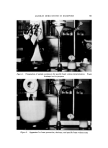
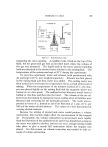
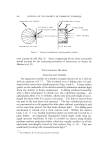
LANOLIN DERIVATIVES IN SHAMPOOS 779 heads of hair during salon testing. He reported good correlation between the properties of foams produced in the Mixmaster after three to four minutes at 720 rpm and foams produced on a head of hair after sham- pooing for 30 seconds (4). Bromley used essentially the same method as New for foam genera- tion but extended the experimental conditions to include concentra- tion, temperature, and presence of soil as variables. He eliminated several of the criteria used by New and evaluated the foams primarily by measuring specific foam volume and foam viscosity (5). The test methods developed by New and by Bromley have been modified to accommodate the scope of this present study. These modi- fications make the tests less cumbersome, yet provide quantitative data describing two properties of foams, which, when analyzed together, afford criteria for differentiating acceptable from unacceptable shampoo foams. The two properties utilized to characterize the foams are specific foam volume and per cent drainage after five minutes. These measure- ments are supplemented by subjective evaluation of foam appearance and feel. Specific foam volume is defined as the volume of foam generated by 1 g of solution. It is a direct measure of foam-producing capacity and is inversely related to foam density. It is also an indirect assess- ment of bubble size and wetness. The per cent drainage is the ratio of the volume of liquid which drains from the foam after five minutes to the amount available on total foam collapse, expressed as per cent. It is primarily a measure of the wetness of the foam and is not necessarily a direct measure of foam stability. Since foam stability is essentially a function of film elasticity, a foam can drain fairly rapidly, yet be quite stable. Instability as manifested by an increase in bubble size and/or rupture of the film was generally not observed at the five-minute test interval except in some of the foams generated in the presence of sebum. METHODS AND MATERIALS Test Procedures Generation of Foam Equipment--Sunbeam Mixmaster Model 12, equipped with ordinary household beaters and calibrated to a speed of 720 rpm glass mixing bowl 150 mm in diameter and 110 mm deep.
Purchased for the exclusive use of nofirst nolast (unknown)
From: SCC Media Library & Resource Center (library.scconline.org)