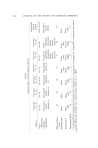
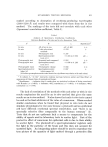
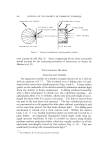
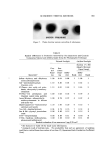
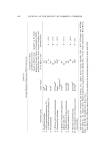
SUNSCREEN TESTING METHODS 811 ranked according to absorption of erythema-producing wavelengths (2900-3200 •) and results were compared with those from the in vivo method. The rankings of the tests did not correlate with each other (Spearman's correlation coefficient, Table I). Table I Analysis of Spearman's Correlation Coefficients Between Rankings of in vivo and in vitro Sunscreen Tests A s B m• Significance •' In vivo All other in vivo all 0. 800 -1--{- In vivo 7 skin physicians' 0. 576 -{- estimate In vivo Photographic test 0. 297 -- In vivo Spectrophotometric -- 0. 355 to 0. 065 all -- tests #1-5 Photographic test Repeated and compared 0. 952 -q- Photographic test Spectrophotometric -- 0. 406 to 0. 248 all -- tests #1-5 Photographic (sun) Photographic (lamp) 0. 845 -1- -q- Spectrophotometric Spectrophotometric 0. 667 (glass) •1 (white paper) #2 (All other spectrophotometric tests showed no significant correlation with each other) • In column A, "in vivo" represents ranking (average between amber and blue filter) of sunscreens at 8 hours (time of maximal erythema). b Significance: --indicates that A ranks show no statistical evidence o[ being associated with B ranks (ms 0.564) d- indicates 95% correlation (ms 0.564) -1--• indicates 99% correlation (ms 0.746). The lack of correlation of the methods with each other or with in vivo results emphasizes the need for an in vitro method that gives the same results as an in vivo method. It also shows that such in vitro tests cannot be used as the final arbitrator of the value of a sunscreen. Blum reached similar conclusions when he found that physical in vitro tests do not simulate physiological in vivo ones because a photocell and an epidermal cell have different erythemal spectral sensitivities, and "there is no spectrally selective filter comparable to the human corneum" (2). Tests that do not use epidermis lack a means to compensate for the ability of agents used in laboratory tests to scatter light. Part of the protective effect of sunscreens for epidermal cells is due to their ability to scatter light. The photocell of a spectrophotometer registers only the light in the pathway of the beam and this does not account for scattered light. An integrating sphere should be used to reproduce the true picture of the quantity of light emitted through a protective film

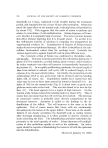
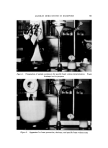
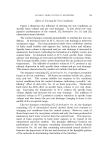
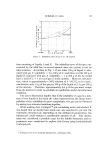
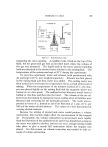
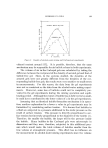
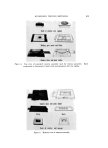
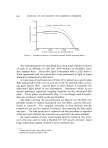
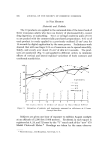
812 JOURNAL OF THE SOCIETY OF COSMETIC CHEMISTS INTEGRATING SPHERE EPIDERMIS AND SUNSCREEN AGENT ,( LIGHT SOURCE PROPOSED METHOD PHOTOGRAPHIC PLATE '• '( LIGHT SOURCE ,( OLD METHOD Figure 3. Proposed modification of photographic method over a group of cells (Fig. 3). Such a registering device more accurately would account for the scattering potential of sunscreens, as shown by Master et al. (3). PHOTOGRAPHIC METHOD Materials and Methods The apparatus consists of a lensless Compur shutter set at 1/250 see with an aperture of f 7.7. This is placed over a sliding piece of card- board which covers four cylindrical ports (Figs. 4 and 5). A foam rubber gasket on the underside of the shutter assembly eliminates ambient light when the shutter is firmly compressed. A sliding cardboard assembly with a filter attachment is placed over the cylindrical openings. An optical glass filter, UG 11 (Schott), allows only ultraviolet light of wave- length less than 4000 • to pass to the plate. The filter is moved from one port to the next after each exposure. The four cylindrical ports are so constructed as to fit against the slide plate without scratching it and at the same time protect the film from ambient light. The sliding port mechanism is housed over a View camera back. Within the camera back, 4 in. X 5 in. Kodak projection plates are held and covered by a plate holder. An important irregularity which might result from un- equal spectral sensitivity of film is avoided by always using Kodak medium contrast projection slides, which are equally sensitive to all the ultraviolet wavelengths tested by this system (Fig. 6) (4). This was confirmed by testing with monochromatic light.* * H. T. Hudson, R. G. Freeman, Baylor University.
Purchased for the exclusive use of nofirst nolast (unknown)
From: SCC Media Library & Resource Center (library.scconline.org)