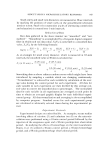
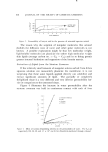
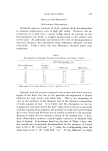
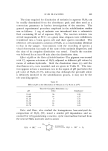
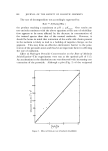
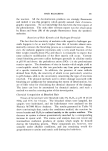
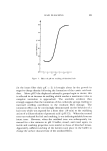
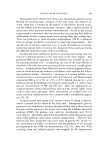
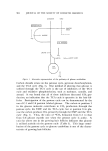
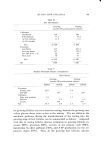
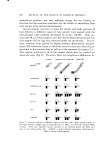
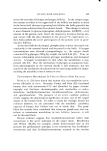
SUBCUTANEOUS MICROCIRCULATORY RESPONSES 847 Small artery and small vein diameters are measured at 30-sec intervals by marking the position of vessel walls on the precalibrated television monitor screen. Small vein vasomotion (cycles of alternating constriction and relaxation) is counted over l-rain intervals. Reduction of Data Raw data gathered in the above manner are "smoothed" and "nor- realized." "Smoothing" is accomplished by a five-point digital computer filter in which each raw data value, X(N), is converted to a smoothed data value, Xs(N), by the following formula: X,(N) - X(:V- 2) [- X(:V- 1) -t 3X(•V) -1 X(:V + 1) [_ X(:V + 2) 16 4 8 4 16 As an example for small artery diameter, which is measured at 0.5-min intervals, the smoothed value at 30 rain is calculated as: X (29 min) .Y (29.5 rain) X•. (at 30 rain) = 16 4 q_ 3.U (30 min) q_ .U (30.5 rain) q_ X (31 min) 8 4 16 Smoothing data as above reduces random errors which might have been introdnced by sampling a variable which was changing continuously. "Normalization" is achieved for each variable by calculation of the aver- age value during the control period for each experiment. All data for each variable in each experiment are then divided by this average con- trol value to convert the smoothed data to percentages. The normalized data for each variable in all experiments are averaged at each point in time to obtain an averaged graphic display for each individual experi- mental group. All data normalization and averaging is also accomplished by computer program. Standard errors for each experimental group are calculated at arbitrarily selected times during the experimental pe- riod. Experimen! Protocols Experimental designs are rather flexible. As examples, recent studies invoMng effects of nicotine (5) and cadmium ion (6) on the microcir- culation were performed using a 10-rain control period followed by the injection of the exogenous agent and a 50-min postinjection observation period. In studying the effects of hemorrhage on the microvasculature, Harris et al. (7) utilized a 30-min control period, a 65-min hemorrhage period, and a 60-rain posthemorrhage observational period.

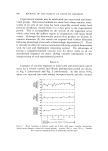
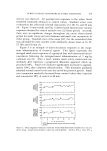
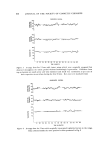
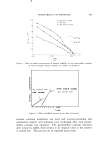
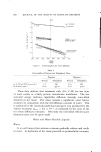
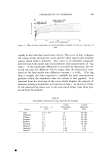
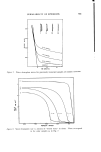
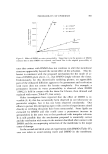
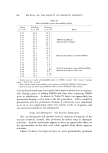
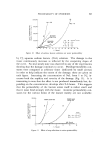
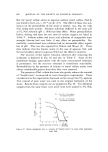
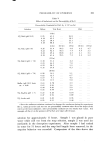
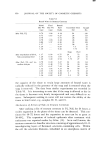
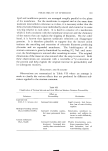
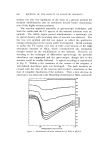
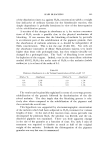
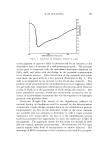
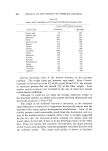
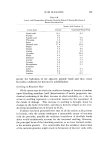
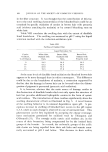
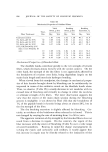
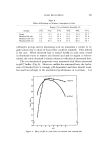
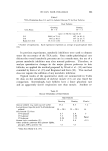
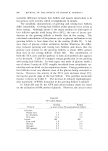
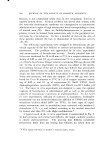
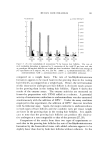
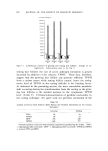
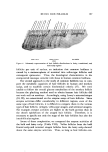
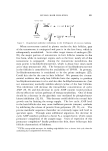
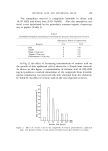
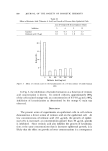
848 JOURNAL OF THE SOCIETY OF COSMETIC CHEMISTS Experimental animals may be subdivided into innervated and dener- vated groups. Denervated animals are those bats whose vascular inner- vation in an area of one wing has been surgically severed under local procaine anesthesia, usually from 3 to 7 days prior to the experimental period. This is accomplished by the section of the tegmental nerve which arises from the axillary region in conjunction with major blood vessels. Although the denervation process does produce an increase in vascular diameters (2), the vessels can respond with further dilatation following physiologic stress such as hemorrhagic hypotension (7). There is virtually no effect on venous vasomotion following surgical denervation with the tone and rhythmicity remaining normal. The advantages of having a sympathectomized vascular area for direct study in an un- anesthetized mammal are many, adding valuable information to the interpretation of each experimental protocol. RESULTS Examples of vascular responses to innervated and denervated (:ontrol series for a 10-min control and 50-min postinjection period are shown in Fig. 1 (innervated) and Fig. 2 (denervated). In this series, 0.9% saline was injected into each animal intraperitoneally and the vascular 120 •o• •, •0- o•= • ]00- •o• • 90- 80 10 20 30 40 50 60 • T I M E (minutes) Control J Period • Post-injection Period •[ Figure 1. Mcan responses of minute vessels for 6 bats with intact vascular inncrvation. Actual mean diameter values for control period: Arteries, 36.2 /x veins, 74.9 v. Vertical lines represent standard errors at arbitrarily selected times
Purchased for the exclusive use of nofirst nolast (unknown)
From: SCC Media Library & Resource Center (library.scconline.org)