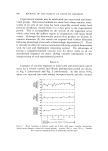
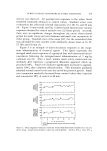
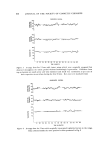
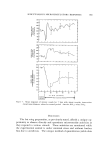
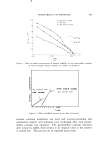
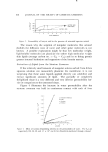
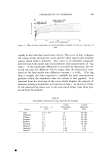
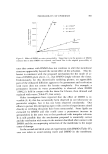
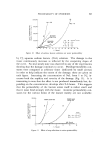
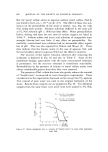
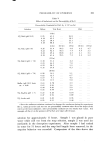
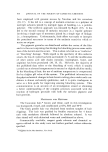
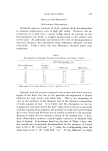
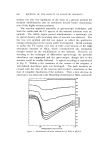
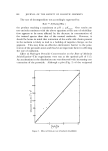
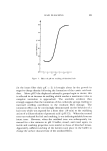
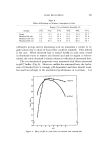
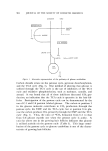
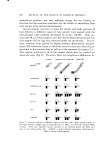
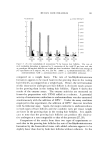
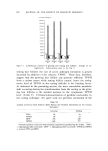
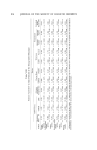
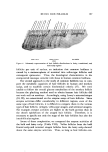
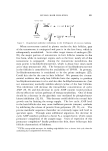
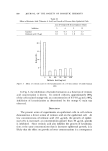
884 JOURNAL OF THE SOCIETY OF COSMETIC CHEMISTS The rate of decomposition was accordingly expressed by' Rate = K[H.,O2][HO2-] the product reaching a maximum at pH = pK•2o2. Our results are not entirely consistent with the above equation as the rate of solubiliza- tion appears to be more affected by the decrease in concentration of the ionized species than that of the neutral molecule. However, it should be borne in mind that ionization of the acidic side chains present in the melanin is likely to lead to a buildup of negative charges on the pigment. This may form an effective electrostatic barrier to the pene- tration of the peroxide anion and thus be an important factor in affecting the rate of oxidation. Effect of Hydrogen Peroxide Concentration on the Rate of Melanin Solubilization--The experiments were run at the optimal pH of 11.5. An acceleration in the dissolution rate was observed with increasing con- centration of the peroxide. Although a plot (Fig. 3) of the reciprocal I I I ] 24.( 20., x 16.• i r. 12.0 .-- .-- :3 '• 8.0 ._• 4.0 © © 1 2 3 Figure 3. Effect of H,20.o on rate of melanin dissolution

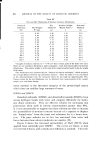
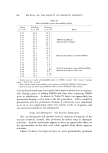
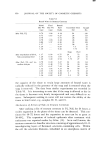
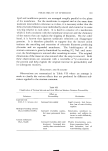
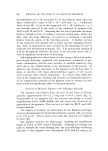
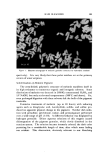
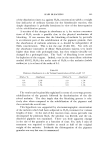
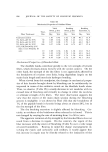
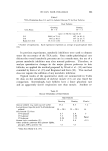
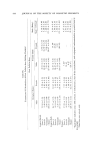
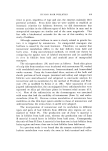
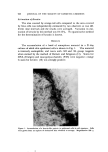
HAIR BLEACHING 885 of the dissolution times (tD) against H202 concentration yields a straight line indicative of ordinary kinetics for the bimolecular reaction, this simple dependence is probably fortuitous in view of the heterogeneity of the solubi!i?ation process- A scrutiny of the changes in absorbance at to for various concentra- tions of H202 reveals a possible clue to the physical mechanism of bleaching. If one assumes that the bleaching of melanin by peroxide is an inherent part of the solubilization of the pigment granule, then the absorbances of melanin solutions at to should be independent of H202 concentration. This is not the case (Table III). Not only are the absorbance intensities of dilute Heemelanin systems very much higher than those with prolonged time, but they remain virtually un- changed for a prolonged time. The "lack" of bleaching is 'not caused by depletion of the reagent. Indeed, even in the most dilute solutions studied (0.01% H.oO2) the molar ratio of H202 to the melanin (indole residue) at to is at least of the order of 5:1. Table III Maximum Absorbances at tofor Various Concentrations of H202 at pH 11.5 [H2021, % Absorbance [H202], % Absorbance 0.1 2.95 1.0 1.24 0.4 1.41 2.0 1.14 0.6 1.36 3.0 1.06 The results can be plausibly explained in terms of a two-step process: solubilization of the granule followed by decolorization of the dis- solved melanin. The data imply that the bleaching process is rela- tively slow when compared to the solubilization of the pigment and thus controls the overall rate. This hypothesis was supported by electromicrographic examination of the melanin which had been subjected to H202 treatment for various lengths of time. At the end of the reaction time, excess peroxide was decomposed by platinum black, the solution was filtered, and the un- dissolved pigment was examined. There was little apparent change in the size of the granules as a function of time. Yet, only 5 min of treatment was required to dissolve as much as half of the original weight of the melanin. Evidently the disintegration of the pigment granules was very fast once it commenced.
Purchased for the exclusive use of nofirst nolast (unknown)
From: SCC Media Library & Resource Center (library.scconline.org)