876 JOURNAL OF THE SOCIETY OF COSMETIC CHEMISTS been employed with greatest success by Nicolaus and his coworkers (16, 17). It has led to a concept of melanin structure as a polymer of multiple subunits joined by multiple types of bonding, i.e., a poikilo- polymer. The synthetic approach was initiated by Raper (18). It has led to the second concept of melanin structure as a regular polymer involving a single type ot5 monomer joined by a single type of linkage, i.e., a homopolymer. Unfortunately, little effort was made to interpret the postulated structures in terms of the melanin reactivity which re- mains an enigma. The pigment granules are distributed within the cortex of the fiber and it is thus not surprising that during the bleaching process some oxida- tion of the keratin matrix occurs. This is often referred to as "oxidative" or "bleaching" damage. With regard to the specificity of this oxidative attack, the loss of cystine has been ascertained (5, 7) and the modification of other amino acid side chains (tyrosine, tryptophane, lysine, and arginine) has been postulated (10, 13, 15). However, the majority of the published data refers to the bleaching of wool, which is usually carried out at elevated temperatures in neutral or slightly alkaline media. In the bleaching of hair, the use of ambient temperature is compensated for by a higher pH value of the system. The published information on the physicochemical changes in hair keratin taking place under such con- ditions is almost exclusively qualitative, and it is quite inadequate to serve as a firm guide for improving existing bleaching systems. This communication is an account of an investigation aimed at obtaining a better understanding of the complex processes associated with the reaction of hydrogen peroxide with both the melanin pigment and hair proteins. MATERIALS AND METHODS The Caucasian hair,* brown and white, used in this investigation was shampooed, rinsed, and conditioned at 65% RH and 70øF. The black poodle hair was obtained from random samples of hair clippings. The hair was purified by Soxhlet extraction for 4 hours each with methylene chloride followed by absolute ethanol. It was then rinsed well with deionized water and conditioned as above. Commercially available, reagent grade solvents and chemical re- agents utilized in this study were not further purified, unless otherwise specified. * Supplied by De Moo Brothers, New York.

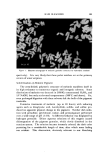
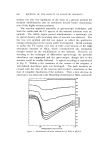
HAIR BLEACHING 877 The melanin was isolated from the hair by acid hydrolysis according to the method of Green and Happey (19). Purified black poodle hair was placed in a round-bottom flask equipped with a reflux condenser and hydrolyzed with 6N HC1 for 4 hours under reflux. A liquor-to-hair ratio of 40:1 was used. The mixture was cooled and the melanin was separated by centrifuging for 30 tnin at approximately 1000 g's. The sedimented melanin was washed with deionized water until the solu- tion in equilibrium with melanin had a pH value of 5.2. The melanin was then rinsed several times with acetone and dried in vacuo at 60øC. Microscopic inspection of the product indicated the absence of any fibrous contamination. The high purity of the isolated pigment was confirmed by examination of the melanin granules with the electron microscope. Altogether, 50 g of poodle hair was hydrolyzed, yielding 3.75 g of melanin. A nonhydrolytic method (20) of melanin extraction was employed mainly for a comparative examination of chemical properties. The hair sample was maintained at reflux for 24 hours in a phenol hydrate- thioglycolic acid mixture (PHT). The filtration step was omitted, due to a previous unsuccessful attempt in the isolation of the pigment. After separation of the brown pigment by centrifuging, the melanin was washed two times with fresh portions of PHT. The isolated melanin was further washed with deionized water as described above, followed by several acetone rinses and drying. The purified melanin contained a considerable amount of fibrous material, which was re- moved manually. Visible and UV absorption spectra of melanin were obtained on a Perkin-Elmer Model 202 Spectrophotometer. Mechanical properties of hair were determined on the table model Instron. The fibers were mounted on plastic tabs at 2-in. gauge length, equilibrated under the desired conditions, and stretched to break at re- quired rates of extension. The broken ends were then cut off the tabs, conditioned, weighed, and the denier of the tested fibers was calculated. Amino acid analyses of untreated and bleached hair were carried out on a Phoenix Model M-7800 Micro Analyzer.* The swelling of hair was determined by the liquid retention tech- nique described by Valko and Barnett (21). When specified, a reduction- * Phoenix Precision Instrument Co., 3803-05 North Fifth Street, Philadelphia, Penna. 19140.
Purchased for the exclusive use of nofirst nolast (unknown)
From: SCC Media Library & Resource Center (library.scconline.org)