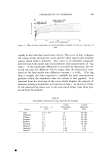
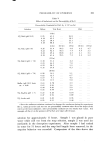
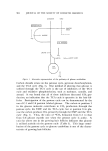
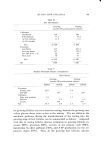
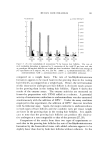
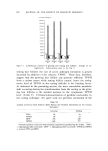
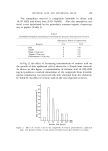
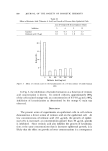
910 JOURNAL OF THE SOCIETY OF COSMETIC CHEMISTS fraction is not catabolized while that in the cytoplasmic fraction is rapidly broken down. Clinical evidence has shown that women with the testicular feminization syndrome are unresponsive to testosterone administration in spite of high testosterone levels corresponding to those of normal men (29). Since no 5oz-dihydrotestosterone is present in plasma, it must be formed from testosterone only in the peripheral tar- get tissue by a 5oz-reductase. In fact, a number of data on the skin of these patients indicate the lack or diminution of 5oz-reductase activity (27,30). The following experiments were designed to demonstrate the po- tential capacity of the hair follicles to convert testosterone to dihydro- testosterone. The problem was approached by in vitro experiment and measurement of 5a-reductase activity. Freshly plucked hair fol- licles were incubated for 30 to 60 rain at 37øC in a reagent mixture con- sisting of 0.02 •c and 0.1 vg of testosterone-•4C in a total volume of 5 •1 of Krebs bicarbonate Ringer solution containing 200 mg glucose/100 mi. In this in vitro experiment, no colactor was added to the incuba- tion medium because of the use of a fresh hair follicle that presumably generates TPNH from the added carbon source. For the 5a-reductase assays, the hair follicles were first freeze-dried to destroy the cell mem- brane and structure, and then the samples (15 to 300 vg) were incu- bated for 15 to 30 minutes at 37øC in 5 v1 of reagent mixture consist- ing of 0.02 vc and 0.1 vg of testosterone-•4C, 2mM TPNH, 2mM diphosphopyridine nucleotide (DPN), and 20mM tris-HC1 buffer pH 7.4. The latter in vitro experiment was designed to assay the optimal capacity of 5mreductase at physiological pH as well as the potential capacity of testosterone conversion to androstenedione. In the latter in vitro experiments, addition of cofactors is mandatory 5a-dihydro- testosterone was not formed without the addition of TPNH and andro- stenedione without added DPN (or TPN). In both types of experi- ments, testosterone and its metabolites were extracted with methanol/ chloroform (1/2: v/v) and isolated according to the method described by Gomez and Hsia (25) with slight modifications.* A typical resttit of the in vitro experiment is summarized in Fig. 3. In both growing and resting hair follicles, the major catabolic product is clearly androstenedione. The growing hair follicles metabolize testosterone faster than the resting hair follicles do (when they are * To be reported elsewhere in detail by S. Takayasu and K. Adachi.

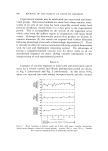
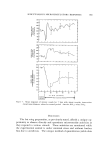
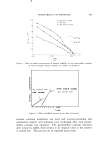
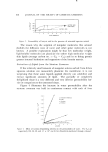
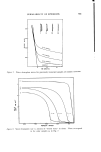
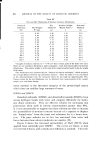
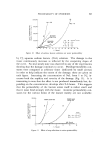
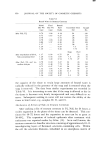
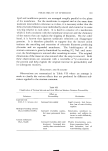
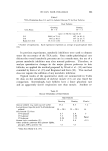
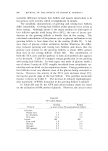
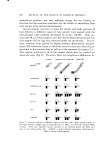
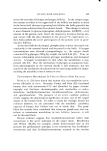
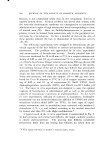
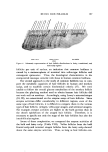
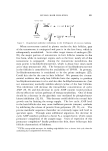
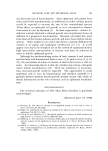
HUMAN HAIR FOLLICLES 911 % conversion AD 7 D #K GROWING (3) AD AD D D SA ST GROWING GROWING (4) (4) AD SK SA RESTING RESTING (I) (2) /J mole/100 mg/hr I0,000 9,000 8,000 7,000 6,000 5,000 4,000 3,000 2,000 AD U 1,000 AAD DHT •{•111• ST RESTING Figure 3. In vitro metabolism of testosterone-•C by human hair follicles. The rate of each metabolite formation is exprcssed as % conversion of the total-•C per hour and also as •mols per 100 mg hair follicles wet weight per hour incubation. Each bar is an average of (N) experiments on 3 subjects, geK, geA, and geT. (DHT : 5a-dihydrotestosterone AD • androstenedione AAD -- androstanedione and U • unidentified substance) compared on a weight basis). The rate of 5a-dihydrotestosterone formation appears to be much faster in the growing than in the resting hair follicles, as compared on a weight basis. Hence, the net formation of this tissue-active androgen per hair follicle is obviously much greater in the growing than in the resting hair follicles. Figure 4 shoves the results of the enzyme assays. The enzyme activities are measured on frozen-dry preparations with TPNH added as a colactor. A potential activity of testosterone catabolism to androstenedione was also measured simultaneously with the addition of DPN+. Under the assay condition employed in this experiment, the addition of DPN+ does not interfere with 5a-reductase assay. Again, the major catabolite is androstenedione in both types of hair follicles and the catabolic rates per tissue weight are faster in the •owing than in the resting hair follicles. It is signifi- cant to note that the growing hair follicles can produce this tissue-ac- tive androgen at a rate comparable to that of the prostate (27, 28). Comparison of the results from these two types of experiments re- veals that in the growing hair follicles the rate of 5.wdihydrotestosterone formation by the frozen-dried tissue with added cofactors appears to be slightly faster than that by fresh hair follicles without cofactors. In the
Purchased for the exclusive use of nofirst nolast (unknown)
From: SCC Media Library & Resource Center (library.scconline.org)