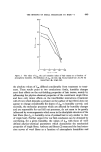
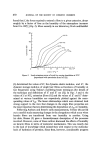
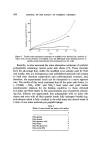
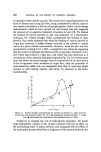
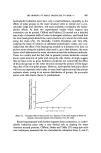
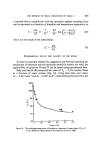
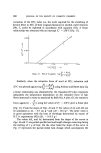
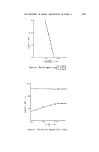
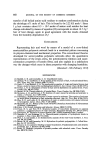
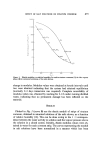
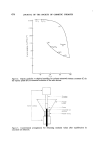
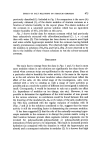
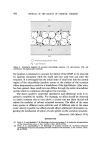
EFFECT OF SALT SOLUTIONS ON STRATUM CORNEUM 475 previously described (1). Included in Fig. 1 for comparison is the curve (A) previously obtained (1), of the elastic modulus of stratum corneum as a function of relative humidity in the vapour phase. The elastic modulus of the corneum in a saturated sucrose solution which has an equivalent relative humidity of 85,2/0 (13) falls on this curve. Fig. 2 shows similar data for stratum corneum which had previously been exhaustively extracted with chloroform/methanol (2: 1, v: v) and then with water (2). This technique has been shown to remove most lipid and water-soluble hygroscopic material from the corneum leaving behind mainly proteinaceous components. The relatively high values recorded for the modulus in solutions of K:COa and CaCI: (Fig. 2) were observed to be due to the inability of these viscous solutions to wet the solvent-extracted corneum. DISCUSSION The main fact to emerge from the data in Figs. 1 and 2 is that in most cases modulus values in salt solutions are significantly less than those ob- tained when corneum strips are equilibrated in the vapour phase. Since at a particular relative humidity the water activity is the same in the vapour as in the salt solution the lower modulus values observed must reflect the effect of the salts. At this initial stage of the investigation, salts were selected with a view to creating as wide a range of water activities as possible and as a result the number of different ions investigated is relatively small. Consequently, it would be incorrect to rule out a specific ion effect (i.e. dependence of modulus on ion charge, size etc.). However, it was possible to determine the significance of the total number of ions present in the various solutions no correlation could be found between this and the lowering of the modulus [EA-EB at rh values of the salts studied (Fig. 1)]. This fact, combined with the regular variation of modulus with rh (Figs. 1 and 2) in the solutions considered so far, suggests that the water activity is still the overriding factor in determining the corneum modulus. It has been suggested (2) that the role of the naturally-occurring hygro- scopic materials in the corneum is to disrupt the protein matrix owing to their location between protein chain segments (similar arguments can be invoked for polysaccharide-polysaccharide or polysaccharide-protein interactions if these prove to be important). This leads to increased protein hydration (as compared with the situation in which the hygroscopics are absent) and a consequent reduction in modulus (2). It is known that high

476 JOURNAL OF THE SOCIETY OF COSMETIC CHEMISTS concentrations of salt ions suppress the association of oppositely charged proteins (14) and Speakman and Whewell (15) have shown that wool fibres are much weaker in concentrated solutions of sodium chloride than would be predicted from the water activity of the solutions. This has been ex- plained (16) as being due to a reduction in thickness of the double layer around the --NHa + and --COO- groups in wool by the salt ions leading to reduced interaction between these groups. A similar role is envisaged for the salt ions considered in this study these penetrate the protein matrix and interact with oppositely charged and dipolar groups (e.g.--COO-, --NH• +, --OH, --NH•) located on the side chains of the constituent amino acids. Since such groups are responsible for the cohesiveness and mecha- nical strength of the corneum by forming hydrogen bonds and salt linkages between and within proteins when the salt ions are absent, the matrix is weakened by the presence of the ions. It is an established fact (10) that the hygroscopic substances which occur naturally in the stratum corneum cannot be removed by aqueous extraction alone. It is first necessary to remove lipids from the corneum by extraction with some suitable organic solvent after which water will leach the hygro- scopics from the structure. It would appear, however, that the simple ions used in this study could enter and be removed from the native corneum as well as from the extracted material without imparting any permanent damage to the structure. This was indicated by the return of the corneum strips to their original modulus values in water after thorough washing. The only conclusion that one can reach at this stage is that this is due to the difference in size between the small ions so far investigated and the larger naturally-occurring hygroscopic materials (organic acids, simple peptides etc). This observation is confirmed by the results obtained using a saturated sucrose solution for which the water activity is known. When native stratum corneum was equilibrated in this solution (Fig. 1) the modulus value ob- tained was identical to the vapour phase value at the same relative humidity (85•) indicating no additional affect due to the presence of the large sucrose molecules. In contrast, the modulus of the lipid-solvent extracted corneum was considerably less in the sucrose solution than in the vapour (Fig. 2). Clearly, removal of the lipid barrier had allowed penetration of the larger hygroscopi½ molecules (sucrose) with their resultant plasticizing effect on the corneum structure. An obvious difference, apart from size, exists between sucrose and the other species studied this is the fact that the sucrose molecule does not bear a charge. Since the absence of charge on the sucrose molecule should impart greater lipid solubility to it than
Purchased for the exclusive use of nofirst nolast (unknown)
From: SCC Media Library & Resource Center (library.scconline.org)