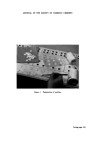
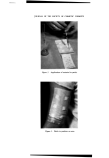
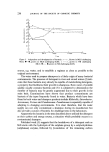
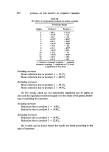
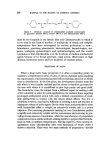
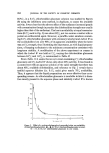
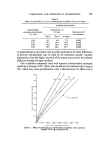
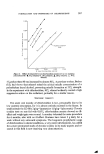
224 JOURNAL OF THE SOCIETY OF COSMETIC CItEMISTS The hairdressings were studied at the following dilutions in distilled water: 100, 50, 25, 18.75, 12.5, 9.38, 6.25, 3.13, 1.56 and 0.78%. At the higher concentration, 10 mg applications were made the fluid dilutions were applied in doses of 10 I•l. pH for the dilutions ranged from 4.5 to 6.1 for Formula A, 5.1 to 7.9 for Formula B, and 4.5 to 6.3 for Formula C. Observations were made by one observer throughout. The curves show: (i) By comparison of the two curves for Formula A, the reproducibility of results with the same applications in two separate series of tests. Good reproducibility in this experiment probably depended on the fact that the same sample of material was used on both occasions, mice from the same batch were used and the same observer carried out both experiments. (ii) The manner in which irritancy is reduced by dilution with water (in the case of this particular type of cosmetic preparation). (iii) The type of comparison that may be made between alternative formulae for the same kind of cosmetic product. Experiment II1 Variances in human patch test The human patch test procedure described above was used for a com- parison between two roll-on antiperspirant-deodorant formulations, each with three different perfumes (Table II). Table II Antiperspirant-deodorant formulations (human patch test) Formula Perfume Mean overall :k SE score I A 11.66 0.69 I B 10.36 0.65 I C 10.82 0.81 II A 9.61 0.76 II B 8.66 0.87 I[ D 8.30 0.79 For this experiment, Formula I with perfume C was regarded as the standard product, and tests for statistical significance of differences from this were performed using Wilcoxoh's Signed Ranks Matched Pairs test and the Student t test. The former test did not show a statistically sig-

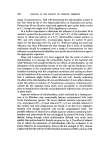
PRIMARY IRRITATION OF THE SKIN 225 nificant difference between the standard product and the other materials examined, whilst the Student t test showed that Formula II with perfume D differed significantly from the standard at the 5•o level of probability. Experiment IV Comparisons between 'baby' shampoos and normal shampoos (hmnan patch test) The human patch test procedure was applied to a range of six liquid shampoos, each tested at a dilution of 1: 5 in tap water (Table III). Table III Comparison between shampoos (human patch test) Formula Mean overall score 4- SE Aõll 8.81 0.47 B•[ I 9.02 0.41 c*•ll 9.94 0.52 D* 12.57 0.90 E'• 23.67 1.53 F•' 28.70 1.12 Shampoos A-D were described as 'baby' shampoos. Comparison between pairs of shampoos was carried out by subjecting the data to Wilcoxon's Signed Ranks Matched Pairs Test, with the following results: * and •' statistically significant difference at the 1 • level of probability + statistically significant difference at the 2 % level of probability + õ statistically significant difference at the 5 • level of probability ]l no statistically significant difference. DISCUSSION Levels of irritancy likely to concern a cosmetic scientist are usually much lower than those responsible for the pathological conditions in which a dermatologist is most interested. This distinction calls for a sensitive tech- nique for predictive tests on cosmetic formulations, where even a level of consumer complaints approximating to 1 in 5 000 users is likely to prove unacceptable. Kligman and Wooding (4) tried to quantify patch testing procedures by introducing the concepts of an ID50 and an IT50 the ID50 represents the concentration of test material producing discernible irrita- tion in 50•o of subjects within 24 h (an approach suggested for strong irri- tants), whereas the IT50 estimates the duration of continuous exposure producing a threshold reaction in 50• of the population (proposed for the
Purchased for the exclusive use of nofirst nolast (unknown)
From: SCC Media Library & Resource Center (library.scconline.org)