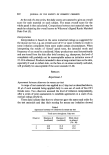
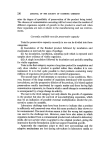
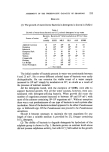
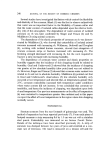
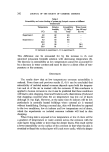
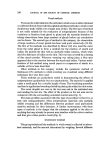
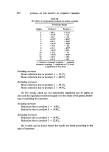
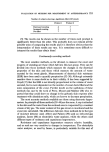
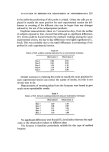
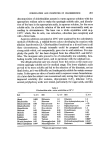
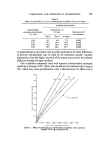
222 JOURNAL OF THE SOCIETY OF COSMETIC CHEMISTS At the end of a test series, the daily scores are summed to give an overall score for each material on each subject. The mean overall score for the whole panel is then calculated. Comparisons between test materials may be made by subjecting the overall scores to Wilcoxon's Signed Ranks Matched Pairs Test (3). Interpretation Interpretation is based on the same numerical ratings as suggested for the mouse ear test, e.g. an overall score of 15 or more is likely to result in some irritation complaints from users under certain circumstances. When interpreting the results of 'closed' patch tests, the intended mode and frequency of use must be considered. Many products are used intermittently and are rinsed from the skin after brief contact, e.g. shampoos the level of complaints will probably not be unacceptable unless an irritation score of 25-30 is obtained. Products intended to have a long contact time on the skin, especially if used on infant skin, on the face or on areas normally occluded, will probably be unacceptable if the score exceeds 15-20. RESULTS Experiment I Agreement between observers in mouse ear test A range of test materials was applied in a 5 day test as described above, 10 I•l of each material being applied daily to one ear of each of five CF1 female mice. Two observers assessed the level of irritation independently, after a series of joint assessments to establish agreement on a scale of nu- merical ratings (Table I). These data indicate that the two observers gave the same rank order for the test materials and that their scoring for mouse ear irritation showed Table I Agreement between two observers in mouse ear test Total score throughout 5 day test Observer Shampoo S Shampoo C Ethyl oleate (undiluted) (undiluted) in ethanol (70: 30) 1 16.8 11.6 13.0 2 18.8 10.4 15.8

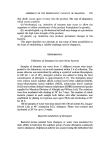
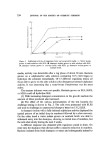
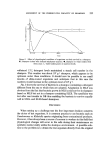
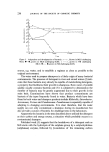
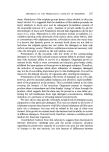
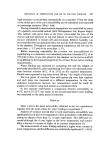
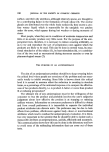
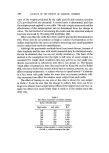
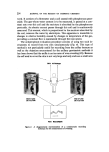
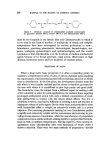
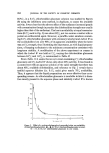
PRIMARY IRRITATION OF THE SKIN 223 good agreement in numerical terms. This demonstrates the value of con- cordance training of observers. However, unless extensive concordance studies are undertaken to ensure fully reliable agreement between observers, it is deskable that the same observer should make all the observations dur- ing a particular test. It is also desirable that all observers should carry out the testing at frequent intervals to avoid major drift of the scoring scale. Even so, comparisons between tests carried out at different times may have dubious validity. Experiment H Serial dilution studies on water-miscible hairdressings (mouse ear test) Groups of five female CF1 mice were used for each dilution of three formulations in two separate studies, Formula A being compared with Formula B in one study and the same batch of Formula A with Formula C in the other (Fig. 4). I I IOO Formula B Formula A Formula C I I _•• Formula A 0,1 0.1 I00 I0 • Log % concentration Figure 4. Dilution curves for water-miscible hairdressings. Vertical comparisons refer to the same experiment, e.g. Formula A 0eft-hand curve) versus Formula B. Formula C is shown as broken line since the points show considerable scatter.
Purchased for the exclusive use of nofirst nolast (unknown)
From: SCC Media Library & Resource Center (library.scconline.org)