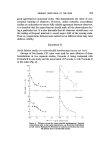
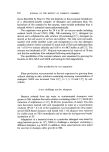
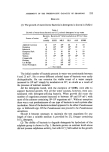
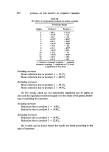
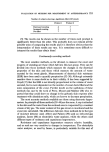
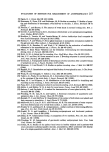
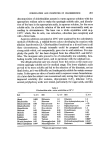
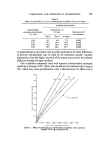
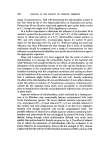
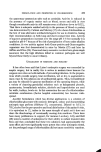
ASSESSMENT OF THE PRESERVATIVE CAPACITY OF SHAMPOOS 233 RESULTS (1) The growth of water-borne bacteria in detergents is shown in Table I. Table I Growth of water-borne bacteria on 0.1% anionic detergents in tap water Source of water Bacteria Bacteria ml -x after incubation at 28 ø for 7 days ml -• initially SLES MLS SLS ALS SDBS Ashford Common 23 107 106 20 0 10 Hampton 6 105 105 105 10 0 Isleworth 16 109 -- 109 I • Kempton Park 12 0 10 20 0 10 Surbiton 13 0 10 10 1 10 Walton 16 106 106 107 107 0 Coppermills 8 -- 0 0 -- -- Hornsey 14 i ] 07 10 • i 1 Lee Bridge 19 -- 106 107 -- -- Stoke Newington 20 -- 106 107 -- -- --= Not tested. The initial number of bacteria present in water was consistently between 6 and 25 ml -•. Six or seven different colonial types of bacteria were easily distinguishable. On one occasion the viable count of a water sample increased to 104 ml 4 simply by incubation at 28 ø, no doubt as a result of the presence of nutrient material. All the detergents tested, with the exception of SDBS, were able to support bacterial growth. Not all the water sources, however, were con- taminated with detergent-utilizing bacteria. When growth did occur the number of organisms present increased to between 105 and 109ml 4, with most of the cultures containing 106-107 organisms ml -•. Without exception there was a vast predominance of one type of bacteria in each system after incubation. Most of the bacteria isolated appeared to be either Pseudomonas spp. or Klebsiella spp. Of the Pseudomonas one proved to be Pseudomonas aeruginosa. Should it become necessary to maintain the test organisms for any length of time a suitable medium is provided by 2•o Ionagar containing 0.1 • detergent. (2) The ability of bacteria to degrade detergents by hydrolysis of the sulphate group is shown in Fig. 1. Bacteria grown on nutrient broth alone did not possess sulphatase activity, but with 0.1 • SLS added to the growth

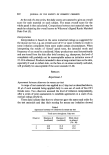
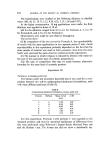
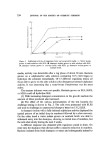
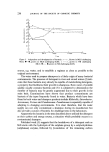
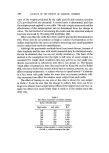
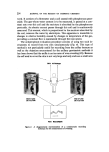
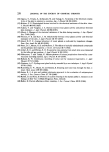
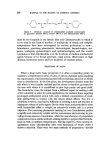
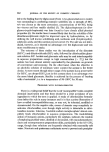
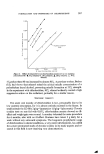
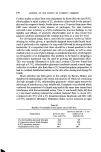
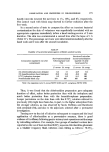
234 JOURNAL OF THE SOCIETY OF COSMETIC CHEMISTS 20 --x x 30 6O 0 9o t20 •I irne (rain) Figure 1. Sulphatase activity of organisms from various growth media. X, Water isolate grown in salts solution with SLS O, shampoo isolate grown in salts solution with SLS ,s•, shampoo isolate grown in nt•trient broth with SLS O, shampoo isolate grown in nutrient broth. media, activity was detectable after a lag phase of about 30 min. Bacteria grown on a sulphate-free salts solution containing 0.1• SLS began to hydrolyse the substrate immediately. Of 15 different organisms tested, all those able to grow on the salts solution plus detergent possessed sulphatase activity. It was interesting that a water-borne Pseudomonas was the most active. The enzyme inducers were not specific. Bacteria grown on SLS, SLES, or MLS could all hydrolyse SLS. (3) With increasing detergent concentration in the growth medium the amount of slime produced also increased. (4) The effect of the various pretreatm.ents of the test bacteria for challenge testing is shown in Fig. 2. The cells were pretreated with SLES and used to challenge an unpreserved shampoo based on 13•o SLES. A shampoo isolate with a fully induced sulphatase activity displayed the typical pattern of an initial drop in numbers followed by a slow recovery. On the other hand a water isolate grown on nutrient broth was able to withstand entry into the shampoo, showing no initial loss of numbers, but the ceils died slowly during the next 3 weeks. A different response was obtained with organisms coated in slime. On entry into the shampoo they did not suffer a massive reduction in numbers. Bacteria isolated from. both shampoo or water and subsequently trained to
Purchased for the exclusive use of nofirst nolast (unknown)
From: SCC Media Library & Resource Center (library.scconline.org)