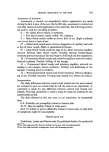
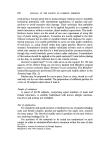
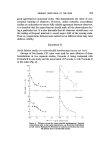
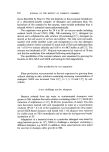
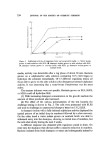
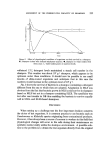
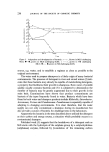
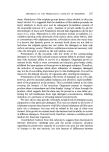
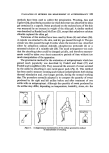
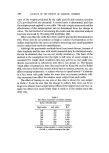
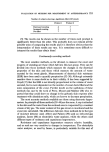
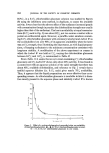
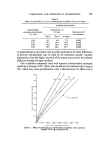
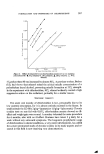
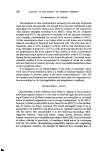
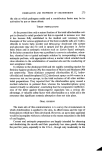
ASSESSMENT OF THE PRESERVATIVE CAPACITY OF SHAMPOOS 235 1o weeks Time Figure 2. Effect of physiological condition of organisms on their survival in a shampoo. A, Shampoo isolate with induced sulphatase enzyme O, shampoo or water isolate with slime coat x, water isolate grown in nutrient broth. withstand 13•o detergent levels maintained a steady cell number in the shampoo. This number was about 10 7 g4 shampoo, which appears to be optimum under these conditions. It should now be possible to use small inocula of slime-coated organisms and anticipate that in this case the numbers would increase to the optimum level of 10 7 g4. Fig. 3 shows the survival of bacteria in a shampoo containing a detergent different from the one to which they are adapted. Adaptation to MLS was obvious from the fact that bacteria grown in MLS could survive in shampoo based on MLS but not in a shampoo containing SLES. The specificity was lost after one transfer in NB thus enabling the bacteria to survive equally well in MLS- and SLES-based shampoos. DISCUSSION When setting up a challenge test the first important decision concerns the choice of test organisms. It is common practice to use bacteria such as Pseudomonas or Klebsiella species originating from contaminated products. However, it has always been a source of concern to workers in this field that physiological changes will occur in the cells during their maintenance on synthetic media totally unlike the shampoo environment. A possible solu- tion to the problem is to obtain the test organism directly from the original

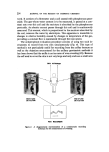
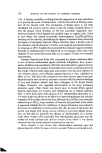
236 JOURNAL OF THE SOCIETY OF COSMETIC CHEMISTS ,x x I I J4 days 21 days T•rne Adaptation and de-adaptation of bacteria. x --x, Grown in MLS challenging Figure 3. MLS 0--0, grown in MLS challenging SLES x --- x, grown in N-B challenging MLS ß- - - O, grown in NB challenging SLES. source, e.g. water, and to establish a regimen as close as possible to the original environment. The water used to prepare shampoos is a likely origin of many bacterial contaminants. The presence of detergent in river and stored waters (2) indi- cates that these bacteria may already be capable of metabolizing detergents, a property that facilitates their growth in shampoos. Even water of potable quality usually contains bacteria and if it is subjected to deionization the number of bacteria may be greatly augmented due to their growth in the resin beds. Examinations have shown that product contaminants are bacteria of the types frequently found in water. Bacteria which have been found in both water and shampoo products include Klebsiella, Enterobacter, Aeromonas, Proteus and Pseudomonas. Pseudomonas is especially capable of adapting to changing environments. It is clear therefore, that the water supply can not only contaminate a shampoo during its manufacture but also provide a source of bacteria for challenge tests in the laboratory. Apparently the bacteria in the tests described above utilized the detergent as their carbon and energy source, a situation which probably occurs in a contaminated shampoo. Published work (3) suggests that the breakdown of a detergent such as SLS starts with the hydrolysis of the sulphate group by a sulphohydrolase (sulphatase) enzyme, followed by [3-oxidation of the remaining carbon
Purchased for the exclusive use of nofirst nolast (unknown)
From: SCC Media Library & Resource Center (library.scconline.org)