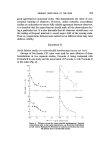
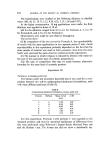
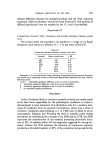
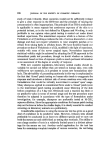
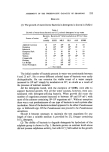
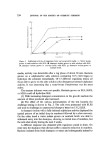
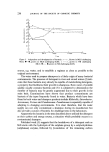
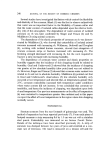
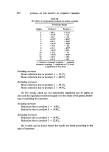
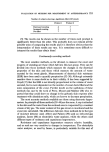
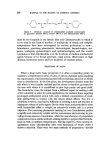
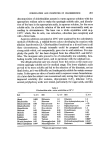
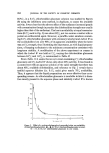
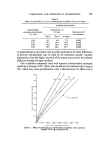
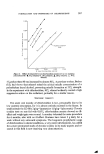
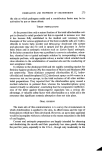
FORMULATION AND PROPERTIES OF CHLORHEXIDINE 265 Table II Effect of Lubrol W (1% w/w) on chlorhexidine availability in an o/w cream Available chlorhexidine Chlorhexidine Expressed as % gluconate concentration of total Expressed as % (% w/w) concentration Test 1 Test 2 Average 0.10 8.1 6.4 7.2 0.0072 0.37 14.3 14'9 14.6 0.0054 0.73 19.2 19.6 19.4 0.1500 1.00 18.5 20.5 19.5 0.2000 to preponderate in this phase. One possible explanation for these differences is that the chlorhexidine may be held by the surfactant micelie. Another alternative is that the higher viscosity of the cream accounts for the reduced diffusion through the agar medium. One surfactant commonly used with aqueous chlorhexidine antiseptic solutions is Lissapol NXU. (Note: this should not be confused with Lissapol NX, which may cause precipitation.) Fig. 3 demonstrates its effect over a 0.8 0,7 0.6 0.5 0.4 / If no interactian 0.3 / 0.2 / / / o.I / o o.I 0.2 0.3 o,4 0.5 0.6 o.7 % w/v 'free' chlorhexidine acetate Figure 3. Effect of surfactants on chlorhexidine availability. Open symbols, Lissapol NXU 0, polysorbate 80.

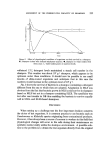
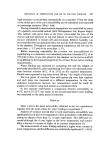
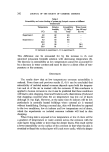
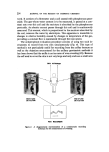
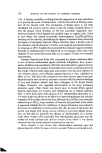
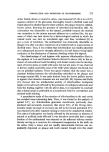
266 JOURNAL OF THE SOCIETY OF COSMETIC CHEMISTS range of concentrations. Hall (10) determined the chlorhexidine acetate in rhe 'free' form by the in vitro bactericidal effect on Staphylococcus aureus. Polysorbate 80 was likewise tested and apparently gave rather better results at 15/o though this might be of. little significance in practice. In a further experiment to determine the influence of' polysorbate 80 in excessive proportion the presence of 1.0•o and 3.35/0 of this surfactant was shown to reduce the activity of a 0.1•o chlorhexidine acetate solution to 39•o and 14• respectively. Corresponding figures for Lubrol W given above for the gluconate were 9•o and 55/0. Without reading too much sig- nificance into these differences the fact emerges that a series of candidate surfactants should be compared over a range of concentrations for their influence on antibacterial availability and specific bactericidal action against the appropriate organisms. Hugo and Longworth (11) have suggested that the mode o[' action of. chlorhexidine is to danaage the permeability barrier of the bacterial cell, while Wiseman (12) considered that the two effects of chlorhexidine, viz. the disruption of the permeability barrier of the cells and the blocking of. elec- tron transport in the cytochrome system were both attributable to chlor- hexidine combining with the cytoplasmic membrane and causing an altera- tion or breakdown of its structure. In such circumstances it would be expected that a surfactant might further affect the cell wall, thereby enhancing the effect of the chlorhexidine. Brown and Richards (13) were able to demon- strate this action in cultures of Pseudomonas aeruginosa containing poly- sorbate 80, the organism being much more susceptible to chlorhexidine (also to benzalkonium chloride and polymyxin B sulphate) than cells grown in plain broth. Aqueous solutions of chlorhexidine, unless sterilized by a heating pro- cess or by filtration, may occasionally become contaminated with water borne Pseudomonas species. The lower aliphatic alcohols n-propanol (4•o v/v), isopropanol (45/o v/v) and ethanol (75/0 v/v) are valuable adjuncts in this context and such preparations are found to be free from vegetative bacteria even though prepared with heavily contaminated water. The possible influence of ethanol on a simple aqueous solution containing chlor- hexidine and polysorbate 80 was investigated by Heard (14)using Visking dialysis tubing through which chlorhexidine diffused very much more quickly than polysorbate 80. Results are given in Fig. 4. The effect of ethanol was to reduce the interaction of chlorhexidine with the surfactant to an extent related to its concentration. Even at the low strength of 10•o ethanol it appeared that the activity of chlorhexidine acetate in a 0.04•o solution with
Purchased for the exclusive use of nofirst nolast (unknown)
From: SCC Media Library & Resource Center (library.scconline.org)