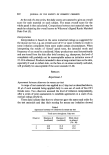
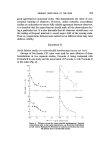
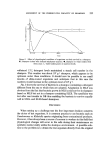
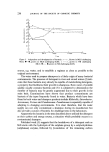
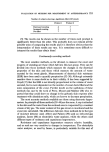
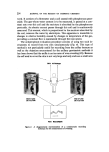
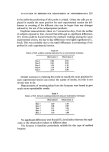
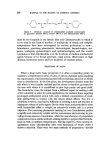
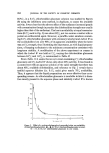
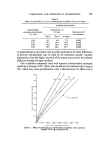
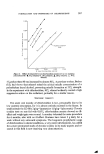
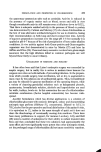
FORMULATION AND PROPERTIES OF CHLORHEXIDINE 267 0,05 O,04 0.03 0,02 I I I 0.01 0,02 0.03 0,04 'free' chlo•hex•dine c•½etote Figure 4. Effect of ethanol (v/v) on chlorhexidine acetate in 1% w/v aqueous polysorbate 80. O, 0% ethanol O, 10% ethanol &, 20% ethanol E, 50•o ethanol. 1 •o polysorbate 80 was increased by almost 50•. A previous worker, Becher (15), had shown that ethanol raised the critical micelle concentration of a polyethylene lauryl alcohol, preventing micelle formation at 25• strength. In the experiment with chlorhexidine, 50• ethanol evidently exerted a high suppressive action on the suffactant, probably for a similar reason. SYSTEMIC TOXICITY The acute oral toxicity of chlorhexidine is low, presumably due to its low systemic absorption, for it is almost entirely excreted in the faeces. In small animals the LD 50 is 2 g kg -• (acetate) or 1.8 g kg -• (gluconate). Chronic toxicity tests on rats fed with 0.05• chlorhexidine acetate showed no ill- effect and weight gain was normal. A monkey tolerated the same procedure for 6 months, also with no ill-effect. Humans have taken 2 g daily for a week without any untoward symptoms. The long-term prophylactic usage of chlorhexidine in dental conditions, a very recent development, has called for a more protracted study of chronic toxicity in its many aspects and re- search in this field is now receiving very close attention.

268 JOURNAL OF THE SOCIETY OF COSMETIC CHEMISTS ACCEPTABILITY TO TISSUES The incidence of skin sensitization is extremely low and only occasional cases have been encountered even though there has been widespread usage throughout the world for many years. There is irritation to the conjunctiva with solution strengths exceeding 0.1•o (0.05•o being the eye irrigation strength and 0.01•o the preservative strength) and the aqueous concentra- tion normally recommended for contact with mucous surfaces is 0.05•o. At this concentration there is no irritant effect on soft tissues nor is healing delayed, according to Shepherd and Kinmonth (16). The gluconate salt is frequently used at 1.0•o strength in creams, lotions and disinfectant solu- tions. Strengths of from 0.1 •o to 0.5•o of the hydrochloride salt may be used for prophylaxis in the lower regions of the nostrils, in which circumstances the gluconate creeps upwards to cause mild discomfort at the 0.5•o strength. Herein lies the particular -virtue of the hydrochloride salt. Its limited water- solubility enables it to be incorporated at strengths at which the soluble salts are ruled out on irritancy grounds. As it is less readily leached away there is more persistent action. It is dangerous to use chlorhexidine on the brain or meninges. Apart from such obvious limitations there is a wealth of medical literature which demonstrates its absolute safety at the active concentrations (17-24). The low toxicity and freedom from sensitization have been two important fac- tors accounting for its wide application and acceptance in medicine. ANTIBACTERIAL ACTION Chlorhexidine is both inhibitory and lethal to vegetative Gram-positive and Gram-negative bacteria in vitro and at relatively high dilutions accord- ing to Davies et al (2) Heat resistant spores are not susceptible to its lethal action at ambient temperature even in strong concentration. At 98-100øC, however, it destroys mesophilic spores, hence its use (0.01•o) in the steriliza- tion of certain eye drops. Laurence (25) found pathogenic fungi to be as susceptible to its inhibitory and lethal action as vegetative bacteria but Hall (10) has shown that susceptibility is in the following descending order: vegetative bacteria, fungi and yeasts, fungal spores, bacterial spores. Animal viruses are not susceptible according to Hurst (26). Its possible mode of action, referred to previously, of exerting a lethal action by combining with the cell surface, disorganizing permeability barriers and coagulating the cytoplasmic contents, was thought by Salton (14) to resemble that of
Purchased for the exclusive use of nofirst nolast (unknown)
From: SCC Media Library & Resource Center (library.scconline.org)