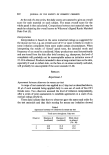
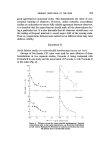
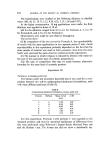
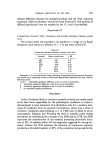
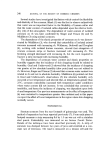
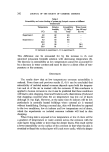
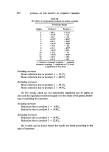
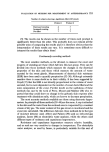
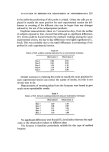
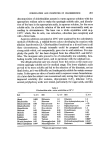
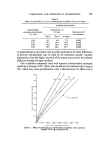
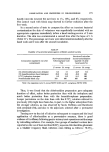
FORMULATION AND PROPERTIES OF CHLORHEXIDINE 271 hourly intervals lowered the survivors to 1•, 10•o, and 6Yo respectively. The control wash with block soap showed no further reduction after the first wash. In a second series of tests to compare the effect on transient bacterial contamination the skin of volunteers was superficially inoculated with an appropriate organism immediately before a hand washing session of 2 min duration. The skin was contaminated a second time after the lapse of 1 h (Table IV). The percentage survivors were determined immediately after the hand wash and 2 rain after the second inoculation. Table IV Rapidity of bactericidal action against artificially applied bacteria Composition (applied 2 min after contaminant) Survivors immediately following hand wash (%) $. aureus Ps. aerug. Survivors 2 min after second contamination (applied 1 h after hand wash (yo) $. attreu$ P$. aerug. 4 •o chlorhexidine gluconate detergent 0.2 5.1 22.9 51.3 3 •o hexachlorophane liquid detergent 28.0 39.8 49.0 100 0.75 •o iodophore detergent 0.2 11.2 81.3 100 Nonmedicated block soap 100 100 100 100 Note: the organisms were $. aureus NCTC 4163 and Ps. aeruginosa NCTC 6749. Thus, it was found that the chlorhexidine preparation gave adequate duration of effect, rather better protection than with the iodophore and much better protection than with the hexachlorophane preparation. Longer persistence on the skin than with the 0.75•o solution referred to previously (32) might have been due, in part, to the higher adsorption from the stronger solution, as was observed by Scott, Robbins and Barnhurst with cetrimide (34), and also to the adjuvants selected after a protracted investigation. Turning now to the risk of infection subsequent to surgery and the local application of chlorhexidine as a preventative measure, there is good evidence of its efficacy following genito-urinary tract operations and drainage by indwelling catheters. For example, four groups of medical workers have reported on the use of heat sterilized 0.025/o •aqueous chlorhexidine gluconate as a bladder irrigatory fluid, infection rates falling as follows: 70-8• ,

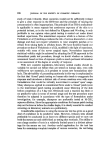
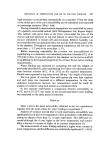
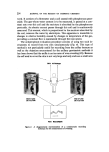
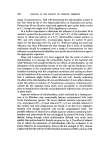
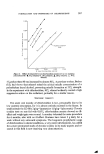
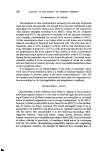
272 JOURNAL OF THE SOCIETY OF COSMETIC CHEMISTS 93-14•o, 80-17•o and 97-155/o (35). Similar good results were achieved by Mitchell, Slade and Linton (36) using 0.05•o chlorhexidine gluconate in glycerin as a urethral disinfectant and catheter lubricant. Chlorhexidine is a valuable safeguard against infection in obstetrics. Hibitane obstetric cream, a smooth, pourable hand cream containing 1•o of the gluconate, was designed to have lubricative properties to aid the obstetrician in vaginal examinations. It is used in labour for application to the skin on and around the vulva and is practically equivalent to preparing the skin with tincture of iodine. It is nonirritating to the skin and vaginal epithelium and widespread use in midwifery centres has indicated that sensi- tivity reactions are extremely rare. Bacteria applied• to the skin are killed within 15-30 s using Gardner and Seddon's technique (37) and results are of the same order as with 70•o alcohol. Infection and cross-infection in hospitals is kept down by a similar though thicker cream of the same strength but with better cosmetic properties (Hibitane antiseptic cream). It is primarily intended as a prophylactic but it also contains emollients to counteract the adverse effect of repeated immersion of the hands in water. It is used for this purpose by general practitioners as well as hospital staff. A more specialized use of chlorhexidine is for preventing or controlling the nasal carriage of Staphylococci and other organisms. A specially designed cream, nonirritant and pleasant to use (Naseptin) contains the hydro- chloride salt (0.1•o) with neomycin sulphate (0.5•o). This combination of entirely different types of antibacterials provides an effective means of overcoming nasal Staphylococci and minimizes the possibility that bacterial resistance may develop. Carriers are usually constitutionally predisposed to carry these pathogens, especially in the nares, with the result that relapse on recolonization usually occurs in 4-8 weeks after cessation of therapy. The routine twice daily treatment of nurses, patients and newborn infants is followed by a clear-cut reduction in cross-infection according to Rountree et al (38) and subsequent checks have confirmed this observation. The combined use of the nasal cream, and the antiseptic cream on the appro- priate infected areas, is a standard treatment for preventing the spread of furuncles. A salient feature of chlorhexidine in this and all other prophyl- actic uses is the assurance that it deals alike with both Gram-positive and Gram-negative organisms. Whilst chlorhexidine is excellent as a skin disinfectant and as a treat- ment for superficial surface infections, cuts or wounds, it is less successful as a curative agent against more deep-seated infections such as chronic in- fected varicose ulcers. One possible explanation is a failure to penetrate to
Purchased for the exclusive use of nofirst nolast (unknown)
From: SCC Media Library & Resource Center (library.scconline.org)