FORMULATION AND PROPERTIES OF CHLORHEXIDINE 269 the quaternary ammonium salts such as cetrimide. Activity is reduced in the presence of organic matter such as blood, serum and milk in vitro though considerable activity still remains even at dilutions down to 0.02 %. That there is adequate residual activity in the presence of blood or protein was demonstrated by Calman and Murray (17) who chose chlorhexidine as the best of nine alternative antibacterial agents for use in obstetrics, basing their recommendation on both long and short contact time tests. Activity of aqueous preparations increases over the range pH 5-8 but normally it is applied at pH 6-7 because of the risk of precipitation of base under alkaline conditions. In vive activity against both Gram-positive and Gram-negative organisms was first demonstrated in mice by Martin (27) and later by Jeffries and Price (28). These and many successive workers have given ample assurance that the high dilutions lethal to common pathogens are well beyond those likely to cause irritancy. UTILIZATION IN MEDICINE AND SURGERY It has often been said that Lister's antiseptic surgery was succeeded by aseptic surgery, but in reality this is untrue in modern times because the surgeon now relies on both methods of preventing infection. In the prepara- tions which precede surgery, heat sterilization, wet or dry, is augmented in many ways by the judicious use of antibacterial agents. Thus, formaldehyde gas may be released for gaseous sterilization of the operating theatre, while a variety of cleansing germicidal solutions such as halogenated phenols, quaternaries, formaldehyde solution, alcohols and hypochlorites are used for walls, trolleys, bowls etc. In this connection the use of a chlorhexidine- cetrimide combination (Savlon hospital concentrate) has become wide- spread. Another formulation which has diverse applications is a solution of chlorhexidine gluconate with nonionic detergent, colour and characterizing antiseptic type perfume (Hibitane 5% concentrate). Diluted to 0.5 % in 70% alcohol for the pre-operative and local disinfection of the patient's skin, it is equivalent to 1% iodine in the same strength of spirit yet it does not share the disadvantage of occasionally causing skin reactions. There have been many publications in support, for instance Lowbury, Lilly and Bull (29) tested a number of antiseptics for their ability to reduce transient skin flora and they concluded that these two solutions had approximately the same effect and were significantly more potent than other antiseptics tested, yet the prolonged usage of chlorhexidine did not cause sensitivity reactions,

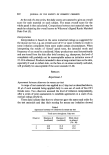
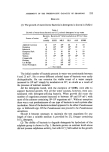
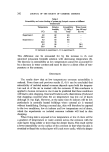
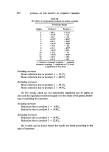
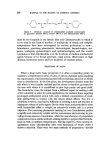
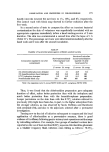
270 JOURNAL OF THE SOCIETY OF COSMETIC CHEMISTS Further studies on these lines were undertaken by Scott (30) who used 0.5% chlorhexidine in spirit in place of 2•o alcoholic iodine both for the patient's skin and the surgeon's hands. Swabs taken over a 2 h period from more than 1000 cases showed a total absence of pathogens. No skin reactions occurred. Later, Lowbury et al (31) confirmed his previous findings on the rapidity and efficacy of alcoholic chlorhexidine and he also found that aqueous solutions maintained the resident skin flora at a very low level. For oft-repeated usage, that is, each time the surgeon 'scrubs up' before donning his rubber gloves, a specifically designed bactericidal liquid hand- wash is preferred to the regimen of a soap wash followed by strong alcoholic bactericide. It is important that there should be a broad spectrum to deal with the wide variety of organisms met with in hospitals, as well as some residual action in case of glove leakage or accidental puncture, which happen too frequently to be disregarded. One problem to be faced in designing a chlorhexidine handwash was the need to prolong the bactericidal effect. This was recently illustrated by Lilly and Lowbury (32) who found that although a 0.75•o chlorhexidine gluconate handwash caused a much larger reduction in resident skin flora than a 3% hexachlorophane preparation, it had no residual disinfectant action on the skin after rinsing and drying the hands. Much attention has been given to this subject by Barnes, Billany and Sandoe (33) culminating in the recent introduction of Hibiscrub containing the high strength of 4•o chlorhexidine gluconate--which again stresses the advantage of introducing a very soluble salt. Excipients were selected which conferred the properties of a liquid soap and at the same time caused least interference with the bactericidal action. Thus, it was found (Table III) that a 1 min hand washing reduced the resident bacterial flora to about 18•o compared with 35•o with a 3•o hexachlorophane handwash and 20•o with a 0.75• iodophore detergent. Repeated washes on five occasions at eight Table In Rapidity of bactericidal action against natural skin flora Composition Survivors after 1 min wash (,%o) Survivors after five X 1 min washes at 8 h intervals (,%o) 4 ,%0 chlorhexidine gluconate detergent 3 % hexachlorophane liquid detergent 0.75 5/o iodophore detergent Nonmedicated block soap 18.2 35.5 20.5 100 0.9 10.0 5.9 100
Purchased for the exclusive use of nofirst nolast (unknown)
From: SCC Media Library & Resource Center (library.scconline.org)