656 JOURNAL OF THE SOCIETY OF COSMETIC CHEMISTS sible for the degradation of shampoos, facial lotions, and sun screen prepara- tions (1). These gram-negative, nonsporulating, motile bacilli attack hydrocarbons, including petrolatum (2, 3), and utilize alkanes and aromatics such as hexane and benzene (4). They produce lipases and oxidize fatty acids (5, 6) as well as a variety of carbohydrates. In addition, they produce protolytic and amylo- lyric enzymes. They reproduce most rapidly at 25øC at a pH of 7-8. The most common source of coagulase positive Staphylococcus aureus and Corynebacterium is the plant personnel. These gram-positive organisms in- habit the nasopharynx and skin. They are responsible for a vide variety of skin infections ranging from furunculosis to an ache-like condition. Preservatives or biocidal agents are used in the final product to suppress or inactivate the flora present in the ra v materials or introduced from the en- vironment during manufacturing. In some cases, these inimical substances may be "over vhelmed" by a high level of microbial contaminants. As pointed out by Tenenbaum (1), many ingredients in current formulations can, on oc- casion, become nutrients vhich stimulate microbial growth and reduce the efficacy of preservatives. Minimizing the risk of overloading the preservative system can best be accomplished by reducing the number of bacteria going into the final product. The chief sources of contamination in cosmetic plants are the make-up ter, raw materials, and the plant environment which includes personnel. Of these, make-up vater is perhaps the source of the greatest number of gram- negative contaminants. This is particularly true vhen deionized vater is used in product preparation. CONTAMINATION S OLrRCES Make-up Water Potable vater entering the deionizing (DI) system, although free of coil- forms, contains large numbers of gram-negative bacteria. They multiply in the interstitial spaces bet veen the resin beads. This is particularly true vhen the system remains static during periods of plant inoperation. When the vater is again utilized, these bacteria are distributed throughout the piping system as vell as into the tanks used for compounding the product. They migrate through to lo v points in the system or dead ends such as unused tees, valves, etc. Here they multiply at an alarming rate. These points serve to fiu'ther seed the system vith these organisms. Species of microorganisms com- monly encountered in DI systems include Pseudomonas and Achromobacter. In many instances these organisms are able to vithstand the rigors of DI resin regeneration. Therefore, some measure must be taken to remove them from the system.

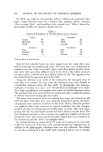
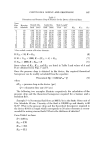
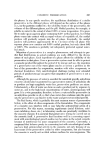
MICROBIAL CONTROL 657 Since deionization resins break down at temperatures above 60øC, hot wa- ter sanitization cannot be employed to reduce the microbial lead within the DI beds. An alternative procedure, employing 2% formalin disinfection, is given in Table I. Table I Formalin Disinfection of DI Resin Beds 1. Close valve between carbon and DI beds. 2. Open all outlet valves in system. 3. Pump 2% formalin solution (1 gal 37% formalin q- 17.5 gal water) into inlet of DI column. Continue pumping until effluent from all outlets gives positive (pink) Schiff test. a 4. Close all valves and allow formalin to remain in the system for 12-18 hours. 5. Flush entire system with tap water until effluent from all taps gives negative Schiff test. 6. Regenerate DI beds. •Test: To 7 ml of effluent add 1 ml of Schiff reagent, mix. Pink indicates a positive reac- tion, colorless indicates negative. Schiff reagent: Fuchsin 0.5 g, sodium bisulfite 9.0 g, conc. HC1 10.0 ml, H, q.s. 500 ml. Prepare fresh daily. Formalin treatment should be utilized when routine microbiological sur- veys of the effluent show a high total count or the presence of a specific or- ganism such as Pseudomonas. If .a carbon bed is present in the water system, it should be isolated by valving prior to the introduction of the formalin. If the piping downstream of the DI column is stainless steel, it may be steamed rather than formalin treated. When the piping downstream of the DI column is PVC, formalin treatment, rather than steam, should be used since PVC will not withstand temperatures in excess of 60øC. Ultraviolet irradiation is commonly used to reduce the microbial level of the water used in product compounding. Ultraviolet radiation (2,400-2,800 A) is relatively easy to use, but even with an optimum system, the effective depth of penetration is never more than 100/xm (7). Dissolved and suspended min- eral and organic content of the water drastically reduce the effect of penetra- tion. Deposits slowly build up on uv lamps and, even with regular cleaning, result in a decay in efficiency between cleanings. Flow rate, contact time, and hours of lamp operation are also critical and exact requirements which need to be established empirically and monitored regularly. For a combination of these reasons, uv radiation tends to be inconsistent and unreliable and is gen- erally not used as a sole means of achieving sterilization. Sterilization of water by heat requires a temperature of 121øC and a pres- sure of 15 psi. The large pressure vessels necessary are not commonplace in production units for cosmetic products. Sometimes lower temperatures (65-
Purchased for the exclusive use of nofirst nolast (unknown)
From: SCC Media Library & Resource Center (library.scconline.org)