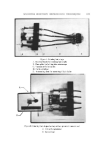
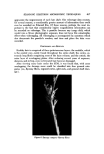
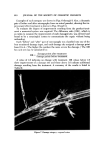
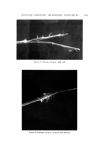
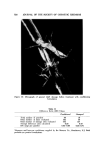
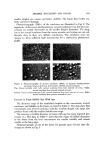
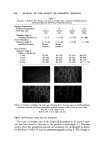
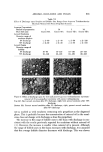
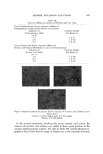
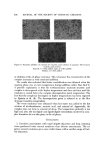
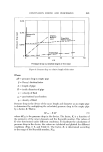
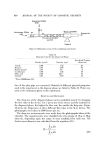
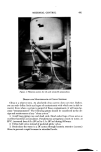
MICROBIAL CONTROL Figure 1. Filtration system for oils and semisolid preparations 661 DESIGN AND MAINTENANCE OF CLEAN SYSTEMS Clean is a relative term. An absolutely clean system does not exist. Rather, one can only define limits and types of contaminants with which one is able to coexist. Even when a system is purged of these contaminants, it will soon be- come "recontaminated." The following points should be considered in the de- sign and maintenance of any "clean system." 1. Avoid long piping runs and dead ends. Dead ended legs of tees serve as excellent bacterial accumulators. Pseudomonas aeruginosa counts in water, at 25øC, increased from 4.8 x 10a/ml to 1.1 x 10ø/ml during 24 hours. 9.. Utilize ball valves instead of gasketed globe valves. 3. Recirculate the water in a DI system through bacteria retentive (screen) filters to prevent a rapid increase in microbial levels.

662 JOURNAL OF THE SOCIETY OF COSMETIC CHEMISTS 4. Avoid pipe threads. Use sanitary (Ladish) type or sanitary threaded piping. 5. Periodically sanitize the piping system with steam, hot water, or 2% formalin. 6. Batching tanks should be equipped with bacterial retentive (screen) filters to prevent atmospheric contaminants from entering the tanks as it is being emptied. These filters should be generously oversized and equipped with vacuum breakers to prevent tank implosion. 7. Institute a comprehensive program of routine microbiological sampling to determine the frequency and efficacy of sanitization procedures. ( Received January 3, 1973) t•EFEBENCES (1) Tenenbaum, S., Psuedomonads in cosmetics, J. Soc. Cosmet. Chem., 18, 797-807 (1967). (2) Bogoff, M. H., Chemistry of oxidation of polycyclic aromatic hydrocarbons by soil pseudomonads, J. Bacteriol., 83, 998-1004 (1962). (3) Solari, A. A., Dato, A. A., et al., Use of a selective enrichment medium for the isol. ation of Pseudomonas aeruginosa from feces, Ibid., 84, 190 (1962). (4) Traxler, R. W., Microbial degradation of asphalt, Biotechnol. Bioeng., 4, 369-76 (1962). (5) Alford, J. A., and Pierce, D. A., Production of lipase by Pseudomonas fragi in a synthetic medium, J. Bacteriol., 86, 24-9 (1963). (6) Sultzer, B. M., Oxidative activity of psychrophilic and mexophilic bacteria on satu- rated fatty acids, Ibid., 82, 492-7 (1961). (7) Richards, J. W., Introduction to Industrial Sterilization, Academic Press, London, 1968, p. 153. (8) Dwyer, J. L., The technology of absolute microfiltration, Tech. Quart., Master Brew. Ass. Amer., 5, 243--9 (1968). (9) Hill, R. A., Clarification and Filtration, in Loc}nnan, L., Lieberman, H., and Kanig, J., The Theory and Practice of Industrial Pharmacy, Lea and Febiger, Philadelphia, 1970, Chap. 7, p. 143. (10) Mulvany, J. G., Membrane Filter Techniques in Microbiology, in Norris, J. R., and Ribbons, D. W., Methods in Microbiology, Vol. 1, Academic Press, London, 1969, Chap. VII, pp. 249-50. (11) Avis, K. E., Sterilization, in Lochman, L., Lieberman, H. and Kanig, J., The TI)eory and Practice of Industrial Pharmacy, Lea and Febiger, Philadelphia, 1970, Chap. 8, p. 165.
Purchased for the exclusive use of nofirst nolast (unknown)
From: SCC Media Library & Resource Center (library.scconline.org)