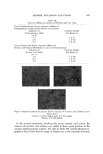
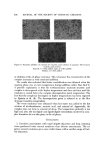
COSMETIC PRESERVATION 675 fluid milk for over 1 year at room temperature and a preservative system 0.3% Germall 115, 0.2% methyl paraben, and 0.1% propyl paraben preserved whole egg slurry for over 1 year at room temperature. A typical stability test was carried out on a protein shampoo using the preservative system 0.3% Germall 115, 0.2% methyl paraben, and 0.1% propyl paraben. Standard challenge tests with bacteria (including spore-forming Bacillus subtilis) and molds showed satisfactory preservation. When the cosmetic containing the Germall 115- paraben preservative system was held for 13 weeks at 44øC (equivalent to normal storage for i year) and then microbially challenged, the cosmetic showed no change in its preservative activity. CONCLUSION The cosmetic chemist is often required to choose a preservative system for a specific cosmetic. When faced with this problem, it is essential not only that he be familiar with the general properties of commonly used cosmetic pre- servatives, but also that he: (a) Consider the components of the formulation, especially the surfae- tants and any protein present, and recognize the limitations set by incom- patibilities, (b) Consider the raw materials, especially any contamination introduced by water and by other natural products. (e) Consider the phases in the product, including nonionic mieelle, and how they compete to dissolve the preservative. (Only the preservative in the water phase is fully active. ) (d) Choose the preservative system vhieh is least toxic, and use enough of it to be fully effective during storage life of the product. The final product must, of course, be tested for toxicity and mierobially challenge-tested to establish whether it has adequate preservative capacity. ( Received January 5, 1973) REFERENCES (1) Bean, H. S., Preservatives for pharmaceuticals, Paper No. 5, Symp. on Microbial Con- trol, Pharm. Soc. of Great Britain and Soc. Cosmet. Chem. of Great Britain, Sept. 29, 1971. (2) Bruch, C. W., Cosmetics: sterility vs. microbial control, Amer. Per[urn. Cosmet., 86, No. 4, 45 (1971). (3) Gucklhorn, I. R., Antimicrobials in cosmetics series, M[g. Chem. Aerosol News, 40-42 (1969-1971). (4) deNavarre, M. G. Synergists to Preservatives, in American Peffumer and Aromatics, 1st Documentary Ed., Allured Publishing Corp., Oak Park, Ill., 1956, p. 110. (5) Bryce, D. M., and Smart, R., The preservation of shampoos, J. Soc. Cosmet. Chem., 16, 187 (1965). (6) Berke, P. A., and Rosen, W. E., Germall, a new family of antimicrobial preservatives for cosmetics, Amer. Per[urn. Cosmet., 85, No. 3, 55 (1970). (7) Mulston, Warren, Clairol, Inc., Stamford, Conn., Private communication, 1972. ,
Purchased for the exclusive use of nofirst nolast (unknown)
From: SCC Media Library & Resource Center (library.scconline.org)