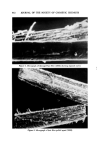
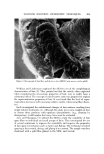
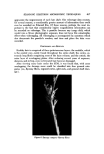
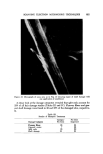
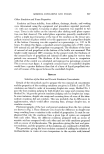
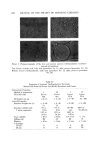
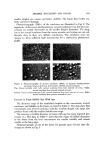
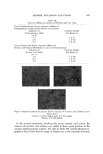
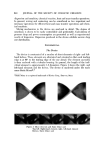
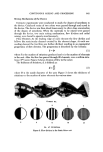
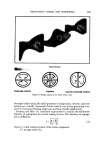
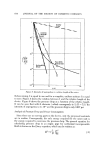
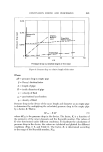
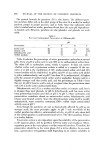
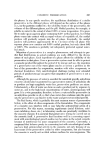
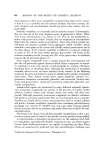
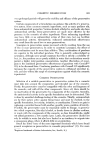
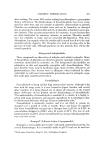
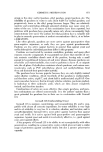
SCANNING ELECTRON MICROSCOPIC TECHNIQUES 617 appreciate the improvement of each hair shaft. The videotape data contain, for several reasons, a considerably greater amount of information than could ever be recorded on Polaroid film. Of these reasons, perhaps the most im- portant is the fact that considerably higher magnification information can be recorded on videotape. This is possible because any image drift, which would ruin a 50-sec photographic exposure, does not have this catastrophic effect when videotaping. All videotaping is accompanied by narration which also documents the panelist's number, and time and place the data were recorded. DISCUSSION AND I•ESULTS Healthy hair is composed of three proteinaceous layers: the medulla, which is the central core-rarely found throughout the entire shaft the cortex, ex- tremely long fibrils comprising most of the hairs volume and the cuticle, the outer layer of overlapping plates. After enduring several years of exposure, abrasion, and styling, even well-treated hair becomes damaged. After viewing many hairs under the SEM, it was found th.at, with some overlapping, the damage areas could be classified into four general cate- gories (i.e., flyaway fibers, exposed cortex, split ends, and general shaft dam- age). ..•.• ..•:• ..... ß .:•...1.•: .:..... "? .7!:': ß ,. } ß •. ß ..•. • :? :: Figure 6. Damage category-flyaway fibers

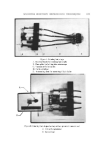
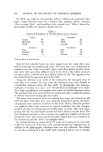
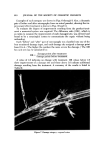
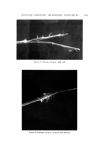
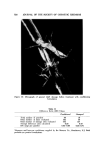
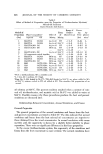
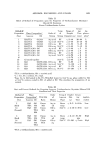
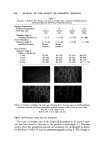
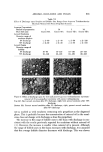
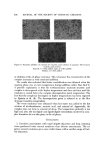
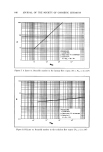
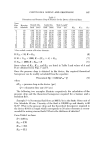
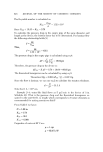
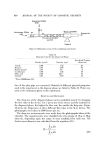
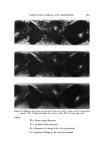
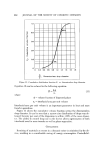
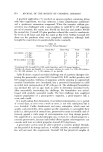
618 JOURNAL OF THE SOCIETY OF COSMETIC CHEMISTS Examples of each category are shown in Figs. 6 through 9. Also, a dramatic pair of before and after micrographs from an actual panelist, showing the im- provement after treatment, is shown in Figs. 10 and 11. To evaluate the degree of improvement resulting from the product treat- ment a numerical system was required. The difference ratio (DR), which is an index to measure the improvement of each damaged site, was devised and found to be a meaningful system to communicate the repair without being misleading. Each "before" and "after" pair of micrographs was classified into one of the four mentioned damage types, and each damage site assigned a danaage point from 0 to 4. (The higher the nulnber the more severe the damage.) The DR for ('ach site may be calculated by: DR = damage points after treatment damage points before treatment A value of 1.0 indicates no change with treatment. DR values below 1.0 shoxv improvement of a danaage site and those above 1.0 indicate additional danaage resulting from the treatment. A summary of the results is listed in Table II. Figure 7. Damage category-exposed cortex
Purchased for the exclusive use of nofirst nolast (unknown)
From: SCC Media Library & Resource Center (library.scconline.org)