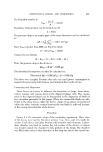
COSMETIC PRESERVATION 673 group on the ester: methyl paraben, ethyl paraben, propyl paraben, etc. The solubility of parabens in water is only about 0.25% for methyl paraben, and progressively lower as the alkyl group becomes larger. They are relatively nontoxic and nonirritating although saturated solutions may cause some irri- tation of the eye. A few cases of skin sensitization have been reported, but problems with parabens have generally arisen only where unreasonably high concentrations were used. The authors feel that parabens have a valuable role to play in cosmetic preservation at modest concentrations-that is, at or below a total of 0.3%. Like other phenols, parabens are more active against gram-positive than gram-negative organisms as such, they are poor against pseudomonads. Parabens are less active against bacteria in general than against yeast and molds although the individual parabens differ in this property. Parabens are inactivated by nonionic emulsifiers, proteins, and many other common cosmetic components. It was pointed out above that micelies of cer- tain nonionic emulsifiers absorb most of the paraben, leaving only a small amount to be partitioned between oil and water phases. Because parabens are oil-soluble and water-insoluble, they tend to partition in favor of, or migrate into, the oil phase. Polyethylene containers absorb parabens, and various mac- romolecules, such as PVP, polyethylene glycol, and methylcellulose, bind them and dinfinish their preservative activity. The parabens have become popular because they are only slightly ionized under alkaline conditions. About two-thirds of the paraben is undissociated, and therefore active, at pH 7, and about half is undissociated at pH 8.5. One must remember, however, that in strongly alkaline solution, parabens gradual- ly hydrolyze to their carboxylic acids, which are then almost completely ionized, and therefore inactive. Combinations of esters are more effective than single parabens, and para- ben combinations are offered commercially. It is the authors' opinion that a great potential for parabens lies in their use in combination with Germall 115. Germall 115 (Imidazolidinyl Urea) Germall 115 is nontoxic, nonirritating, and nonsensitizing (6), and is com- patible with almost all cosmetic ingredients. Its water solubility is very high and its oil solubility is very low. It is colorless, odorless, and tasteless, and is not pH-dependent. Germall 115 is more active against bacteria than against yeast and molds. It is active against both gram-positive and gram-negative organisms. Against yeast and molds it is selectively effective, i.e., good against some, poor against others. A key property of Germall 115 is its ability to act synergistically with other preservatives, resulting in a preservative system which gives not only a wider range of protection against microbial insult, but also a greater preservative capacity.

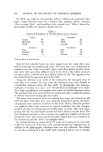
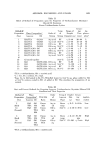
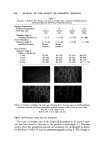
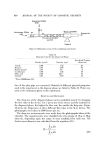
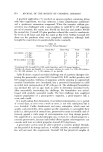
674 JOURNAL OF THE SOCIETY OF COSMETIC CHEMISTS A practical application (7) involved an aqueous product containing, kdong with other ingredients, two hair softeners: a fatty alkanolamine conddnsate and a quaternary ammonium compound. When the cosmetic without p're- servative was challenged with a mixed culture to yield 104 to 10 • organis'ms per ml of cosmetic, the counts rose 10-fold the first day and another 10-f01d the second day. Germall 115 plus paraben reduced the count to nondetecta- ble levels in 24 hours and kept the count at this level. Neither Germall 115 alone nor the parabens alone were completely satisfactory although both brought the count down to nondetectable levels eventually. Table II Challenge Test of a Protein Shampoo" Gram-Pos. b Gram-Neg. Yeast , Mold Inocul]•tion + 0 days 2+ 4+ + 1 day 0 1+ + 2 days 0 0 Re-inoculation q-0 days 4+ 4+ -1- 1 day 0 1-3- -1- 2 days 0 0 4+ 4+ 1+ 0 0 0 4+ 4+ o 1+ o o "Containing 0.5% Germall 115, 0.2% methyl paraben, and 0.1% propyl paraben. "Numbcr of colonies per 1oopful: 4+, too many colonies to count 3+, 100-300 colonies 2+, 50-100 colonies 1+, 1-50 colonies 0, no growth. Table II shows a typical microbial challenge test of a protein shampoo don- taining the preservative system 0.5% Germall 115, 0.2% methyl paraben, and 0.1% propyl paraben. Cultures of organisms actively growing in unpreserved cosmetic formulation were inoculated into a preserved formulation to yield an initial total contamination of 10 ø cells per ml. The challenged formfilation was streaked (0.1 ml) on agar daily in order to determine microbial levels. After successfully inactivating the challenge, the formulation was rechal- longed with similarly successful results. The four challenge tests empldyed separate populations of a gram-positive organism, a gram-negative rod, a yeast, and a mold. It is worth noting that elimination of microbial contamination over a period of several days, or even over a week or more, is not only satisfactory, b•,•t is even desirable. Unlike disinfectants and many antiseptics, which must act quickly and powerfully, often against specific organisms, to accomplish their tasks in a short period of contact time, preservatives must act steadily and cf.- fectively against a wide range of microorganisms ovcr long storage periods. The rapid kill of a successful antiseptic may, in fact, be a disadvantage for a cosmetic preservative, because such lethal effects against microorganisms can coincide with toxic or irritant properties toward all living tissues. A preservative system must be able to protect a cosmetic product through- out the period of its storage and use. A volatile, reactive, or unstable p•cscrva- tire will not meet this requirement, Germall 115 has preserved samples of
Purchased for the exclusive use of nofirst nolast (unknown)
From: SCC Media Library & Resource Center (library.scconline.org)