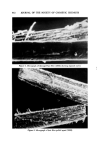
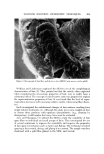
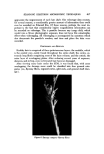
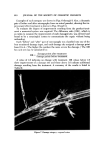
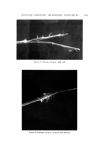
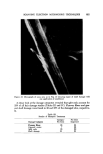
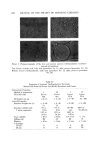
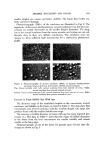
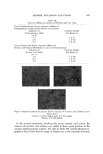
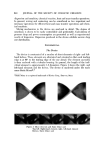
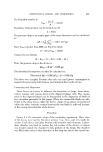
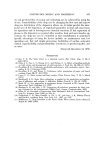
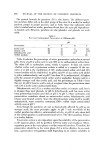
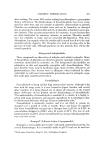
SCANNING ELECTRON MICROSCOPIC TECHNIQUES 613 Figure 3. Micrograph of hair fiber pulled into a kn3t (800X) (note severe cuticle uplift) XVolfram and Lindemann employed the SEM to reveal the morphological characteristics of hair (3). They pointed out that the cuticle, often neglected when considering the stress-strain properties of hair, may in reality have a substantial effect. The concept of cuticle-cortex ratio was proposed to explain the supercontraction properties of hair. It was found that the level of super- contraction decreases with increasing relative cuticle (decreasing fiber diame- ter). Swift investigated the architectural changes of hair surfaces resulting from simple toiletry treatments (4). Although this study gives some insights in how to choose those products with optimum characteristics (e.g., cleaning by shampooing), it still implies that many hairs must be evaluated. Ayer and Thompson (5) utilized the SEM to stndy the coatability of hair spray fihns on individual and small groups of hairs. They investigated the,. use of several surfactants to improve the coatability and improve the properties of hair spray formulations such as luster and flaking. The technique involved spraying a hair swatch, drying, and gluing it to a mount. The sample was then shadowed with a gold film, placed in the SEM, and viewed.

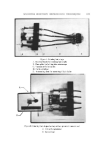
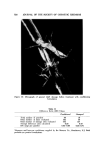
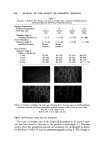
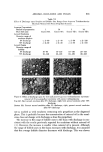
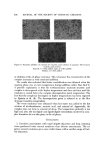
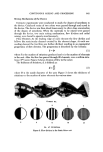
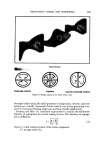
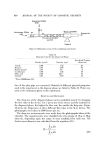
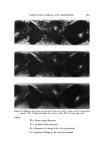
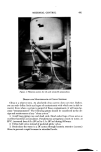
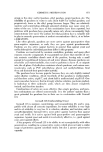
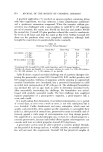
614 JOURNAL OF THE SOCIETY OF COSMETIC CHEMISTS EXPERIMENTAL Rotating Hair Stage All previous SEM studies of hair suffer from the primary experimental diffculty that hair exhibits considerable heterogeneity not only from person to person but also between hairs from the same person and even different sec- tions along the same hair shaR. Consequently, when studying the effect of a product it is extremely cliffcult to conclude that a particular feature resulted from the treatment and did not already exist prior to the treatment. In order to overcome these drawbacks that have in the past been taken for granted as being impossible to overcome, a rotating hair stage (RHS)* was designed and fabricated (Figs. 4 and 5). The RHS provides for mounting four different hair shafts, each of which could be rotated around its axis by controls external to the microscope vacuum system. After several attempts, a satisfactory sea] was developed consisting of a brass screw-on nut, beveled on the inside, into which fit a carefully slit beveled rubber groinmet. When the hairs were placed in the slit, the pressure produced by the beveled screw-on nut was sufficient to produce an excellent high vacuum seal. The rotating hair stage allowed us to make a completely valid evalu.ation of hair before and after treatment. The RHS and the SEM parameters used resulted in the ability to perform the following: 1. The identical area on the same hair was evaluated in the before and after micrographs. In order to ensure this, complete axial rotation in addition to the normal X-Y rotation of the SEM was performed, reveal- ing the entire circumference of the hair. 2. The hair remained on the panelist's head when applying the product. The RHS allowed taking the sample in and out of ,the SEM without cutting the hair from the scalp. 3. The SEM instrument parameters were adiusted to obtain micrographs of hair without applying a conductive metallic c•ating. In other words, no special treatment was given to the various hair samples. The charging problems, normally encountered, were minimized by operating the SEM a•t reduced accelerating voltages (10 kv rather than 30 kv), low beam currents, and very specific settings for the condenser lens and detector power supply. Test Protocol Only girls with hair longer than 18 in. in length were selected no other qualifications were used. Eighteen inches was our estimate of the minimum length required for getting the hairs into and out of the microscope without breaking. *Designed jointly by the Mennen Co., Morristown, N.J., and Structure Probe Inc., West Chester, Pa.
Purchased for the exclusive use of nofirst nolast (unknown)
From: SCC Media Library & Resource Center (library.scconline.org)