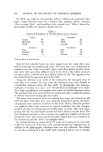
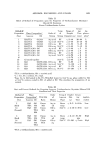
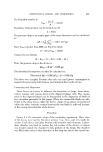
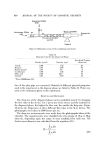
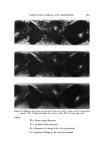
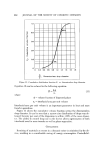
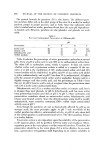
674 JOURNAL OF THE SOCIETY OF COSMETIC CHEMISTS A practical application (7) involved an aqueous product containing, kdong with other ingredients, two hair softeners: a fatty alkanolamine conddnsate and a quaternary ammonium compound. When the cosmetic without p're- servative was challenged with a mixed culture to yield 104 to 10 • organis'ms per ml of cosmetic, the counts rose 10-fold the first day and another 10-f01d the second day. Germall 115 plus paraben reduced the count to nondetecta- ble levels in 24 hours and kept the count at this level. Neither Germall 115 alone nor the parabens alone were completely satisfactory although both brought the count down to nondetectable levels eventually. Table II Challenge Test of a Protein Shampoo" Gram-Pos. b Gram-Neg. Yeast , Mold Inocul]•tion + 0 days 2+ 4+ + 1 day 0 1+ + 2 days 0 0 Re-inoculation q-0 days 4+ 4+ -1- 1 day 0 1-3- -1- 2 days 0 0 4+ 4+ 1+ 0 0 0 4+ 4+ o 1+ o o "Containing 0.5% Germall 115, 0.2% methyl paraben, and 0.1% propyl paraben. "Numbcr of colonies per 1oopful: 4+, too many colonies to count 3+, 100-300 colonies 2+, 50-100 colonies 1+, 1-50 colonies 0, no growth. Table II shows a typical microbial challenge test of a protein shampoo don- taining the preservative system 0.5% Germall 115, 0.2% methyl paraben, and 0.1% propyl paraben. Cultures of organisms actively growing in unpreserved cosmetic formulation were inoculated into a preserved formulation to yield an initial total contamination of 10 ø cells per ml. The challenged formfilation was streaked (0.1 ml) on agar daily in order to determine microbial levels. After successfully inactivating the challenge, the formulation was rechal- longed with similarly successful results. The four challenge tests empldyed separate populations of a gram-positive organism, a gram-negative rod, a yeast, and a mold. It is worth noting that elimination of microbial contamination over a period of several days, or even over a week or more, is not only satisfactory, b•,•t is even desirable. Unlike disinfectants and many antiseptics, which must act quickly and powerfully, often against specific organisms, to accomplish their tasks in a short period of contact time, preservatives must act steadily and cf.- fectively against a wide range of microorganisms ovcr long storage periods. The rapid kill of a successful antiseptic may, in fact, be a disadvantage for a cosmetic preservative, because such lethal effects against microorganisms can coincide with toxic or irritant properties toward all living tissues. A preservative system must be able to protect a cosmetic product through- out the period of its storage and use. A volatile, reactive, or unstable p•cscrva- tire will not meet this requirement, Germall 115 has preserved samples of

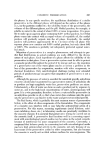
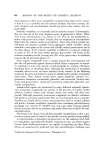
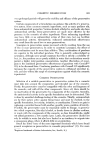
COSMETIC PRESERVATION 675 fluid milk for over 1 year at room temperature and a preservative system 0.3% Germall 115, 0.2% methyl paraben, and 0.1% propyl paraben preserved whole egg slurry for over 1 year at room temperature. A typical stability test was carried out on a protein shampoo using the preservative system 0.3% Germall 115, 0.2% methyl paraben, and 0.1% propyl paraben. Standard challenge tests with bacteria (including spore-forming Bacillus subtilis) and molds showed satisfactory preservation. When the cosmetic containing the Germall 115- paraben preservative system was held for 13 weeks at 44øC (equivalent to normal storage for i year) and then microbially challenged, the cosmetic showed no change in its preservative activity. CONCLUSION The cosmetic chemist is often required to choose a preservative system for a specific cosmetic. When faced with this problem, it is essential not only that he be familiar with the general properties of commonly used cosmetic pre- servatives, but also that he: (a) Consider the components of the formulation, especially the surfae- tants and any protein present, and recognize the limitations set by incom- patibilities, (b) Consider the raw materials, especially any contamination introduced by water and by other natural products. (e) Consider the phases in the product, including nonionic mieelle, and how they compete to dissolve the preservative. (Only the preservative in the water phase is fully active. ) (d) Choose the preservative system vhieh is least toxic, and use enough of it to be fully effective during storage life of the product. The final product must, of course, be tested for toxicity and mierobially challenge-tested to establish whether it has adequate preservative capacity. ( Received January 5, 1973) REFERENCES (1) Bean, H. S., Preservatives for pharmaceuticals, Paper No. 5, Symp. on Microbial Con- trol, Pharm. Soc. of Great Britain and Soc. Cosmet. Chem. of Great Britain, Sept. 29, 1971. (2) Bruch, C. W., Cosmetics: sterility vs. microbial control, Amer. Per[urn. Cosmet., 86, No. 4, 45 (1971). (3) Gucklhorn, I. R., Antimicrobials in cosmetics series, M[g. Chem. Aerosol News, 40-42 (1969-1971). (4) deNavarre, M. G. Synergists to Preservatives, in American Peffumer and Aromatics, 1st Documentary Ed., Allured Publishing Corp., Oak Park, Ill., 1956, p. 110. (5) Bryce, D. M., and Smart, R., The preservation of shampoos, J. Soc. Cosmet. Chem., 16, 187 (1965). (6) Berke, P. A., and Rosen, W. E., Germall, a new family of antimicrobial preservatives for cosmetics, Amer. Per[urn. Cosmet., 85, No. 3, 55 (1970). (7) Mulston, Warren, Clairol, Inc., Stamford, Conn., Private communication, 1972. ,
Purchased for the exclusive use of nofirst nolast (unknown)
From: SCC Media Library & Resource Center (library.scconline.org)