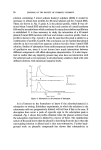
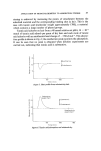
STABILITY OF MONOFLUOROPHOSPHATE AND FLUORIDE IONS IN DENTIFRICE ACKNOWLEDGMENTS This work is part of a research programme on dentifrices performed on behalf of one of the member companies of the Kabi Group, Grummebolagen. We wish to thank Dr John Holmberg, head of the Surface Chemistry Laboratory at the Research Department of the Kabi Group, for his en- couraging advice and valuable discussions. We also wish to thank Professor Bertil •berg, the Director of Research of the Kabi Group, for his interest in our work and the permission to publish the results, and Mr William Hilton-Brown, who has revised the English text. (Received: 30th March 1973) REFERENCES (1) Ericsson, Y. Fluoride in dentifrices. Investigations using radioactive fluorine. Acta Odontol. $cand. 19 41 (1961). (2) Koch, G. Effect of sodium fluoride in dentifrice and mouthwash on incidence of dental caries in schoolchildren. Odontol. Revy 18 Suppl. 12 (1967). (3) Andersson, R. and Ericsson, Y. Fluorine in the liquid phase of a monofluorophosphate dentifrice. Sv. Tandli•'k. Tidskr. 63 779 (1970). (4) Cropper, E. and Puttnam, N. A. The gas chromatographic determination of fluoride in dental creams. o r. $oc. Cosmet. Chern. 21 533 (1970). (5) Frant, M. S. and Ross, J. W. Use of a total ionic strength adjustment buffer for electrode determination of fluoride in water supplies. Anal. Chern. 40 1169 (1968). (6) Lang, W. f2ber die Monofluorfosfors•iure und die Ahnlichkeit ihrer Salze mit den Sulfaten. Chern. Bet. 62 793 (1929). (7) Fajans, K. and Steiner, W. Bemerkungen zur spektralen Sensibilisierung des Silberbromids und Silberchlorids durch adsorbierte Ionen. Z. Phys. Chern. Abt. A 125 307 (1927).

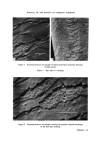
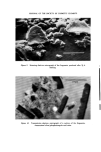
J. Soc. Cosmet. Chem. 25 13-22 (1974) ¸ 1974 Society of Cosmetic Chemists of Great Britain The chemistry of human hair cuticle•I: A new method for the physical isolation of cuticle j. A. SWIFT and B. BEWS* Synopsis---The CUTICLE of human HAIR has been isolated in bulk by a new method involving vigorous agitation of fibres in water. The cuticle fractions have been shown to be of high morpho- logical purity using various techniques of ELECTRON MICROSCOPY. The significance of AMINO ACID ANALYSES is discussed. INTRODUCTION Despite the fact that any toiletry treatment of human hair must involve direct contact with the outer cuticle layer, either cleaning its surface, depositing materials on it or merely diffusing through it, very little is known about the chemical composition of this layer. The present series of papers describes studies carried out to elucidate the chemical nature of this com- ponent and thereby to improve our understanding of its interaction with cosmetic agents. CUTICLE STRUCTURE At the root end of human scalp hair the cuticle is about 3 gm thick and sheaths the underlying solid cylindrical core of cortex. It consists of a series of cellular sheets each about 0.3 gm thick and in the form of a segment from a truncated conical shell about 40-60 [tm in length and breadth which * Unilever Research Isleworth Laboratory, Unilever Limited, 455 London Road, Isleworth, Middlesex. 13
Purchased for the exclusive use of nofirst nolast (unknown)
From: SCC Media Library & Resource Center (library.scconline.org)