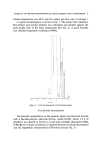
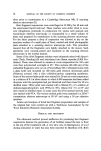
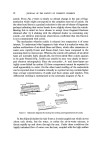
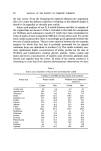
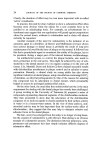
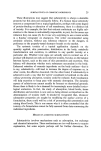
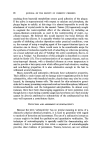
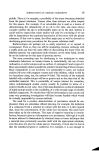
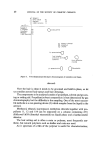
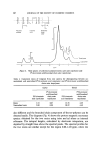
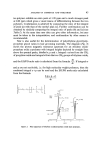
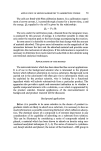
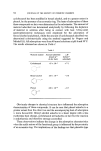
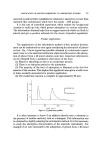
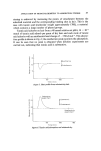
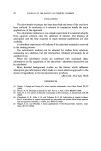
56 JOURNAL OF THE SOCIETY OF COSMETIC CHEMISTS solution containing 5 mmol sodium dodecyl sulphate (SDS) it would be necessary to obtain heat profiles for 40 mmol phenol and for 5 mmol SDS. These are shown in Fig. 4 peak A is the phenol profile, whilst B was ob- tained when 5 mmol SDS adsorbed on hair and consists of a small exotherm followed by an endotherm which continues for many hours before equilibrium is established. It is then necessary to study the interaction of a 40 mmol phenol/5 mmol SDS mixture with hair and obtain a reaction profile. Such a profile is shown in Fig. 4 peak C. It can be seen that this peak is similar to a combination of profiles A and B. The conclusion can be reached that phenol adsorbs on hair not only from aqueous solution but also from 5 mmol SDS solution. Studies of adsorption from multicomponent systems will mostly be of qualitative use, since it is not known how much interactions between different components will affect adsorption characteristics. It is also impor- tant to realize that any impurity present may also have an interaction with the substrate and so it is necessary in all calorimetry studies to deal with well- defined solutions with minimum impurity levels. •u Exothermic 6ndothermic 50 I00 Time (min) Figure 4. Adsorption in the presence of detergent. It is of interest to the formulator to know if the adsorbed material is substantive to rinsing. Subsidiary experiments, in which the solutions in the calorimeter cells are progressively diluted, will tell him if this is the case. If desorption does occur a peak of opposite sign to the adsorption peak is obtained. Fig. 5 shows the profile obtained when the phenol solution from the adsorption experiment is diluted by a factor of three. The endothermic nature of the peak shows that the phenol is desorbing from the hair when the surrounding solution is diluted and is thus non-substantive. Further back- ground work on phenolic compounds has shown that substantivity to

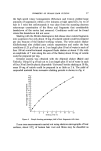
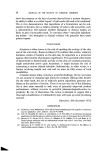
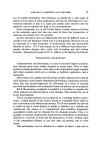
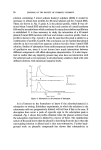
APPLICATION OF MICROCALORIMETRY TO ADSORPTION STUDIES 57 rinsing is achieved by increasing the points of attachment between the adsorbed material and the corresponding binding sites in hair. This is the case with tannic acid (molecular weight approximately 1700), a material which contains a large number of phenol groups. Tannic acid adsorbs on hair from a 40 mmol solution at pH 6, 14 x 10 -a mmol of tannic acid adsorb per gram of dry hair and each mole of tannic acid adsorbs with an exothermic heat change of - 170 kJ mol -x. The adsorp- tion profile is shown in Fig. 6 the exothermic peak monitors the adsorption. It can be seen that no peak is obtained when dilution experiments are carried out, indicating that tannic acid is substantive. t Exotherm•c Endothermic 50 100 T•me (mln) Figure 5. Heat profile from substantivity test. Exothermic Endothermic Substantivity experiment 50 I00 150 Time (min) Figure 6. Tannic acid adsorption and substantivity.
Purchased for the exclusive use of nofirst nolast (unknown)
From: SCC Media Library & Resource Center (library.scconline.org)