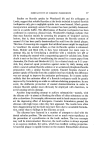
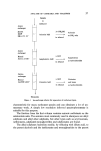
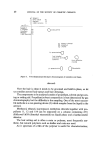
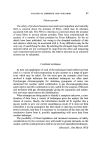
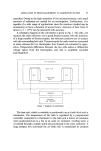
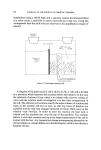
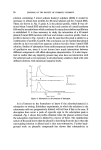
36 JOURNAL OF THE SOCIETY OF COSMETIC CHEMISTS Nuclear magnetic resonance spectroscopy (mr) Mass spectrometry (ms) Thermal analysis Differential thermal analysis (dta) Thermogravimetric analysis (tga) X-ray Diffraction Micro-analysis Polarography Ion selective electrodes APPLICATION OF TECHNIQUES Surfactants in shampoos Let us start at the top with hair---clean, shining, manageable hair, which automatically suggests shampoos. Most modern shampoos contain one or more mild detergents and optionally a lather booster. These surface active agents can belong to one or more of the five main groups of surfactants, namely soaps, anionics, cationics, nonionics or amphoterics. So if the question is which surfactants are present and the amounts of each, how can the answer be obtained? First, the species must be separated and one of the best ways is by ion- exchange chromatography. One scheme is illustrated in Fig. 1. An alcoholic solution of the shampoo non-volatiles is passed down three columns in series. The nonionics pass straight through and are collected in the eluent. The anionics are held on the first column, some amphoterics on the second and the cationics plus any non-volatile bases on the third. The columns are then separated and each one eluted. The first one with 3N ammonia in ethanol and the second and third with N hydrochloric acid in ethanol. Each fraction is then evaporated to dryness and extracted with acetone, iso-propanol etc. to remove inorganic salts. Soaps, if present, are best removed as fatty acids by acidifying and solvent extracting the shampoo non-volatiles prior to ion-exchange chromatography. The fractions thus obtained can be further examined. First it is useful to monitor each fraction by means of its infra-red spectrum since this is

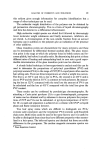
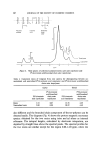
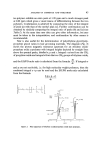
ANALYSIS OF COSMETICS AND TOILETRIES 37 Artion exchanger Zerolit M-1P SRA 151 C1- Sample in methanol Anionics held 3N NHaOH Anionics as NHa salts in ethanol Anion exchanger Biorad AG1 x 2 OH- Amphoterics held • HC1 in ethanol Amphoterics as hydrochlorides Cation exchanger Biorad AG50W x 8H + Cationics held N HC1 Cationics -' and bases in ethanol as hydrochlorides Nonionics Figure 1. Ion-exchange scheme for separation of surfactant types. characteristic for many surfactant species and can eliminate a lot of un- necessary work. A simple low resolution infra-red spectrophotometer is suitable for this purpose. The fraction from the first column contains anionic surfactants as the ammonium salts. The anionics most commonly used in shampoos are alkyl sulphates and alkyl ether sulphates, but other types such as acyl taurates, isethionates, sulphated monoglycerides and sulphonates are found. The alkyl sulphates hydrolyse readily, by refluxing with dilute acid, to the parent alcohols and the isethionates and monoglycerides to the parent
Purchased for the exclusive use of nofirst nolast (unknown)
From: SCC Media Library & Resource Center (library.scconline.org)