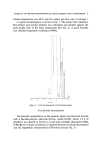
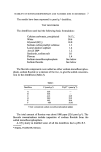
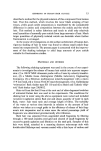
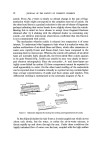
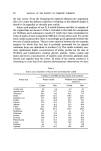
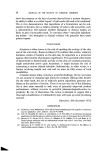
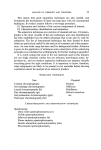
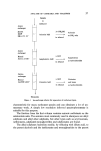
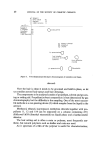
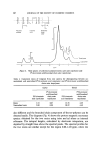
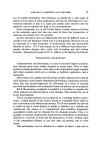
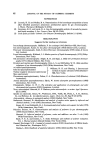
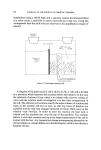
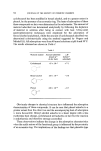
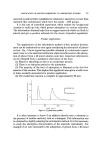
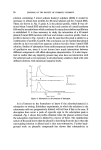
42 JOURNAL OF THE SOCIETY OF COSMETIC CHEMISTS •H i• FH oooml Fm H 1 -- - -I-C--C•--t-C--C- / .... /• I/ /I I / H • •Ja LCH• H J• LH O--C=OJc I C--CH 3 R•-•--R I II o R3 Polyvinyl Cro•on[c Bronched ocelo•e odd choin esler -\ ,,, ,, j ,,, /• •"---- TerpoJyme __ • Copolymer 6 5 4 3 2 I 0 ppm Figure 4. Nmr spectra of polyvinyl acetate/crotonic acid acid copolymer and PVA/crotonic acid/branched chain ester terpolymer. Table I. Calculated ratios of integrals from nmr spectra for distinguishing between un- neutralized and neutralized PVA/crotonic acid copolymer and PVA/crotonic acid/branched chain ester terpolymer (a)/(c) (b)/(c) PVA/crotonic PVA/crotonic acid/branched acid/branched PVA/crotonic chain ester PVA/crotonic chain ester acid copolymer terpolymer acid copolymer terpolymer Resin 2.21 0.87 12.78 4.69 Neutralized resin 2.00 0.88 10.22 4.68 also different and the branched chain component of the ter-polymer can be detected easily. The diagram (Fig. 4) shows the proton magnetic resonance spectra obtained for the two resins using tetra me hyl silane as internal reference. The integral heights, calculated by electronic integration, are depicted by straight lines above the spectral peaks. The spectral profiles for the two resins are similar except for the region 0.88-1.20 ppm, where the

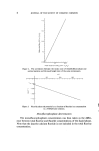
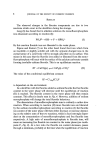
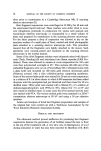
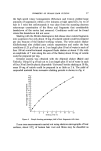
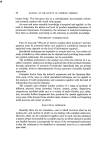
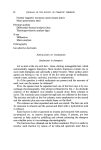
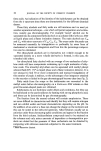
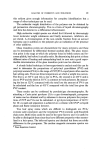
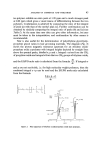
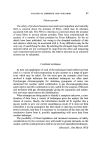
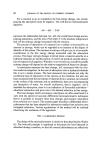
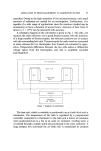
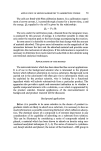
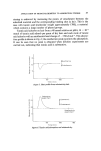
ANALYSIS OF COSMETICS AND TOILETRIES 43 ter-polymer exhibits an extra peak at 1.20 ppm and a much stronger peak at 0.88 ppm which gives a visual means of differentiating between the two polymers. Confirmation is achieved by comparing the ratio of the integral of peak (a) with that of the methyl peak (c). Further confirmation can be obtained by similarly comparing the integral ratio of peaks (b) and (c) (see Table I). At the same time nmr data can give other information, but care must be taken in the interpretation, and confirmation by other means is recommended. Nmr is also useful for the determination of polyethylene glycol/poly- propylene glycol ratios in hair grooming materials. The diagram (Fig. 5) shows the proton magnetic resonance spectrum for an ethylene oxide/ propylene oxide copolymer with integral heights depicted by straight lines above the spectral peaks, labelled e, p and r. Integral r arises from the CHa ofpropylene oxide and integral e from the two CH2 groups of ethylene oxide, and the EO/PO mole ratio is calculated from the formula 3e If integrals e 4r and p are not resolvable, i.e. for high molecular weight polymers, then the combined integral e + p can be used and the EO/PO mole ratio calculated from the formula 3 (e + p -r) 4r / HI L Jx L CH• JY n (e) l 3.66 Ideal __ I j case / 2 x CH 2 of EO //"' CH 3 of PO /I 3.•• (r) Jl'J8 .J 1.14 I•KI-.*-CH• of PO 5 4 3 2 I ppm Figure 5. Nmr spectrum of ethylene oxide/propylene oxide type polymers.
Purchased for the exclusive use of nofirst nolast (unknown)
From: SCC Media Library & Resource Center (library.scconline.org)