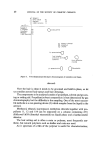
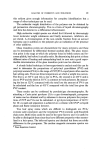
38 JOURNAL OF THE SOCIETY OF COSMETIC CHEMISTS fatty acids. An indication of the identity of the hydrolysates can be obtained from the ir spectrum since these are characteristic for the different chemical classes. These fatty alcohols and fatty acids are still mixtures and we need yet another separation technique--one which will permit separation and estima- tion, namely gas chromatography. For example 'lauryl' alcohol can be separated into its component fatty alcohols on a column with Carbowax 20M as liquid phase and a flame ionization detector. The main alcohols are and C•4 with minor amounts of C•0, C•6, C•s. The areas under the peaks can be measured manually by triangulation or preferably by some form of mechanical or electronic integration and from this the percentage composi- tion can be calculated. The ethoxylated alcohols are in themselves not volatile enough to be separated directly so a more volatile derivative is formed, in this case, the trimethyl silyl ethers. An ethoxylated fatty alcohol with an average of two molecules of ethy- lene oxide will have components containing up to eight molecules of ethy- lene oxide. The trimethyl silyl ethers can be separated with methyl phenyl silicone fluid (OV 17)* as liquid phase and a flame ionization detector. It is not unusual to find 30 or more components and manual triangulation of this number of peaks is tedious, so the advantages of an integrator attached to the recorder or linked to the gas chromatograph become clear (see Fig. 2). Fatty acids from the soaps or the isethionates are converted to the methyl esters before chromatography on a Carbowax 20M column so that good Gaussian-shaped peaks are obtained. Sulphonates do not hydrolyse under dilute acid conditions, but they can be hydrolysed to the parent alkenes by heating with strong phosphoric acid, and these can be determined by gas chromatography. The fraction from the second column will contain amphoterics. These are more difficult to characterize and identify but they will contain nitrogen and can exhibit acidic and basic characteristics depending on the pH. So the addition of an acid or a base can change the charge on the molecule and this can be noted in the infra-red spectrum. Alkyl betaines usually act as cationics under these chromatographic conditions and appear in the fraction from the third column. Imidazolinium compounds tend to be retained on the columns and only minor amounts of impurities or decomposition pro- ducts are eluted but the presence of these surfactants can be detected by comparing with reference materials subjected to the same treatment. * Phase Separation Limited.

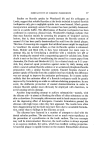
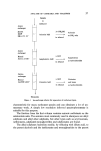
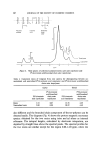
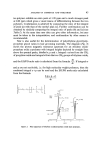
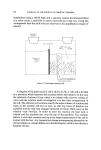
ANALYSIS OF COSMETICS AND TO1LETRIES 39 CI4 CI2 CI• CI2 CI4 CI2 Cl• CI2 Cl• CI2 CI4 CI2 CI4 CI2 CI4 CI2 7EO 7EO FoEO 6EO 5EO 5EO 4EO •EO $EO :$EO 2EO 2EO lEO lEO Figure 2. Gas chromatogram of ½thoxylatcd fatty alcohol trimethyl silyl ethers. The fraction from the third column will contain non-volatile bases as well as cationics. These can be separated and identified by means of two- dimensional thin layer chromatography. The diagram (Fig. 3) illustrates the separation of a selection of cationics and weak bases. If it is necessary to know the alkyl chain length distribution in a quaternary ammonium halide, this can be achieved by reaction gas chromatography. In this procedure the first 2 ft of a 5 ft column contains a 20•o loading of potassium hydroxide on Celite and the last 3 ft contains 10• Aoeiezon L as liquid phase plus 10• potassium hydroxide. The quaternary reacts with alkali on the gc column producing a series of olefins and tertiary amines which can be separated, identified and estimated gas chromatographically (1). Finally, the nonionic fraction can be separated into its component parts by column chromatography on silica or alumina columns, eluting with successively more polar solvents or preferably by high pressure liquid chromatography which gives better resolution in shorter times. Liquid chromatography is likely to become the generally accepted method for separating surfactant mixtures in the future. The nonionic fraction is likely to be the most complex since in addition to lather booster (fatty amides), fatty esters for opacifying, and ethoxylated nonionic surfactants, it will contain the nonionic components (e.g. unsul- phated fatty alcohols etc.) from the other surfactant species.
Purchased for the exclusive use of nofirst nolast (unknown)
From: SCC Media Library & Resource Center (library.scconline.org)