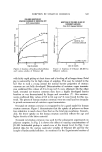
518 JOURNAL OF THE SOCIETY OF COSMETIC CHEMISTS the primary interest has been in dry skin, and we developed a criterion for evaluating the quality of the stratum corneum. Figure 3 shows a sequence of 4 montages taken from the calf area of elderly females. This work was done in collaboration with Dr. Albert Kligman, of the University of Pennsylvania, who actually made the clinical evaluations from these subjects. All four mon- tages are at the same magnification and viewing conditions, and the only variable here is the clinical variation from subject to subject. "Norma]" skin (Fig. 3(a)) basically shows a relatively smooth surface and the individual cells are desquamating away as extremely small clusters (or perhaps individu- ally) and not as large layers. Note the absence of what we will later refer to as uplifting layers. Mildly Flaky (Fig. 3(b)) shows slightly more evidence of layers (arrows) but that does seem to be the primary difference. Moderately Flaky (Fig. 3(c)) shows not only a substantial increase in the number of layers, but they seem to be lifting away or uplifting from the surface of the stratum comeurn. Severely Flaky (Fig. 3(d)) differs only in terms of the numbers of uplifting layers, and, of course, the size of the layers has in- creased as well. In fact, after being involved with a large number of different projects involving many different subiects and different dermatologists, we have come to the following general conclusions. 1. Dry skin, flaky skin, chapped skin, or some of the other terms used to describe "bad" skin, from a dermatological standpoint, xvhen viewed by repli- cation in this fashion, all look similar. We would not go so far as to say these conditions have similar causes, but, certainly, the end result is similar the stratum corncure begins to desqua- mate more as entire laycrs of dry material rather than small groups of indi- vidual cells, and these layers are the cause of undesirable clinical manifesta- Nons. These layers are responsible for the rough feel as well as the appearance. 2. Whatever one does to "improve" these types of skin conditions, and when there is in fact a discemable clinical effect, the change has always been ac- companied by a reduction in the size and number of the uplifting layers. In almost three years of regularly directing projects of this type, we have ob- served no exceptions. When obvious differences in the replicas have not been observed, we have later learned that the differences observed clinically (in a clinical testing enviromnent) xvere considered marginal and were not sub- stantial. These conclusions certainly must be considered somewhat "radical" in that not once did the word "moisture" enter into the discussion. Everything has been explained away solely on the basis of uplifting layers, and if moisture is important, then its efficacy must be due to. its effect in changing the mecha- nism of desquamation from large layers back to individual ceils. In recent years, the amount of "moisture" in the stratum corneum has generally been considered the primary parameter for evaluating skin quality. If the impli-

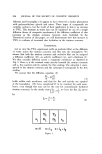
SCANNING ELECTRON MICROSCOPY 519 cations of the SEM results are correct, the efforts expended to quantify the presence, absence or subtle changes in water content in the stratum corneum may be lessons in experimental eloquence, but from a scientific standpoint, they may not be measuring the really important variable. We believe we have found strong evidence that the effect of water alone, if it does do something, is miniscule compared to the overall covering and lubricating effects of the oils and other materials present in the typical product. A BEFORE and AF- TER 1-h warm water bathtub soak set of replicas show almost no change in the replicas, although, clinically there is a huge change. The inescapable con- clusion is that this type of moisturization produces demonstrable clinical ef- fects, but the changes are not within (or on) the stratum corneum but are, in fact, underneath it! To better communicate the basis for our conclusions, a few additional examples are in order. A. Moisturizing Soap Figure 4 shows the same identical area of clinically chapped skin from a female (mid-thirties) subject, before and after washing with a "moisturizing" (a) (b) Figure 4. SEM montages of chapped skin (back of hand): (a) beiore, and (b) after treat- ment with "moisturizing" soap. Note dramatic reduction in prevalence of uplifting layers of stratum corneum. Location of air bubbles artifact in after was most unfortunate. Scale bar represents 300/zm
Purchased for the exclusive use of nofirst nolast (unknown)
From: SCC Media Library & Resource Center (library.scconline.org)