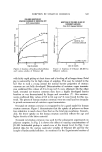
II•ToeRHEDIAToe NEW LANOLIN QUATERNARY SALTS BENZ¾1 oeHLORIDoe 563 i NToe RMI•DIAT• _jso C DIoeTHYL 5ULFA TE L C,H J R = Lan/I '•I-EHzE, I-tzCH•. H Figure 4. Quaternization TABLE II Typical Properties of Quats [ e LanBAC Stearalkonium LanES Quarternium 7 Chloride Amber Creamy White Amber Very Cream Colored Form Semisolid Dispersion Viscous Liquid Dispersion Active content 81.9% 16.0% 76.3% 79.7% Total chloride content 5.8% - N/A 7.8% pH (1% aqueous sol'n) 6.2 3.0-4.0 5.0 3.4 Surface tension 41.4 34 40.3 -- (1% aqueous sol'n (@ 25øC) dynes/cm dynes/cm dynes/cm Ross Miles Foam Data-- Initial: 100 mm 50 mm 150 mm 150 mm After 5 min: 80 mm 40 mm 110 mm 130 mm ides, aromatic halides, or other aliphatic alkylating agents, such as ethylene chlorohydrin, could have been used. Among such halides and esters which may be used are methyl chloride, methyl bromide, butyl bromide, di-methyl sulfate, and the like (11). The resulting experimental lanolin quaternaries are dark amber materials ranging in viscosity from a thick liquid for the ethosulfate derivatives, to a hard brittle solid for the benzyl chloride derivative. Since these quaternium

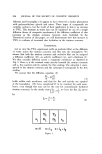
564 JOURNAL OF THE SOCIETY OF COSMETIC CHEMISTS salts are soluble in water, aqueous solutions ranging in activity of 10 to 25 per cent offer an easier means of handling these materials. Typical specifications of these lanolin quaternaries are compared to two other commercial quaternary ammonium compounds (Quaternium 7 and Stearalkonium Chloride) in Table II. ANALYTICAL PROCEDURES Various procedures were used to support evidence of our reactions. The structure of the lanolin acid arnidoamine intermediate was confirmed by in- frared analysis. The acid carboxyl absorbance was absent and was replaced by absorbition in the region 1640 cm -•, which is indicative of amides. Also, the so-called Amide II band appearing near 1550 cm -• was observed. The absence of unreacted primary amine was determined titrametrically (12). Quaternary activity was determined via a titration with tetraphenyl boron (13). PHYSICAL PROPERTIES I. Compatability with Anionic Surfactants Experimental-10 per cent active solutions of Triethanolamine (TEA) Lauryl Sulfate. Sodium Laureth Sulfate (3 moles of ethylene oxide (ETO)), Quaternium 7, Stearalkonium Chloride, the experimental lanolin benzyl chlo- ride quat (LanBAC) and the experimental lanolin ethosulfate quat (LanES) were prepared. The pH of these solutions were adjusted to 4 with citric acid. (The pH of the Quaternium 7 and the Stearalkonium Chloride solutions were under 4, so that these were not adjusted.) Blends were then prepared by add- ing 1, 5, 10, 15, and 20 g of cationic solution to 99, 95, 90, 85, and 80 g of an anionic solutio,n. The solutions were warmed on a steam bath when necessary to obtain clarity. The resulting 40 solutions were then set aside for 2 weeks. Results-Formation of either a cloud, haziness, or a precipitate in the solu- tions was taken as an indication of incompatability (14). Those solutions, which remained clear were taken to be compatible. The results are sum- marized in Fig. 5. It was found that upon mixing, both lanolin acid quaternary ammonium derivatives formed clear solutions without warming. Also, the lanolin quater- nary salt solutions showed superior compatability in an anionic medium to the other two cationic ammonium compounds tested. Blends of the 10 per cent active cationic solutions and 10 per cent active anionic solutions were prepared by adding 5 parts of the cationic solution to 95 parts of the anionic solutions. These blends were further diluted to yield a total i per cent active solution of surfactant. Ross-Miles foam tests were run on the anionic solutions alone and the various blends of the cationic-anionic blends. Foam height measurements were taken initially and after 5 min. The resulting data demonstrated tht the lanolin derived quaterniums interfered
Purchased for the exclusive use of nofirst nolast (unknown)
From: SCC Media Library & Resource Center (library.scconline.org)