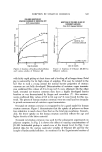
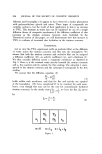
NEW LANOLIN QUATERNARY SALTS 565 .,, * ................. i ppt e/ear "'i,•i. ' ...... : o•atrue •otn l ................... •:. Figure 5. Compatability with anionics Figure 6. Draize eye irritation scores

566 JOURNAL OF THE SOCIETY OF COSMETIC CHEMISTS with the foaming power of the anionics less than the Quaternium 7 and the Stearalkonium Chloride. This again demonstrated higher compatability be- tween the cations of the lanolin quaterniums in solution with the anions of the detergent salts. II. Eye Irritation Experimental-0.5 and 2.5 per cent active solutions were prepared for the Quaternium 7, Stearalkonium Chloride, LanBAC, and LanES. The resulting 8 solutions were submitted to an outside laboratory for Draize Rabbit Eye Irri- ' '•ion tests. Six normal healthy albino rabbits were used in this experiment. The animals were divided into 2 groups of 3 animals each. Group i had 0.1 ml of the test solution instilled into the right eye with no further treatment. Group 2 had 0.1 ml instilled into the right eye followed 4 sec later by washing out with 20 ml of lukewarm water. The untreated left eye of each animal served as its oxvn control. Both the treated and control eyes were examined every 24 hours for 4 days and then again on the seventh day. The scores re- corded were made according to the Draize scale for scoring occular le- sions (15). Results--As can be seen in Fig. 6, the lanolin quaternaries proved to be less irritating than the other two cationic salts used in the test. The LanBAC was shown to be less irritating than Stearalkonium Chloride at 5 times the con- centration of Stearalkonium Chloride. III. Germicidal Activity Experimental-In this experiment, 2 aspects of a germicidal activity were studied-namely, the zones of inhibition and the plate count reduction. Five per cent active Quaternium 7, Stearalkonium Chloride, LanBAC, and LanES were prepared and submitted to an outside testing laboratory for these tests. The solutions were diluted 1:5 for both determining the zones of inhibition and for the plate count reduction, so that the results shown in Table III are for i per cent active quaternary solutions. For the zones of inhibition, the quaternaries were tested against two or- ganisms: Staph aureus ATCC* 6538 and Strep pyogenes ATCC* 8668. In the plate count reduction, the test organism was Staph aureus ATCC 6538. A 24-h broth culture of the test organism was diluted 1-10 with sterile distilled water before use. One ml of the diluted test organism was .added to 9ml of t:he sam- ple and stored at 37øC. At 2, 5, 10, 15 minutes, i and 4 h i ml of the sample was plated out with Tryptic Soy Agar. The plates were incubated at 35øC for 48 h. Results-As can be seen in Table III, the two experimental lanolin quater- naries exhibited larger zones than either of the two commercial quaternaries against both test organisms. The plate count reduction showed the two lanolin quaternium salts to be as effective as the Stearalkonium Chloride, and more *American Type Culture Collection, Washington, D.C.
Purchased for the exclusive use of nofirst nolast (unknown)
From: SCC Media Library & Resource Center (library.scconline.org)