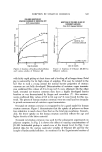
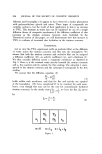
NEW LANOLIN QUATERNARY SALTS 569 Table V Quaternary Creme Rinse Quaternary (10% active solution) Glycerol Stearate, SE, acid stable Hydroxypropyl Methylcellulose (1% solution) Deionized Water Perfume WT.% 30.00 1.50 40.00 28.00 0.50 100.00 PROCEDURE: Heat the GMS and water together to 75øC and let cool to 30øC with slow continual stirring. Add the other ingredients and package. pH was adjusted to 5.5 with Lactic Acid. Results--In all 6 cases, the 2 shampoos used were very similar as far as foam quality and quantity are concerned. If anything, the right (LanES) side pro- duced a tighter bubble, which gave the appearance and feel of a thicker creamier lather. Both shampoos rinsed equally well. During the wet comb evaluation, the left side (Quaternium 7) excelled. In 4 cases out of 6, the left side combed out easier with less tangles and had more slip, which allowed the comb to glide through the hair easier. After comb out, the right (LanES) side generally felt as if it had a slightly greasy film remaining. After setting and drying, the right (LanES) side was preferred for sheen, manageability, and body. Both shampoos controlled fly away well in only one case, the subject preferred her right over her left side in the fly away evalu- ation. In general, marked distinctions between the two shampoos did not exist. Differences were very small in most cases, thus showing the LanES to be as effective as the Quaternium 7. Creme Rinse-The formula employed for this study was simple but effec- tive in pointing out the differences between the LanBAC and the Stearal- konium Chloride. The formula is shown in Table V. The small percentage of gum was added to provide a viscosity sufficient to improve the formula's stability. Experimental-Half-head tests were employed to evaluate the two products. Six females in their mid-teens, with long virgin hair were used. The hair was washed twice with a commercial bland shampoo, then parted in the middle of the head. The Stearalkonium Chloride creme rinse was used on the left side and the LanBAC creme rinse was used on the right side. The rinses were di- luted 10 to 100 ml at the salon and applied to the hair. The full 100 ml was

570 JOUBNAL OF THE SOCIETY OF COSMETIC CHEMISTS used on each side. This was followed by a thorough rub in for approximately 3 min and then a thorough rinse. A wet comb evaluation was followed by a set and drying. The curlers were removed and a final evaluation of the hair was carried out. Results-Both rinses applied equally well and rinsed out well. The left (Stearalkonium Chloride) side was preferred by all in the wet evaluation for ease of combing and amount of slip on the hair. In some cases, the right (LanBAC) side yielded a lesser amount of tangles. After setting and drying, the right (LanBAC) side was preferred by 5 out of the 6 females for sheen, fiuhtlness of the hair, manageability, feel, and body. As in the shampoo study, the lanolin quaternary was preferred in the final evaluation, although it suffered somewhat in the wet comb evaluation. SUnIMARY In this paper, we presented two nexv quaternary compounds derived from lanolin acids. We discussed their method of preparation and described other derivatives that could be prepared. It was demonstrated that their use in shampoo and creme rinse formulas compared with commercially available compounds of this type. Lower eye irritation scores and higher germicidal activity were presented along with an experiment demonstrating greater com- patibility with anionic surfactants. (Received July 15, 1975) (lO) (11) (1•.) (13) (14) (15) REFERENCES (1) H. F. Mark, J. J. McKeppa, Jr., and D. F. Othmer, Encyclopedia of Chemical Tech- nology, 2nd ed., Vol. 16, John Wiley & Sons, N.Y.C. New York, p. 864, 1968. (2) M. Ginn et al., J. Amer. Oil Chem. Soc. 42, 1084 (1965). (3) W. M. Linfield et al., J. Amer. Oil Chem. Soc. 35, 590 (1958). (4) A. Scherr and E. Vitales, Ind. Eng. Chem. Prod. Res. and Devel., 2, 97, (1963). (5) Vale, W. H., Brit. Pat. 775981 (1957). (6) A. Kluge, The Properties of Quaternary Ammonium Salts and their uses as Cosmetic Products for Treatment of Hair, Parrum. Kosmet., 42, 341 (1961). (7) G. Barker, Cationic Lotions, Cosmet. Per., 89, 9.5-34 (1974). (8) J. K. Finnegan and J. B. Dienna, Toxicological Observations on Celtain Surface Active Agents, Proc. Sci. Sec. Toilet Goods Ass., 20, 16 (1953). (9) R. C. Heald, Shampoo Bases Containing Cationic Hair Conditioners, Norda- Schimmel Briefs No. 416, Jan. 1970. Bio-Toxicology Labs., Private Rep. to Maimstrom Chemical Corp. E. Kraft and M. Schlossman, U.S. Pat. Application •P156,102. AS•M method D-2074. L. D. Metca]re et al., J. Amer. Oil Chem. Soc., 43, 355 (1966). T. G. Schoenberg, New Look at Cationic Surfactants for Today's low pH Shampoos, Cosmet. Per., 90, (1975). J. H. ,Draize, Appraisal of the safety of chemicals in foods, .drugs and cosmetics by Association of Food and Drug Officials of the United States, Topeka, Kansas, 1965, Pg. 49.
Purchased for the exclusive use of nofirst nolast (unknown)
From: SCC Media Library & Resource Center (library.scconline.org)